
Intelligence – Tulsi Gabbard Steps Down Amid Family Health Crisis and Policy Differences
Intelligence – Former Director of National Intelligence Tulsi Gabbard has announced her resignation from President Donald Trump’s administration, citing urgent family circumstances as the primary reason behind her departure. Gabbard confirmed that she will officially leave office on June 30, 2026, as her husband undergoes treatment for a rare and aggressive form of bone cancer.
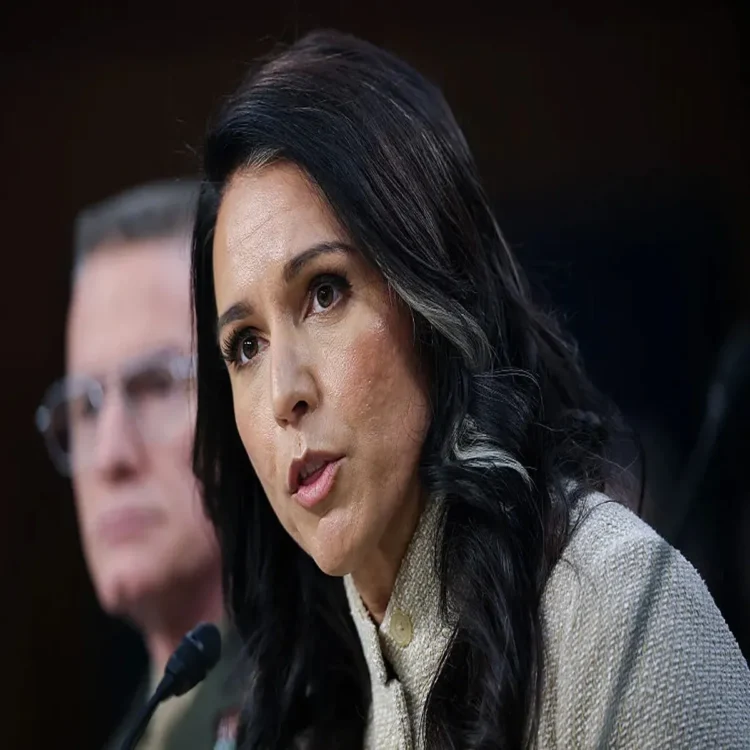
In a resignation statement shared publicly on X, Gabbard said the decision was deeply personal and necessary to support her family during a difficult period. Her exit marks the fourth Cabinet-level departure during Trump’s second presidential term and adds to a growing list of senior officials who have left the administration in recent months.
Growing Divisions Over Iran Policy
Although Gabbard pointed to family concerns as the central reason for resigning, political observers had already noted signs of tension within the administration over US military action against Iran. The disagreement became more visible after Trump approved strikes targeting Iranian facilities earlier this year.
Gabbard, a longtime critic of foreign military interventions, appeared increasingly uncomfortable defending the administration’s position. During congressional hearings, she avoided directly endorsing the attacks and repeatedly stressed that military decisions were ultimately made by the president, not intelligence officials.
Her cautious responses drew attention from lawmakers seeking clarity about whether intelligence agencies had warned the White House about possible consequences, including disruptions to shipping routes through the Strait of Hormuz.
Conflicting Statements on Iran Threat Assessment
Another point of friction emerged during testimony before the Senate Intelligence Committee. Gabbard stated there was no indication Iran had attempted to restore its nuclear capabilities after earlier US operations severely damaged the program.
Those remarks appeared inconsistent with Trump’s repeated claims that Iran represented an immediate threat requiring military action. The differing narratives led to tense exchanges during hearings, where lawmakers pressed Gabbard for a direct assessment of Iran’s danger level.
She maintained that determining whether a threat justified military action was a presidential responsibility rather than a function of the intelligence community.
A Unique and Unconventional Political Journey
Gabbard’s appointment to lead the Office of the Director of National Intelligence was considered unusual from the beginning. Although she served in the military and spent years in Congress, she had no formal intelligence background before taking the role.
The former Hawaii congresswoman first gained national recognition through her criticism of US involvement in Middle East conflicts. During her 2020 presidential campaign, she argued that prolonged wars abroad weakened American security and cost thousands of lives.
After ending her Democratic presidential bid, she endorsed Joe Biden before later distancing herself from the Democratic Party entirely. In 2022, Gabbard declared herself an independent, accusing Democratic leaders of promoting divisive politics and unnecessary foreign conflicts.
She later aligned more closely with conservative figures, campaigned for Republican candidates and became a political commentator on Fox News before eventually endorsing Trump.
Major Changes Inside Intelligence Agencies
During her tenure, Gabbard pushed for significant restructuring within the US intelligence system. She repeatedly argued that intelligence institutions had become overly politicized and required reform.
Under her leadership, staffing reductions were introduced across multiple intelligence agencies, while a new internal task force was formed to examine possible long-term structural changes.
However, her time in office also attracted criticism. Earlier this year, a whistleblower complaint accused her office of selectively withholding intelligence information for political purposes. The allegations intensified calls from Democratic lawmakers demanding her resignation.
Political Career Marked by Firsts
Born in American Samoa and raised largely in Hawaii, Gabbard entered politics at a young age. She was elected to Hawaii’s House of Representatives at just 21 years old before pausing her political career to serve in Iraq with the National Guard.
She later became the first Hindu member of the US House of Representatives and the first American Samoan elected to Congress. Throughout four congressional terms, she built a reputation for challenging party leadership and taking independent political positions.
Her national profile expanded significantly after supporting Senator Bernie Sanders during the 2016 Democratic primary race, a move that increased her popularity among progressive voters at the time.