
ManipurCrisis – Church Leaders Step In as Tribal Tensions Deepen
ManipurCrisis – The ongoing unrest in Manipur involving members of the Kuki and Naga communities has taken a fresh turn, with senior church leaders stepping forward to encourage dialogue and restore calm in the violence-hit state. Chief Minister Yumnam Khemchand Singh welcomed the initiative and appreciated the religious leaders for attempting to reduce hostility between the two tribal groups.
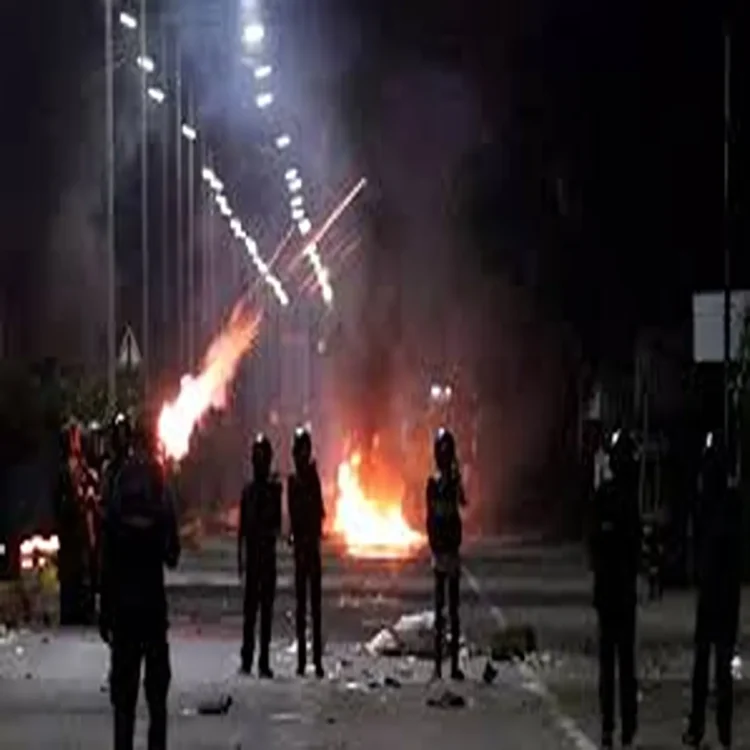
The crisis worsened after three tribal church leaders were killed in Kangpokpi district, triggering anger and fear across nearby regions. In the aftermath, reports emerged that civilians from both communities had been held captive by rival groups, increasing tensions further.
Exchange of Captives Raises Hope
In a partial breakthrough, Naga groups released 14 Kuki civilians, while Kuki organisations also freed 14 members of the Naga community. Despite the exchange, uncertainty remains over several individuals who are still unaccounted for.
Kuki organisations alleged that another 14 members of their community continue to be missing. On the other hand, Naga representatives claimed that six people, including two pastors, have not yet been located.
The developments have kept anxiety high in affected districts, where local residents are demanding immediate intervention from authorities to ensure the safe return of all missing individuals.
Shutdowns and Blockades Disrupt Supply Movement
The conflict has also severely affected transportation and trade routes in the region. Hundreds of trucks carrying essential goods remained stranded for the fifth consecutive day due to parallel protest actions announced by tribal bodies.
The Kuki Inpi Manipur enforced a total shutdown in Kuki-dominated areas to protest the killings of the church leaders and what it described as the government’s failure to rescue missing Kuki civilians. Meanwhile, the United Naga Council imposed an economic blockade in Naga-majority areas over concerns regarding the disappearance of six Naga civilians.
As a result, transport services across several routes in Manipur came to a standstill, leaving drivers and helpers stranded without adequate supplies.
Truck Drivers Face Difficult Conditions
Many truck operators stuck in Imphal Valley and Senapati district described difficult living conditions as food and drinking water began running low.
One driver said they had been stranded for several days without proper arrangements. According to him, some local residents provided rice and lentils, but the assistance was insufficient considering the growing number of stranded workers.
Another driver appealed to the state administration for secure passage and police protection. He noted that transport workers regularly carry goods across northeastern states but often face uncertainty during sudden shutdowns and blockades in Manipur.
The prolonged disruption has also raised concerns over the supply of essential commodities to several districts if the situation continues.
Church Delegation Begins Peace Initiative
Amid the growing tension, a ten-member delegation from the Council for Baptist Churches in North East India and the Manipur Baptist Convention met Chief Minister Singh on Monday to discuss possible peace measures.
According to an official statement, the church representatives offered to act as mediators between the two communities and expressed willingness to assist in confidence-building efforts.
The chief minister reportedly appreciated the delegation’s humanitarian approach and described their intervention as an important step during a sensitive period.
Separate Peace Missions Planned
The church groups have now decided to form two separate peace mission teams to directly engage with local communities in the affected regions.
One delegation is expected to visit Kangpokpi district, where the Kuki population is dominant, while the second team will travel to Senapati district, a Naga-majority area.
Church leaders stressed that the release of all remaining captives should take place immediately on humanitarian grounds. They also appealed to both sides to avoid further escalation and support efforts aimed at restoring normalcy in the state.
Authorities continue to monitor the situation closely as community leaders, civil organisations, and religious groups attempt to prevent further violence and rebuild trust between the two tribal communities.