
WaterConservation – Kashmir Villages Preserve Centuries-Old Spring Cleaning Tradition
WaterConservation – In the picturesque village of Panzath in Jammu and Kashmir’s Anantnag district, an age-old community tradition continues to strengthen environmental awareness and social unity. Every year in May, residents from dozens of nearby villages come together to clean the historic Panzath Nag spring, a major water source that supports farming and daily life across the region.
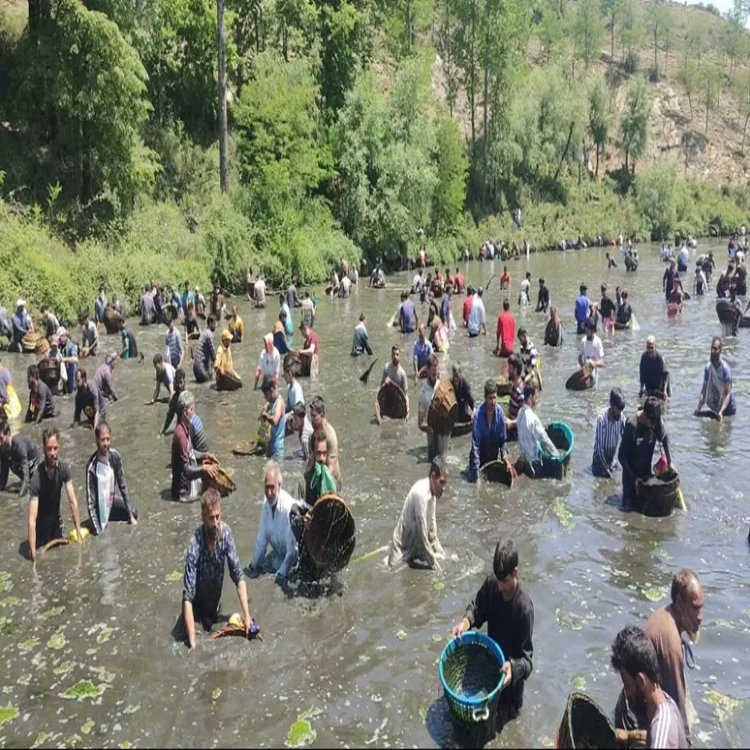
Villagers Gather to Restore Vital Water Source
The annual event draws participation from nearly 45 surrounding villages in the Qazigund area of south Kashmir. Panzath Nag plays a significant role in supplying drinking water and irrigating paddy fields spread across several rural communities.
On Sunday, more than a thousand villagers stepped into the shallow waters carrying wicker baskets, plastic tubs, and traditional tools to remove mud, weeds, and accumulated waste blocking the natural flow of the spring. The cleaning exercise lasts throughout the day and has become one of the region’s most respected cultural practices linked to environmental conservation.
Local residents believe the spring’s name originated from the Kashmiri phrase “Paanch Hath,” meaning “five hundred,” as the water body historically fed many smaller springs and channels in the surrounding landscape. Stretching nearly 1.5 kilometres, Panzath Nag remains essential for agriculture and household water needs.
Traditional Fish Festival Encourages Participation
The cleaning drive is also known locally as the “fish festival” because villagers are allowed to catch fish during the event. However, the activity follows strict traditional methods and designated zones. Participants use wicker baskets and mosquito nets instead of modern fishing equipment to avoid damaging the ecosystem.
Residents describe fish catching as both a cultural attraction and an incentive that encourages large-scale community participation in the conservation effort.
Khurshid Ahmad Pandith, a 55-year-old resident who has been part of the event since his school days, said the tradition has been passed down through generations. According to him, elders in the village taught younger generations the importance of protecting natural water resources and maintaining the spring for future use.
He explained that Panzath Nag supports agricultural lands and provides water to dozens of villages, making the annual cleaning necessary for sustaining local livelihoods.
Environmental Benefits Visible Immediately
Villagers say the impact of the cleanup becomes visible almost immediately after the work is completed. Once silt and unwanted vegetation are removed, water flow improves and the spring regains its natural clarity.
Another local resident, Mohammad Afzal, highlighted that the event is about much more than fishing. He said the primary objective is to restore the health of the water body, improve water circulation, and maintain the natural beauty of the spring.
Afzal added that the cleaning process also benefits aquatic life by creating a healthier habitat for fish and other organisms living in the spring ecosystem.
The annual gathering is usually organised on a Sunday to ensure maximum participation from villagers, including farmers, students, and elderly residents. Beyond environmental preservation, the occasion has also become a symbol of social harmony, where communities work collectively for a shared public resource.
Recognition Beyond the Region
The unique conservation tradition has also received national attention in recent years. Prime Minister Narendra Modi previously mentioned the Panzath spring initiative during his Mann Ki Baat programme, praising the community-driven effort to protect natural resources through collective action.
As climate concerns and water scarcity continue to affect different parts of the country, the villagers of Panzath continue to demonstrate how traditional practices and community participation can play an important role in environmental sustainability.