
AviationFare – Supreme Court Pushes Centre to Address Rising Air Ticket Costs
AviationFare – The Supreme Court on Friday stressed the need for better regulation of airline ticket pricing and urged the Central government to examine ways to ease the financial burden on passengers facing steep airfare variations.
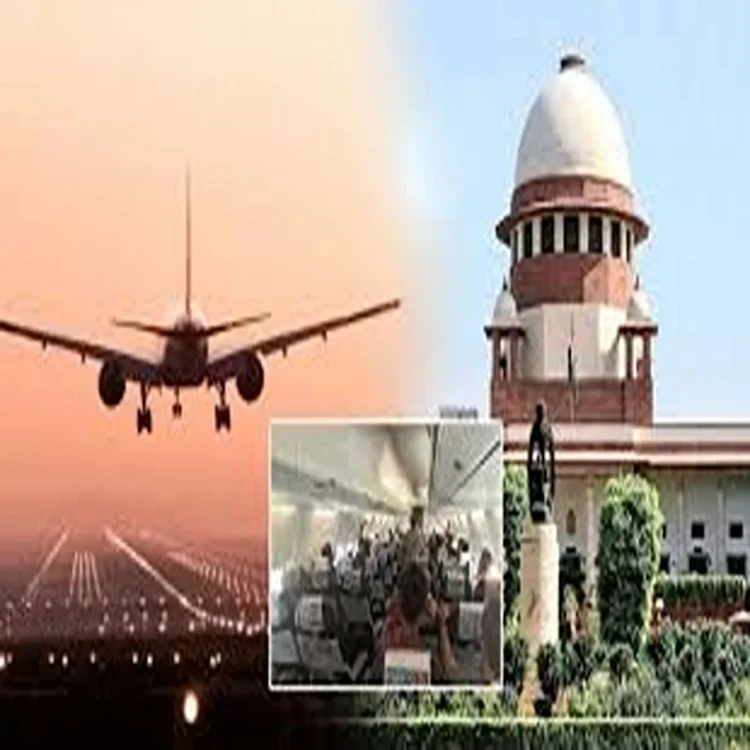
The court made the observation while hearing a petition related to fluctuating airfare rates and additional charges imposed by private airlines. A bench comprising Justices Vikram Nath and Sandeep Mehta highlighted the sharp difference in fares charged by airlines operating on identical routes on the same day.
Court Highlights Price Disparity in Air Travel
During the proceedings, the bench pointed to instances where one airline offered economy class tickets at nearly Rs 8,000, while another carrier on the same sector charged close to Rs 18,000. The judges remarked that such inconsistencies create unnecessary hardship for ordinary travellers and called for a more balanced airfare structure.
Addressing Solicitor General Tushar Mehta, who represented the Centre, the bench urged the government to consider measures that could provide relief to passengers affected by unpredictable pricing trends.
The court also observed that some level of rationalisation in airfare determination appeared necessary, especially in situations where consumers have little choice during emergencies, festivals, or peak travel periods.
Government Says New Aviation Rules Under Review
Responding to the court’s concerns, the Solicitor General informed the bench that the government was already examining the issue under the newly introduced Bharatiya Vayuyan Adhiniyam, 2024, which became operational in January 2025.
He clarified that the Centre does not dispute the concerns raised in the petition and is treating the matter seriously. According to the government, consultations are currently underway for framing updated rules under the new aviation law.
The court recorded the Centre’s submission and noted that the process of drafting the new regulatory framework is ongoing.
Petition Seeks Independent Aviation Regulator
The plea before the court was filed by social activist S Laxminarayanan, who has sought the creation of an independent regulatory authority for the civil aviation sector. The petition demands greater transparency in airfare mechanisms and stronger safeguards for passengers against sudden fare spikes and hidden costs.
Senior advocate Ravindra Srivastava, appearing for the petitioner, argued that existing provisions under the Aircraft Act of 1937 already empower authorities to act against excessive pricing practices by airlines. However, he claimed those powers have not been effectively used.
According to the petitioner, the Directorate General of Civil Aviation (DGCA) has authority to intervene if airlines are found charging unreasonable or predatory fares, but directions are rarely issued despite recurring complaints from passengers.
Concerns Over Additional Charges and Baggage Policies
The petition also questioned the growing trend of airlines reducing complimentary services while increasing ancillary charges. It alleged that several private carriers reduced free check-in baggage allowance for economy class travellers from 25 kg to 15 kg without proper justification.
The plea further argued that limiting passengers to a single check-in bag, while offering no compensation or concession to those carrying less luggage, unfairly shifts operational costs onto consumers.
Another concern raised was the absence of effective grievance redressal systems at airports and the increasing use of dynamic pricing models, which often result in sharp fare increases during festivals, weather disruptions, or last-minute bookings.
Previous Observations by the Supreme Court
The Supreme Court had earlier criticised sudden airfare hikes, especially during festive seasons, describing such practices as exploitative. In previous hearings, the court had directed both the Centre and the DGCA to respond to concerns regarding excessive fares and opaque pricing mechanisms.
On April 30, the bench also expressed displeasure over delays in filing the Centre’s affidavit in the matter and sought explanations for the delay.
The case has now been scheduled for further hearing on July 13, when the court is expected to review the Centre’s response and progress on the proposed aviation regulations.