
Politics – Kerala Left Alliance Faces Rising Internal Strains After Poll Loss
Politics – The Left Democratic Front in Kerala is facing growing internal friction after its heavy defeat in the Assembly elections, with differences between the Communist Party of India and the Communist Party of India (Marxist) becoming increasingly visible in public.
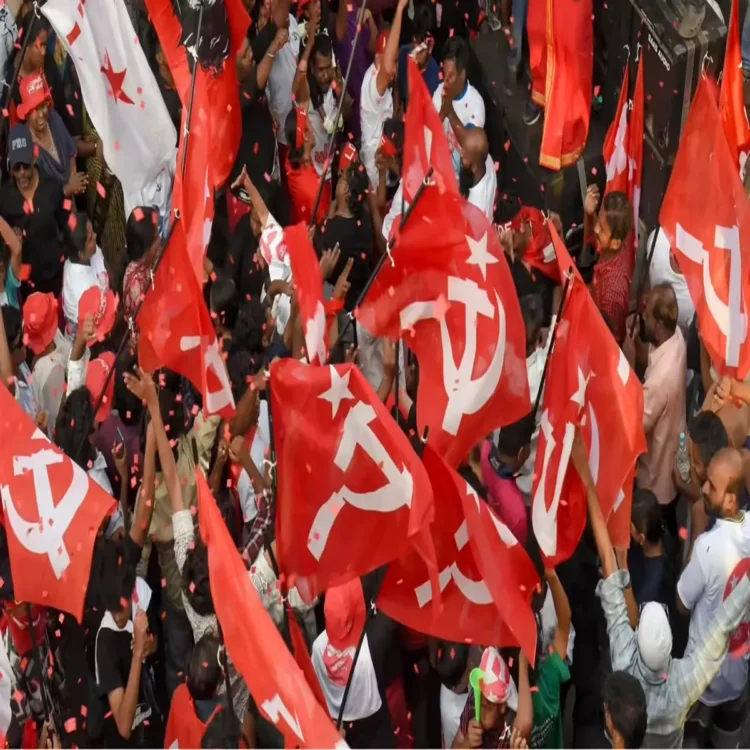
What initially appeared to be a disagreement over the appointment of the Deputy Leader of the Opposition has now developed into a wider debate about influence, representation and political authority within the Left alliance. The tensions have emerged at a sensitive moment for the coalition, which suffered one of its worst electoral setbacks in recent years.
Dispute Over Opposition Position Intensifies
The latest controversy began after CPI state secretary Binoy Viswam publicly stated that the Deputy Leader of the Opposition post should be given to the CPI. His remarks reportedly did not go down well with the CPI(M), which considers such discussions an internal matter to be resolved within alliance meetings.
LDF convener T.P. Ramakrishnan reacted strongly to the public demand, saying sensitive decisions should not be discussed through the media. His comments came shortly after he had criticised the Congress party for delaying decisions regarding leadership positions, making the developments within the Left camp politically significant.
Longstanding Unease Between Allies
Although the current disagreement revolves around an Assembly post, political observers believe the issue reflects deeper tensions that have existed within the alliance for several years.
During the decade-long LDF government led by Pinarayi Vijayan, the CPI occasionally voiced its concerns over policy decisions and governance matters. While the CPI remained the junior partner in the alliance, it repeatedly signaled that it did not want to be sidelined in major political decisions.
On more than one occasion, the CPI reportedly pressured the leadership to reconsider or soften certain government positions. Those disagreements were largely managed internally while the coalition remained in power. However, the election defeat appears to have weakened that balancing mechanism.
Election Defeat Sparks Blame Game
Following the loss, internal discussions within the CPI are understood to have raised criticism over the style of governance adopted during the previous administration. According to party sources, some leaders openly questioned whether centralized decision-making and leadership approaches contributed to the alliance’s poor electoral performance.
The CPI now believes the setback should lead to structural changes within the coalition, including a greater role for smaller partners in political and organisational matters. The demand for the Deputy Opposition Leader’s post is being viewed as part of that larger push for increased recognition within the alliance.
CPI(M) Reluctant to Share Political Space
The CPI(M), however, is reportedly unwilling to make concessions on key positions in the Assembly despite the defeat. Party leaders are believed to be cautious about giving away influential posts at a time when the Left is attempting to rebuild its political standing in the state.
This difference in approach has widened the gap between the two parties, raising questions about how smoothly the alliance will function while sitting in the opposition.
Political analysts say the coming months could prove crucial for the future of Left unity in Kerala. Internal contradictions that remained hidden during the years in government are now becoming more visible as both parties attempt to redefine their roles after the electoral setback.
Sharp Decline in Assembly Strength
The LDF’s performance in the election marked a major decline in its legislative presence. The alliance, which previously held 99 seats in the 140-member Kerala Assembly, has now been reduced to just 35 seats.
The dramatic fall has intensified internal discussions over leadership, alliance coordination and future political strategy, with both the CPI and CPI(M) expected to reassess their positions in the evolving opposition landscape.