
Heritage – Somnath Temple Continues to Symbolise India’s Spiritual Resilience
Heritage – The enduring story of the Somnath Temple reflects how faith, history and national identity have remained deeply connected across centuries of political and social change.
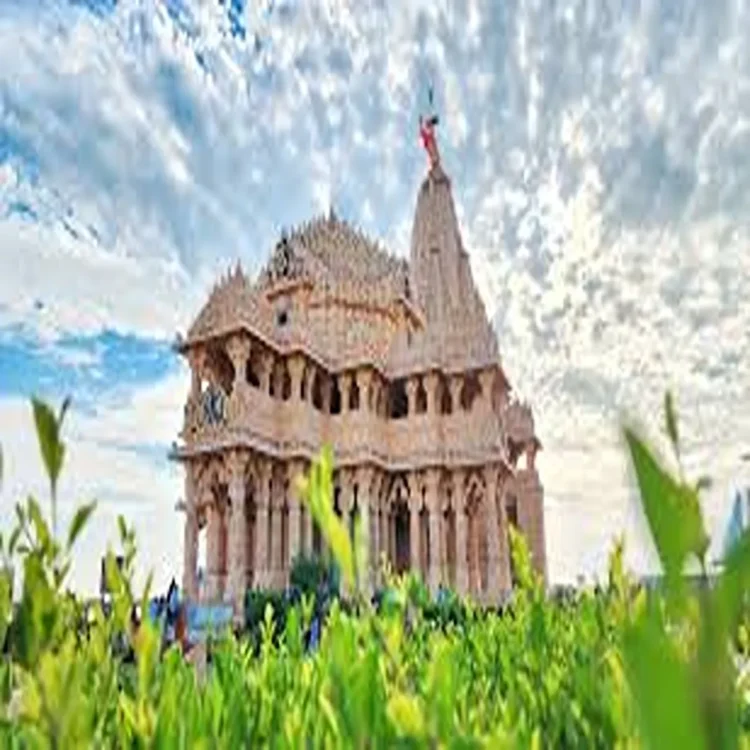
The Somnath Temple on Gujarat’s western coast remains one of the most powerful symbols of spiritual endurance in India’s civilisational history. Revered as the first among the twelve Jyotirlingas dedicated to Lord Shiva, the temple has witnessed repeated destruction, political turmoil and reconstruction over several centuries. Yet, despite these upheavals, it has continued to hold a central place in the religious and cultural consciousness of the country.
A Sacred Centre With Deep Historical Roots
Located in the ancient town of Prabhas Patan in the Kathiawad region, Somnath has long been associated with pilgrimage and sacred traditions. The area is considered spiritually significant due to its connection with Lord Krishna and the Triveni Sangam, where three rivers meet. Several nearby religious sites, including Gopi Talav and Vairagya Kshetra, add to the region’s importance for devotees visiting western India.
Historical records and archaeological studies have documented the region’s cultural richness for decades. Scholars examining the antiquities of Kathiawad and nearby areas have highlighted the presence of ancient structures, inscriptions and remains that reflect the region’s longstanding spiritual heritage.
Temple Destruction and Reconstruction Through Centuries
During the medieval period, temples in India often served not only as places of worship but also as centres of administration, education and economic activity. Their close association with ruling dynasties made them vulnerable during invasions and military conflicts.
Among the most widely discussed events in Indian history is the attack on Somnath by Mahmud of Ghazni in the 11th century. Historical accounts from Persian chroniclers described it as a military victory, while Indian traditions remembered it as a moment of cultural loss and resistance. Despite the destruction, the temple did not disappear from public memory or religious practice.
Regional rulers later rebuilt the shrine, allowing worship and pilgrimage activities to continue. Over time, Somnath became an example of how religious institutions adapted and survived despite repeated disruptions caused by changing political powers.
Symbol of India’s Diverse Spiritual Traditions
Somnath also represents the coexistence of multiple traditions within Indian spirituality. While primarily associated with Shaivism, the region also carries strong links to Vaishnav traditions due to its connection with Lord Krishna. Historians and scholars often describe this blend as evidence of the inclusive and layered nature of Indian religious culture.
The temple’s journey reflects broader patterns in Indian history, where cultural practices and faith traditions continued despite institutional decline or political uncertainty. Rather than representing uninterrupted dominance, Somnath’s significance lies in its repeated revival and continued relevance.
Reconstruction After Independence
A major turning point in the temple’s modern history came shortly after India gained independence in 1947. Following Partition, India’s first Deputy Prime Minister and Home Minister, Sardar Vallabhbhai Patel, visited Somnath and supported the idea of rebuilding the temple as a symbol of national renewal.
The reconstruction effort gradually took shape through institutional support and public participation. Leaders associated with the initiative envisioned the project not merely as the rebuilding of a religious structure, but also as the restoration of cultural confidence in newly independent India.
On May 11, 1951, the reconstructed temple was formally inaugurated in the presence of President Rajendra Prasad. The ceremony became a landmark moment in independent India’s cultural history and reaffirmed the temple’s role in the country’s shared heritage.
Somnath’s Role in Contemporary India
In recent years, the Somnath Temple has undergone further development through heritage conservation, infrastructure upgrades and expanded pilgrim facilities. Under the leadership of Prime Minister Narendra Modi, who serves as Chairperson of the Shri Somnath Trust, several initiatives have focused on improving visitor access while preserving the site’s historical character.
The ongoing Somnath Swabhiman Parv 2026-27 marks both 1,000 years since the first recorded attack on the temple and 75 years since the reopening of the rebuilt shrine. The year-long programme includes cultural events, educational activities, spiritual gatherings and nationwide outreach initiatives linked to Jyotirlinga temples across India.
The commemoration aims to connect younger generations with India’s cultural traditions while promoting values of resilience, continuity and collective memory. Today, Somnath stands not only as a place of worship but also as a lasting reminder of how heritage and faith continue to shape India’s identity.