
Elections – BJP Secures Bengal Win as Regional Parties Face Setbacks
Elections – The outcome of the recent Assembly elections across five states has delivered a decisive message, particularly for the Bharatiya Janata Party (BJP), which achieved a landmark victory in West Bengal. The result marks the end of a 15-year tenure led by Mamata Banerjee and her Trinamool Congress (TMC), signaling a major political shift in the state.
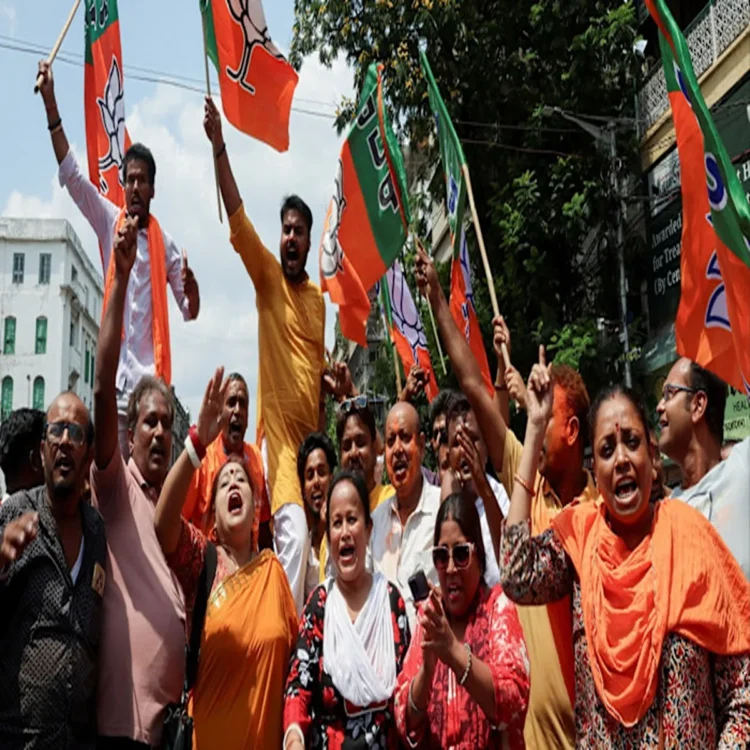
BJP Expands Influence in Eastern India
The BJP’s performance in West Bengal goes beyond a routine electoral win. For over a decade, the party had struggled to establish dominance in the eastern region, with Bengal remaining a stronghold of regional politics. This victory indicates a significant breakthrough, suggesting that voter preferences have shifted in a more enduring way rather than reflecting a temporary change. Mamata Banerjee’s defeat in her Bhabanipur constituency by a margin of around 15,000 votes to Suvendu Adhikari highlights the scale of the transformation.
The BJP’s success also included gains in areas previously considered strongholds of the TMC, pointing to a deeper political realignment within the state. Analysts believe this development could influence opposition dynamics at the national level, particularly within the INDIA bloc, where the TMC has been a key player.
Recovery After National Setback
The results come as a boost for the BJP following a less dominant showing in the 2024 Lok Sabha elections, where its seat tally dropped significantly compared to 2019. The strong performance in these Assembly elections suggests that the party has managed to regain momentum at the state level.
Victories in Assam and Puducherry further reinforced this trend. In both regions, the BJP retained power, benefiting from positive sentiment among voters regarding its governance. In West Bengal, the party’s campaign emphasized themes such as development, national identity, and law and order, which appear to have resonated with a broad section of the electorate.
Tamil Nadu Sees Emergence of New Political Force
Tamil Nadu presented a different kind of political development. The Tamilaga Vettri Kazhagam (TVK), led by actor-turned-politician Vijay, emerged as the largest party, marking a significant disruption in the state’s traditional political structure. The defeat of the incumbent government led by M K Stalin came as an unexpected outcome, while the AIADMK slipped further behind in the rankings.
Although TVK did not secure an outright majority, reports indicate that the party is actively engaging with smaller groups and potential allies to form a government. This result is notable as it breaks a decades-long pattern in Tamil Nadu politics, where power alternated primarily between the DMK and AIADMK.
Impact on Opposition Coalition
The setbacks faced by both the TMC in West Bengal and the DMK in Tamil Nadu could have broader implications for opposition unity at the national level. These parties have been among the more influential contributors to the INDIA bloc, and their reduced strength may affect internal coordination and strategy in future elections.
Congress Gains Ground in Kerala
Amid these shifts, the Congress-led United Democratic Front (UDF) secured a clear victory in Kerala, returning to power after a decade. This win provides a significant morale boost for the Congress, adding to its presence in southern states alongside Karnataka and Telangana.
The BJP also made a modest but notable breakthrough in Kerala by winning three seats, ending a long period without electoral success in the state. While the numbers remain small, the development is seen as an important step for the party’s expansion efforts in the region.
Looking Ahead to Future Contests
The results of these Assembly elections are expected to influence political strategies in the coming years. With major states such as Uttar Pradesh, Punjab, and Himachal Pradesh scheduled for elections in 2027, parties are likely to recalibrate their approaches based on these outcomes.
Overall, the elections have not only reshaped state-level leadership but also hinted at changing political alignments across the country, setting the stage for the next phase of electoral competition.