
Elections – Limited Female Victories Mark Assam Assembly Results
Elections – The outcome of the recent Assam Assembly elections has once again highlighted the limited representation of women in state politics, with only a small fraction of female candidates securing victories despite a notable presence in the contest.
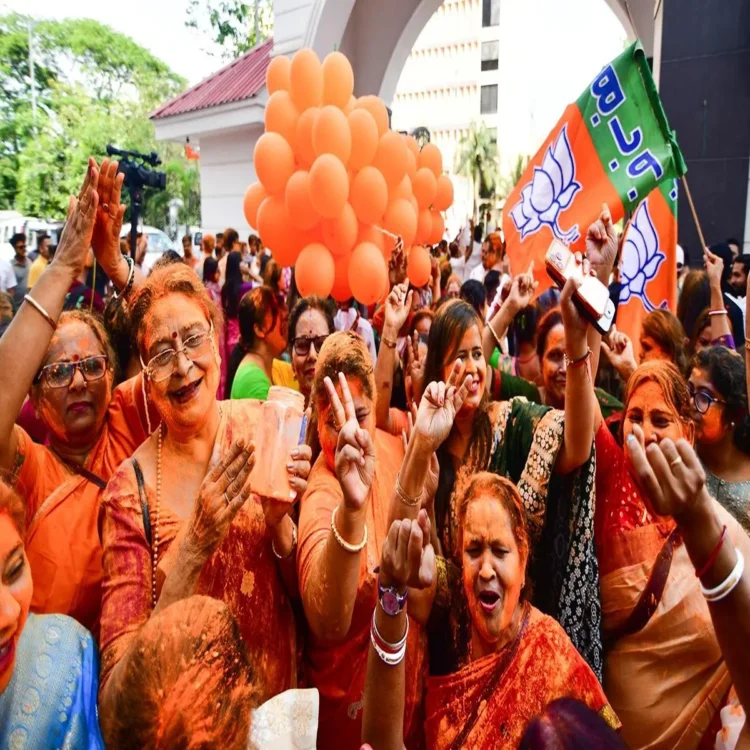
Low Success Rate Among Women Candidates
Out of a total of 722 candidates who contested the elections, 59 were women. However, only seven of them emerged victorious, accounting for just 11.86 percent of the total female candidates. The figures underline the persistent gap in electoral success between male and female contestants in the state’s political landscape.
Distribution of Winning Candidates
Among the seven successful women candidates, four belonged to the ruling Bharatiya Janata Party (BJP), reflecting the party’s continued electoral strength. The remaining winners included one candidate each from the BJP’s allies — the Asom Gana Parishad (AGP) and the Bodoland People’s Front (BPF) — along with one representative from the Congress.
Ajanta Neog secured victory from Golaghat, while Nilima Devi won the Mangaldoi seat. Rupali Langthasa and Niso Terangpi were elected from Haflong and Diphu respectively, all representing the BJP. Sewli Mohilary of the BPF claimed the Kokrajhar seat, and Diptimoyee Chowdhury of the AGP triumphed in Bongaigaon. The Congress registered its sole female win through Baby Begum in Dhubri.
High-Profile Contests Draw Attention
Two candidates had drawn considerable attention ahead of the elections but were unable to convert their campaigns into victories. Gyanashree Bora from Raijor Dal contested in Mariani, while Kunki Chowdhury of the Assam Jatiya Parishad stood from Guwahati Central. Both faced strong competition from BJP candidates and ultimately lost their respective contests.
Their campaigns had generated public discussion due to their contrasting backgrounds. Gyanashree Bora, a former college lecturer, comes from a farming family, while Kunki Chowdhury has an international educational background and belongs to a well-established business family.
Campaign Controversies During Elections
The election campaign period was not without controversy. Chief Minister Himanta Biswa Sarma made remarks targeting Kunki Chowdhury’s family, claiming that her mother, Sujata Gurung Chowdhury, consumed beef. The statement attracted criticism, and both Kunki and her mother rejected the allegation.
Sarma also raised questions about Gyanashree Bora’s local connection to the Mariani constituency, suggesting that voters should support a candidate with stronger ties to the area. These remarks became part of the broader political discourse during the campaign period.
Declining Participation Over the Years
The number of women candidates in Assam elections has seen fluctuations over recent years. In the 2016 Assembly elections, 91 women had contested, while the number dropped to 76 in 2021. The latest election saw 59 female candidates, indicating a continued decline in participation.
Despite efforts by political parties and advocacy groups to encourage greater involvement of women in politics, the overall representation remains limited. The low success rate in the current election further reflects the challenges faced by women candidates in achieving electoral success.
Need for Greater Representation
The results have renewed discussions around the need to enhance women’s participation and representation in state politics. While some progress has been made, the numbers suggest that more structured efforts may be required to create equal opportunities and support for women candidates in future elections.
The Assam Assembly election outcome serves as a reminder that increasing the number of women contestants alone may not be sufficient, and broader systemic changes may be necessary to improve their chances of winning.