
Football – Punjab FC’s Youth System Drives Dominant Elite League Triumph
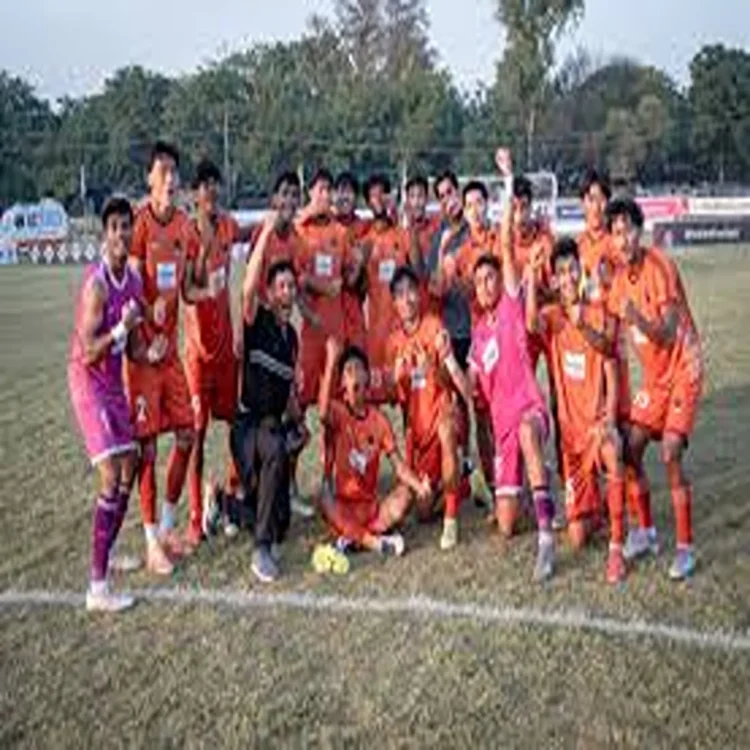
Football – Punjab FC’s commanding 3-0 victory over Zinc Football Academy in the AIFF Elite Youth League final may appear as a straightforward success on paper, but the result reflects a much deeper transformation underway within the state’s football ecosystem.
Grassroots Expansion Strengthens Foundation
The triumph in Garhshankar was not built overnight. It is the outcome of years of investment in training infrastructure, grassroots outreach, and a steadily growing network of development centres across Punjab. In April 2026, the club further expanded its reach by opening six new centres in Batala, Bilga, Khothra, Panam, Moga, and Patiala.
Each of these centres begins with a structured intake of 75 young players, including both boys and girls. This balanced approach highlights the club’s commitment to inclusivity while maintaining scale. With these additions, Punjab FC now operates 32 centres across the state, making it one of the most extensive youth development systems in Indian football.
Beyond numbers, the focus remains on quality. Every centre follows a standardized coaching framework, ensuring that young players receive consistent training regardless of location. This structured approach allows talent identification and development to progress seamlessly.
Consistent System From Grassroots to Academy
At the heart of Punjab FC’s strategy is a unified development model. Players entering the system at a young age are guided through a clearly defined pathway that integrates technical skills, physical training, nutrition, education, and mental development.
The club’s academy, recognised as a five-star institution by the national federation, serves as the central pillar of this system. It provides not only football training but also academic support and medical care, ensuring players are prepared for long-term careers both on and off the field.
This emphasis on structure and continuity has allowed the club to build a reliable pipeline of talent. Rather than focusing on short-term achievements, the approach prioritises sustainable growth and repeatable success.
Rising Impact at National Level
The effectiveness of this development model is increasingly visible in national competitions. Punjab FC’s academy has already contributed several players to India’s senior and youth squads.
During the recent SAFF Under-20 Championship, six academy players were selected for the national team. Their influence was immediate, particularly in India’s victory over Pakistan, where academy graduates accounted for all three goals.
Such performances underline the benefits of a shared training philosophy. Players coming through the same system demonstrate strong coordination and understanding on the field, reflecting years of structured coaching.
Clinical Performance Seals Youth League Title
The Elite Youth League final provided another example of this system in action. After controlling much of the first half, Punjab FC eventually broke the deadlock in the 69th minute. What followed was a decisive burst of attacking play.
Within a span of ten minutes, the team scored three goals, effectively ending the contest. The clinical finishing and coordinated play highlighted the team’s preparation and composure under pressure.
This victory secured consecutive national titles at the Under-17 level, reinforcing the consistency of the club’s development structure. The players on the field were largely products of the same pipeline, demonstrating how the system continues to deliver results.
Changing Football Culture in Punjab
Punjab has traditionally been associated with sports like hockey and kabaddi, but football is steadily gaining ground. Across the state, training facilities are becoming more active, and organised coaching is replacing informal play.
Participation among young players, especially girls, has seen noticeable growth. Families are increasingly viewing football not just as recreation, but as a viable career path supported by structured programs.
The impact extends beyond the sport itself. The development centres promote discipline, education, and community involvement, creating a well-rounded environment for young athletes.
Punjab FC’s recent success, therefore, represents more than a single victory. It reflects a broader shift in how football is nurtured and developed at the grassroots level, pointing towards a stronger future for the sport in the region.