
Defence – India China Defence Talks Focus on Border Stability and Security
Defence – India’s Defence Minister Rajnath Singh held discussions with his Chinese counterpart Admiral Dong Jun in Bishkek on Tuesday, focusing on maintaining stability along the Line of Actual Control (LAC) and addressing wider security concerns affecting the region.
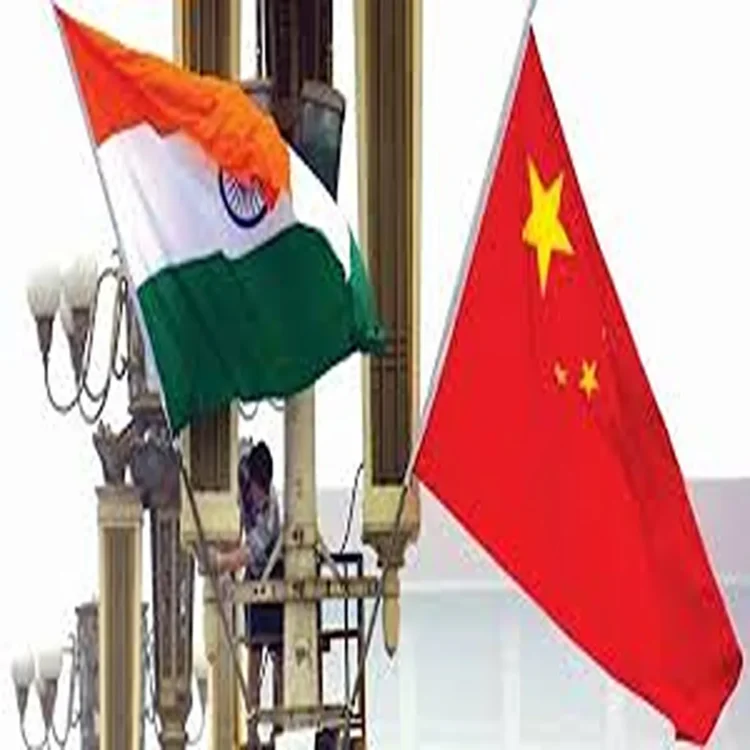
Talks Held on SCO Sidelines
The meeting took place during the Shanghai Cooperation Organisation (SCO) Defence Ministers’ gathering in Kyrgyzstan’s capital. It comes at a time when both India and China are attempting to rebuild relations after years of tension. According to official statements, the interaction provided an opportunity for both sides to exchange perspectives on pressing international and regional developments.
Singh later described the interaction as constructive, highlighting the importance of continued dialogue between the two nations. Officials indicated that discussions extended beyond bilateral issues and included evolving security challenges in regions such as West Asia.
Focus on Border Stability
A significant part of the conversation centred on maintaining peace along the LAC, which has been a sensitive issue since the 2020 Galwan Valley clash. Both sides acknowledged the importance of ensuring calm in border areas and avoiding escalation through consistent communication and cooperation.
In recent months, India and China have taken gradual steps to ease tensions. Multiple rounds of diplomatic and military-level talks have resulted in disengagement at several disputed locations in eastern Ladakh. These efforts have been seen as crucial in preventing further confrontations.
Progress in Disengagement Efforts
In October 2024, both countries reached an agreement to disengage forces in Depsang and Demchok, the last major friction points in the region. This development marked a notable step toward restoring normalcy along the border.
Following this progress, high-level political engagement also resumed. Prime Minister Narendra Modi and Chinese President Xi Jinping met in Kazan, where they discussed measures aimed at improving bilateral ties. During that interaction, both leaders stressed the need for mutual respect and trust as the foundation for future cooperation.
Earlier, during the SCO summit held in Tianjin, Modi reiterated India’s commitment to strengthening relations with China while maintaining sensitivity to each other’s concerns.
Engagement with Russia on Defence Cooperation
Apart from his meeting with the Chinese Defence Minister, Singh also held discussions with Russian Defence Minister Andrei Belousov. The talks focused on ongoing defence cooperation between India and Russia, particularly the supply of advanced S-400 air defence systems.
India had signed a $5 billion agreement in 2018 for five S-400 units. So far, three systems have been delivered, while the remaining units are expected in the coming months. Reports suggest that India has also approved the acquisition of additional systems, reflecting continued defence collaboration between the two countries.
Strengthening Ties with Other Nations
Singh’s engagements in Bishkek were not limited to China and Russia. He also met Belarus Defence Minister Lieutenant General Viktor Khrenin to explore ways to enhance bilateral cooperation, especially in training and capacity building.
In addition, discussions were held with defence representatives from Kyrgyzstan and Kazakhstan. These meetings focused on expanding partnerships and exploring new areas of collaboration in defence and security.
Broader Regional Context
The SCO platform provided an opportunity for multiple countries to discuss shared security challenges and strengthen regional cooperation. For India, participation in such forums remains important for maintaining strategic dialogue and building partnerships across Eurasia.
Singh arrived in Bishkek a day earlier to attend the conclave, where defence ministers from several member states gathered to review regional security dynamics and explore joint approaches to emerging threats.