
Security – Senators question Pentagon preparedness after deadly Kuwait drone strike
Security – A group of senior Democratic lawmakers has opened a formal inquiry into how the Pentagon safeguarded American troops during Operation Epic Fury, following reports that a drone attack in Kuwait killed six service members and left several others injured. The senators have raised concerns about whether adequate protective measures were in place when tensions escalated after the conflict with Iran began.
Lawmakers cite serious gaps in troop protection
In a detailed letter addressed to Defense Secretary Pete Hegseth, Senators Elizabeth Warren, Richard Blumenthal, Kirsten Gillibrand, and Mark Kelly pointed to what they described as troubling failures in basic military preparedness. According to their account, the Department of Defense did not implement even minimal safeguards to protect personnel stationed in high-risk areas.
The lawmakers highlighted the March 1 strike on a US military installation at Shuaiba port in Kuwait. They stated that troops received no prior alert, warning sirens, or instructions to seek shelter, leaving them exposed when the drone attack occurred.
Casualties and immediate response on the ground
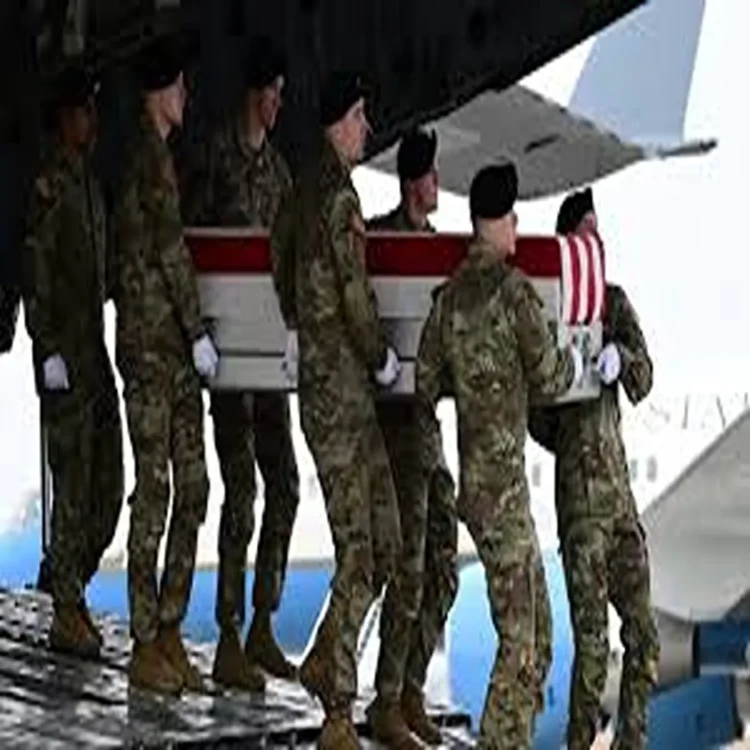
The strike resulted in the deaths of six American service members, while at least 20 others sustained injuries. Survivors reportedly had to rely on improvised medical care, using basic materials to treat wounds before arranging transport. Civilian vehicles were used to move the injured to nearby hospitals in Kuwait, indicating a lack of immediate emergency support at the base.
This account has raised questions about the readiness of on-site medical and evacuation systems, particularly in a region already considered vulnerable to retaliation.
Dispute over official account of the attack
The senators also challenged the Pentagon’s description of the incident. Secretary Hegseth had characterized the strike as a powerful attack that breached fortified defenses. However, individuals present during the incident reportedly rejected this version, stating that the facility lacked meaningful defensive capabilities altogether.
According to these accounts, requests for additional systems to counter drone threats had been made prior to the attack but were not fulfilled. Lawmakers cited this as a significant lapse, suggesting that the base was not equipped to respond effectively to known risks.
Absence of key defense systems
Further concerns were raised about the absence of critical air defense infrastructure at the location. The senators noted that the base did not have systems capable of intercepting drones, such as counter-rocket or mortar defense equipment. One survivor reportedly described the level of protection as effectively nonexistent.
The letter also referenced intelligence reports indicating that the site had been identified as a potential Iranian target. Despite these warnings, troop deployment at the location continued without significant reinforcement of defensive measures.
Broader concerns over regional preparedness
The inquiry extends beyond the Kuwait incident. Lawmakers argued that the Pentagon may have failed to adequately warn US-flagged vessels operating in the region about possible Iranian retaliation. This departure from established protocols, they said, left personnel at sea without clear guidance or evacuation plans for extended periods.
The senators expressed concern that these issues reflect a wider pattern of insufficient preparation and risk management during escalating regional tensions.
Demand for accountability and answers
In their letter, the lawmakers requested detailed explanations from the Defense Department. They asked why troops were stationed at a site considered vulnerable, why requests for additional protective systems were denied, and what steps are being taken to improve safety going forward. A response has been requested by May 11.
They emphasized that ensuring the safety of service members must remain a top priority, particularly during high-risk operations. The letter also called for more thorough planning and risk assessment in future missions to prevent similar incidents.
Senator Warren, in particular, criticized the handling of the situation, stating that leadership failed both in protecting troops and in providing an accurate account after the incident.