
Heritage – Delhi Renames SRDC While Debate Grows Over Historical Context
Heritage – The Delhi government’s decision to rename the Shahjahanabad Redevelopment Corporation (SRDC) as the Indraprastha Virasat Redevelopment Corporation has sparked a wider conversation about history, geography, and identity. The move appears aimed at reconnecting the capital’s modern image with references from ancient Indian tradition, particularly the legendary city of Indraprastha described in the Mahabharata.
Questions Around Historical Alignment
While governments hold the authority to rename public bodies, the decision has prompted historians and observers to examine whether the association between Indraprastha and Shahjahanabad is historically grounded. The concern is not about acknowledging ancient heritage, but about whether two distinct periods and geographies are being merged without sufficient evidence.
Scholars have long debated the exact location of Indraprastha. Excavations at Purana Qila have uncovered remains linked to the Painted Grey Ware culture, often connected to the later Vedic period. This has led some experts to associate the site with the Pandava capital. However, textual interpretations of the Mahabharata do not describe a compact city in the way medieval urban centers were structured.
Understanding Indraprastha’s Geography
Rather than a tightly defined city, Indraprastha is widely understood as part of a broader region along the Yamuna River. Historical interpretations suggest it functioned as a central administrative zone within a larger territorial expanse. Records indicate that a settlement named Inderpat existed near Purana Qila until the early 20th century, before it was cleared during the construction of New Delhi under British rule.
Traditional narratives also reference five key settlements—Panipat, Sonipat, Baghpat, Maripat, and Tilapat—granted to the Pandavas. These locations, spread across what is now the National Capital Region, reinforce the idea that Indraprastha was part of a wider cultural and political landscape rather than a single enclosed city.
A Distinct Identity of Shahjahanabad
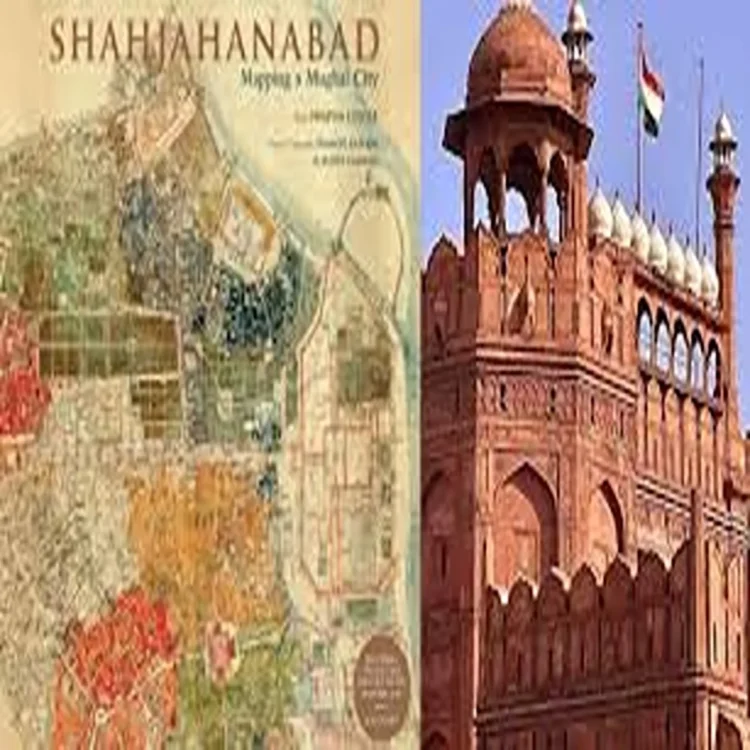
In contrast, Shahjahanabad represents a clearly documented chapter in Delhi’s history. Established in the 17th century by Mughal emperor Shah Jahan, it was designed as a fortified urban center with defined architecture and planning. Landmarks such as the Red Fort and Jama Masjid, along with its network of markets and residential areas, illustrate a well-preserved example of Mughal-era city design.
This distinction is important because Shahjahanabad is not just a physical space; it is a historical record of a specific period marked by Indo-Islamic architecture and urban planning. Blending it symbolically with an earlier and less precisely defined entity raises questions about historical accuracy.
Symbolism Versus Substantive Action
Renaming institutions is not uncommon and is often used to reflect contemporary priorities or cultural emphasis. However, experts argue that invoking Indraprastha in this context may serve more as a symbolic gesture than a historically grounded correction.
If the intention is to highlight ancient heritage, a more effective approach could involve developing a structured cultural circuit connected to the Mahabharata. Currently, such initiatives remain limited, with most attention focused on Kurukshetra, while other historically associated locations have evolved into modern industrial or transport zones.
Challenges Facing the Walled City
Meanwhile, Shahjahanabad itself continues to face pressing urban challenges. Issues such as overcrowding, encroachments, deteriorating infrastructure, and loss of heritage structures require immediate attention. Urban conservation in this area demands long-term planning, regulatory support, and active community involvement.
Critics note that changing the name of a redevelopment body does little to resolve these practical concerns. Instead, targeted investments and preservation strategies are needed to maintain the area’s historical character.
Balancing Heritage and History
The broader debate centers on how historical legacy should be acknowledged in a modern city. Indraprastha holds cultural and mythological significance that extends across a wide geographic region. Recognizing it meaningfully may require initiatives that reflect this scale rather than linking it narrowly to Old Delhi.
As the discussion continues, the focus remains on ensuring that efforts to honor the past are supported by historical understanding and practical measures that preserve existing heritage.