
Conflict – Displacement Crisis Deepens for Mothers and Newborns in Lebanon
Conflict – Mariam Zein gently holds her 11-week-old son on a thin mattress laid across the floor of a crowded shelter near Beirut, where her family has been living since violence forced them from their home. At 26, she had imagined welcoming her first child into a peaceful environment, but those hopes were quickly overshadowed by conflict.
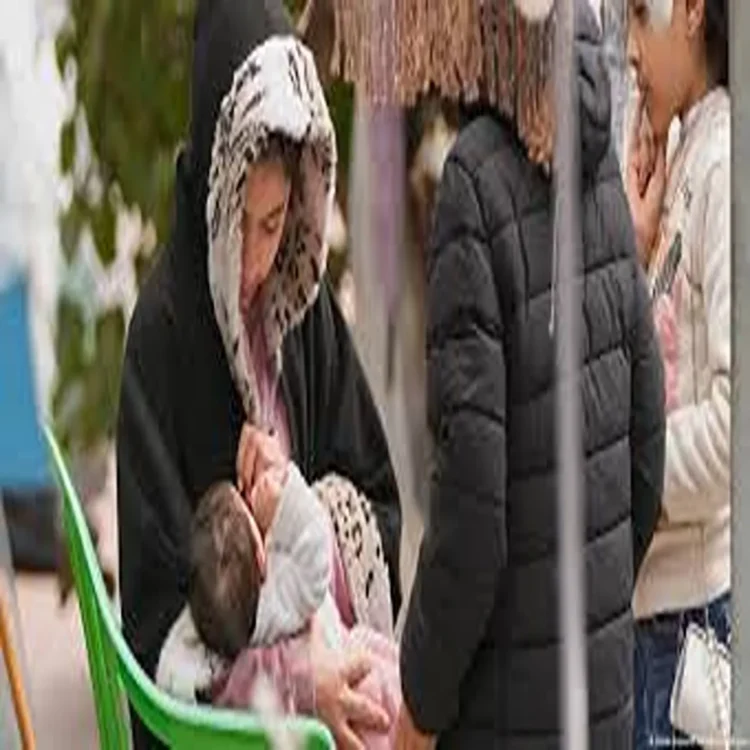
She recalls the anticipation she felt during the final weeks of her pregnancy, never expecting that her son would be born into uncertainty and displacement. Now, instead of settling into a home of their own, she watches him grow in a shared space filled with other displaced families. The experience, she says, has left her emotionally drained as she struggles to provide a sense of normalcy for her child.
Displacement Leaves Families in Uncertainty
Zein and her relatives fled southern Lebanon when fighting escalated on March 2, forcing large numbers of civilians to seek refuge in safer areas. Like many others, she has no information about whether her home still stands. Authorities report that thousands have lost their lives, while over a million people have been displaced across the country.
Temporary shelters in Beirut and surrounding areas are overwhelmed. Facilities designed for limited use now house hundreds of people, often lacking privacy and adequate resources. In Zein’s shelter alone, hundreds share cramped conditions, including several pregnant women and mothers with newborns.
Challenges in Caring for Newborns
Living conditions inside these shelters present serious challenges for new mothers. Zein explained that she had to stop breastfeeding due to the lack of privacy, turning instead to infant formula, which is both scarce and expensive. As her baby grows, even basic needs such as clothing have become difficult to meet.
Despite the hardships, she remains focused on keeping her child close and safe. Her primary concern, she says, is ensuring his well-being amid the uncertainty surrounding their future.
Rising Concerns Over Maternal Health
According to international aid agencies, hundreds of thousands of women and girls have been displaced, including thousands who are pregnant. Many of them are expected to give birth in the coming weeks, raising concerns about access to medical care.
Healthcare workers have stepped in to bridge the gap. Mobile clinics, often set up in temporary tents, provide essential services such as prenatal check-ups and basic medical screenings. Doctors working in these conditions warn that many women are missing critical tests due to displacement, increasing risks for both mothers and babies.
Medical professionals also highlight the psychological toll. Anxiety about safety, lack of proper follow-up care, and uncertainty about returning home all contribute to stress during an already vulnerable period.
Overcrowded Shelters Add to Strain
In another shelter set up inside a school building in central Beirut, 36-year-old Ghada Issa prepares for the birth of her third child. Displaced with her husband and two young children, she now lives in a small tent within a packed facility housing thousands.
She describes the environment as unsuitable for pregnancy, with limited access to basic amenities. Even simple tasks such as reaching communal toilets require navigating crowded spaces, adding to her discomfort.
Aid organizations have provided some relief, distributing essential baby supplies such as nappies and blankets. However, Issa acknowledges that without these donations, she would have little to prepare for her newborn.
Loss and Resilience Among Displaced Families
Further south in Sidon, another mother, Ghada Fadel, cares for her newborn twin boys in a converted classroom. She fled her village during the final months of her pregnancy, only to learn later that her home had been destroyed in an airstrike.
Everything she had prepared for her children was lost. Now, she raises them in a temporary space, relying on limited resources and community support.
Despite the hardships, her hopes remain simple. Like many displaced mothers, she dreams of returning home and giving her children a stable environment. For now, that possibility remains uncertain as families continue to navigate life shaped by conflict and displacement.