
Elections – Women’s Reservation Bill Sparks Sharp Political Divide in Lok Sabha
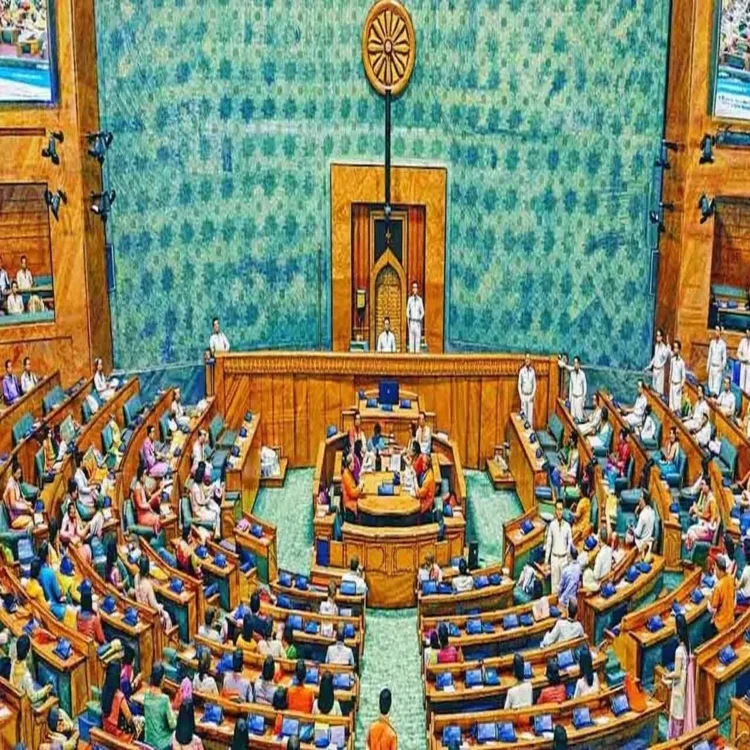
Elections – The debate over the Women’s Reservation Bill in the Lok Sabha on Friday extended well beyond the final vote count, revealing a deeper political struggle over representation, electoral strategy, and future governance priorities. While 298 members supported the Bill and 230 opposed it, the discussion reflected contrasting visions between the government and the Opposition on how women’s representation should be implemented.
Government Frames Bill as Historic Opportunity
For the ruling coalition, the Constitution (131st Amendment) Bill, 2026 was presented as a landmark initiative aimed at strengthening women’s participation in governance. Prime Minister Narendra Modi made a direct appeal to Members of Parliament ahead of the vote, urging them to rise above party lines and consider the broader significance of the legislation.
He called upon MPs to reflect on the role of women in their own lives and emphasized that the Bill offered a long-awaited chance to ensure fair representation for nearly half of India’s population. The government’s messaging positioned the proposal not just as policy, but as a defining moment in democratic inclusion.
Political Messaging Targets Women Voters
Union Home Minister Amit Shah reinforced the government’s stance by highlighting the political implications of opposing the Bill. He suggested that resistance could carry consequences in future elections, particularly among women voters, who are increasingly seen as a decisive electoral group.
Shah’s remarks indicated a broader strategy to consolidate support among women across regions and communities. By linking the Bill to long-term electoral outcomes, the government signaled its intent to make women’s representation a central theme in upcoming political campaigns.
Delimitation Link Remains Key Point of Contention
A core aspect of the government’s argument was the connection between women’s reservation and the process of delimitation. According to the ruling side, implementing reservation effectively requires a reorganization of constituencies, which would ensure balanced representation.
The government also sought to address concerns about regional disparities, particularly fears that some states might lose representation after delimitation. Officials maintained that no state would see a reduction in seats and described the process as a necessary structural adjustment rather than a political reshuffle.
Opposition Raises Concerns Over Electoral Design
The Opposition, however, strongly disagreed with this approach. Leader of Opposition Rahul Gandhi argued that the Bill was not merely about empowering women but also about reshaping the country’s electoral framework.
He stated that while his party supports women’s reservation in principle, it opposes linking the reform to delimitation. According to the Opposition, combining these elements introduces uncertainty and delays the immediate benefits of reservation.
This distinction allowed Opposition parties to present a unified position, emphasizing that their objection was not to the idea of women’s representation itself, but to how and when it would be implemented.
Federal Balance and Representation Debate Intensifies
Beyond procedural concerns, the Opposition also raised broader issues related to federal balance. Gandhi warned that changes tied to delimitation could alter political representation across states, particularly affecting southern and smaller regions.
This argument framed the Bill within a larger debate about maintaining equilibrium in India’s federal structure. The Opposition suggested that any reform impacting representation should be approached cautiously to avoid unintended consequences.
Bill Outcome Reflects Broader Political Divide
Although the Bill ultimately failed to secure the required two-thirds majority, the debate has already shaped political narratives on both sides. For the government, it represents an effort to build a long-term agenda centered on women’s empowerment and voter outreach.
For the Opposition, the episode has become a point of convergence, highlighting concerns about the design and timing of electoral reforms. The issue is likely to remain significant in future political discussions, particularly as parties prepare for upcoming elections.