
Elections – AIADMK Calls for Political Shift Ahead of Tamil Nadu Polls
Elections – The campaign for the upcoming Tamil Nadu Assembly elections has intensified, with political leaders stepping up their outreach to voters across the state. AIADMK candidate P. Saravanan, contesting from Madurai North, has expressed confidence that the electorate is looking for a change in leadership and governance.
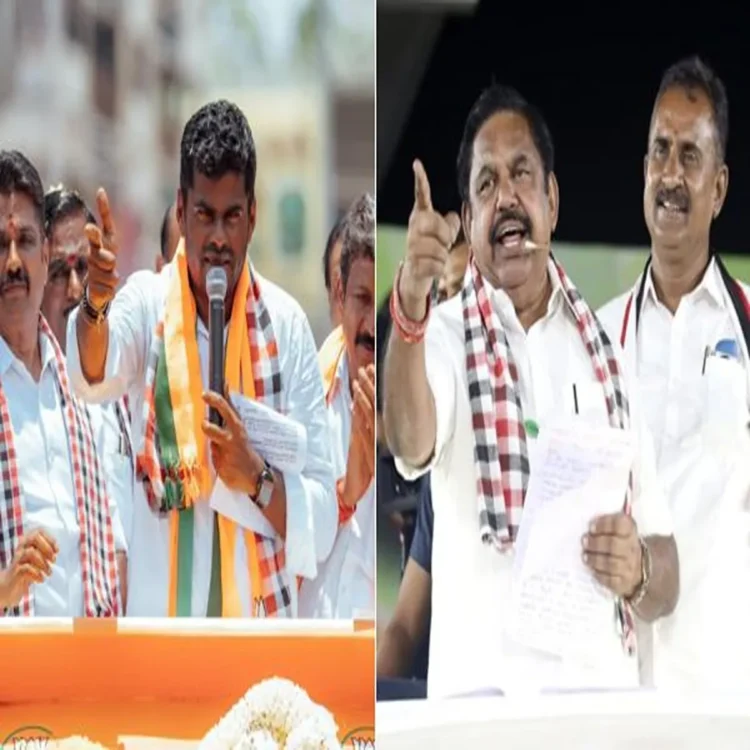
Appeal for Change in Leadership
Speaking during a campaign event on Friday, Saravanan said that people across Tamil Nadu are increasingly inclined toward a political shift. He urged voters to support the AIADMK alliance and its ‘Two Leaves’ symbol in all 234 constituencies. According to him, the party, under the leadership of Edappadi K. Palaniswami, is prepared to form the next government and bring a new direction to the state.
Saravanan emphasized that the alliance aims to deliver a governance model that focuses on development and administrative efficiency. He encouraged voters to participate actively in the electoral process and make a choice that, in his view, would shape the state’s future trajectory.
Criticism of the Incumbent Government
During his campaign in the Anna Nagar area, Saravanan criticized the ruling DMK government, alleging that it has not fulfilled the majority of its electoral promises. He claimed that only a small portion of commitments made during the previous election had been implemented, leading to dissatisfaction among sections of the public.
He further stated that the current political climate indicates a shift in voter sentiment. According to him, the AIADMK alliance is confident of securing a strong mandate in the elections, reflecting what he described as growing public support.
Poll Schedule and Key Dates
Tamil Nadu is scheduled to vote in a single phase on April 23, covering all 234 Assembly constituencies. The counting of votes will take place on May 4. Political parties have been actively campaigning across regions, focusing on local issues, governance records, and future development plans.
The election is being closely watched, as it is expected to influence the state’s political direction over the coming years. With multiple parties and alliances in the fray, the contest is anticipated to be competitive.
Debate on State-Centre Relations
Saravanan also highlighted the importance of coordination between the state and central governments. He suggested that having a state government aligned with the Centre could facilitate smoother implementation of development projects and access to resources.
He contrasted this approach with the current government’s stance, stating that differences between the state leadership and the central government could impact policy execution. He also noted a perceived shift among some voters toward national-level political alignment.
Opposition Response and Emerging Contest
Meanwhile, Tamil Nadu Chief Minister M.K. Stalin has expressed confidence in the DMK-led alliance’s prospects. He stated that the ruling coalition is prepared to face the elections and remains optimistic about retaining power. Stalin framed the contest as one between regional priorities and external influence, asserting that the state’s interests would prevail.
The main electoral battle is expected between the DMK-led Secular Progressive Alliance and the AIADMK-led National Democratic Alliance. Both alliances include several regional and national parties, making the contest multifaceted.
Adding a new dimension to the elections, actor-turned-politician Vijay is set to enter the political arena with his party, Tamilaga Vettri Kazhagam (TVK). His debut could potentially influence voter dynamics and turn the contest into a three-cornered fight in certain constituencies.
A Crucial Electoral Moment
As the campaign period continues, parties are focusing on addressing voter concerns, presenting their development agendas, and building momentum ahead of polling day. With diverse political narratives and competing visions for governance, the Tamil Nadu Assembly elections are shaping up to be a significant event in the state’s political landscape.