
Politics – Women’s Reservation Law Activated Ahead of Key Amendment Debate
Politics – The Women’s Reservation Act, 2023, which mandates 33 percent reservation for women in Parliament and state assemblies, has officially been brought into force with effect from April 16, 2026. The move comes just a day before a scheduled discussion and vote in the Lok Sabha on amendments aimed at enabling its implementation timeline.
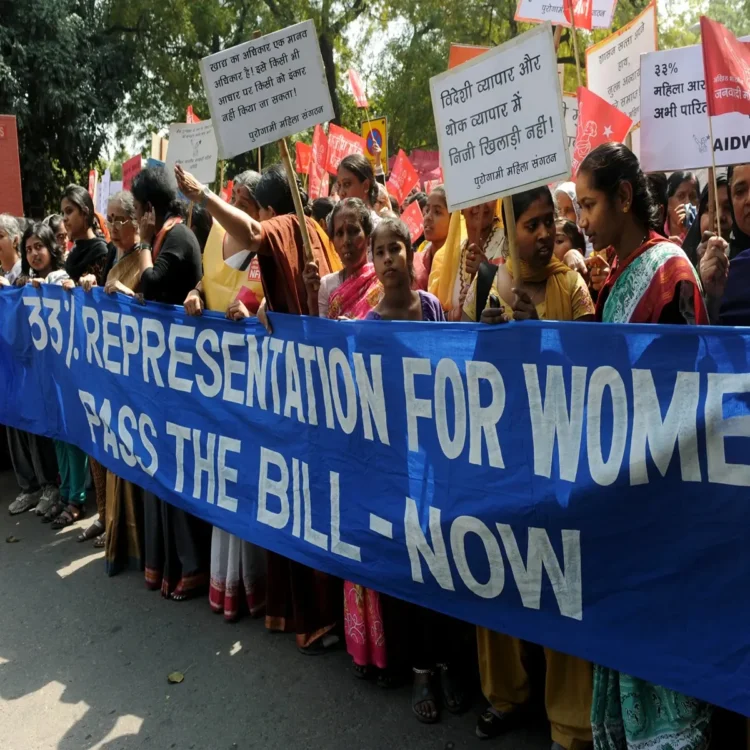
Law Brought into Effect Before Amendment Discussion
The government issued a late-night notification on Thursday to operationalise the long-pending legislation. This development triggered immediate reactions in the Lok Sabha on Friday, where members of the Opposition questioned the sequence of events. They raised concerns over why the law was formally enforced shortly after a bill proposing amendments to it had already been introduced and debated.
Congress leader KC Venugopal highlighted the timing of the notification, noting that it was issued around 10 pm, after discussions on the amendment bill had already begun. He argued that such a sequence raised procedural questions that required clarification from the government.
Opposition Questions Government’s Approach
Adding to the criticism, DMK MP Kanimozhi also expressed confusion over the rationale behind discussing amendments after notifying the main legislation. Several Opposition members collectively sought an explanation from Union Law Minister Arjun Ram Meghwal, who was present during the proceedings.
The concerns primarily revolved around legislative consistency and whether the process followed adhered to established parliamentary norms. Members pointed out that typically, amendments are considered after a law is fully in force, not alongside its notification.
Government Cites Technical Necessity
In response to the objections, government officials explained that bringing the Act into force was a necessary procedural step. According to them, amendments cannot be implemented unless the original law is active. Since the Women’s Reservation Act had not previously been enforced, any proposed changes would have lacked legal standing.
Officials clarified that although the Constitution Amendment Bill had been passed earlier, it had not technically become part of the Constitution due to the absence of formal enforcement. Therefore, activating the law on April 16 was essential to proceed with any modifications.
Another official referred to “technical reasons” behind the timing but did not provide detailed elaboration.
Implementation Still Linked to Future Delimitation
Despite the law now being in force, its provisions will not apply immediately to the current Lok Sabha or state assemblies. Officials confirmed that the reservation for women will only be implemented after a fresh delimitation exercise is conducted based on data from the next Census.
This means that while the legal framework is now active, its real-world impact will take time to materialise. The reservation is expected to come into effect only after the completion of delimitation, which is tied to post-2027 Census processes.
Background and Legislative Significance
The Women’s Reservation Act, also known as the Nari Shakti Vandan Adhiniyam, was passed by Parliament in September 2023. It marked a major legislative step toward improving gender representation in India’s political system by reserving one-third of seats in the Lok Sabha and state legislative assemblies for women.
However, the original law linked its implementation to delimitation following the next Census, effectively pushing its enforcement timeline further into the future, potentially beyond 2034.
To address this delay, the government has introduced three new bills currently under discussion in the Lok Sabha. These include the Constitution (One Hundred and Thirty-First Amendment) Bill, 2026, the Delimitation Bill, 2026, and the Union Territories Laws (Amendment) Bill, 2026. These proposed changes aim to enable the reservation policy to be implemented as early as 2029.
Notification Details
The official notification issued by the government stated that April 16, 2026, would be the date from which the provisions of the Act would come into force. This step formally integrates the law into the constitutional framework, allowing further legislative action to proceed.
The developments highlight both the government’s intent to accelerate implementation and the Opposition’s concerns over procedural clarity, setting the stage for continued debate in Parliament.