
Parliament – Lok Sabha to Vote on Women’s Reservation Bills Friday
Parliament – Voting on a set of three significant bills, including proposals linked to women’s reservation and constituency delimitation, is expected to take place in the Lok Sabha on Friday, following an extended debate among members.
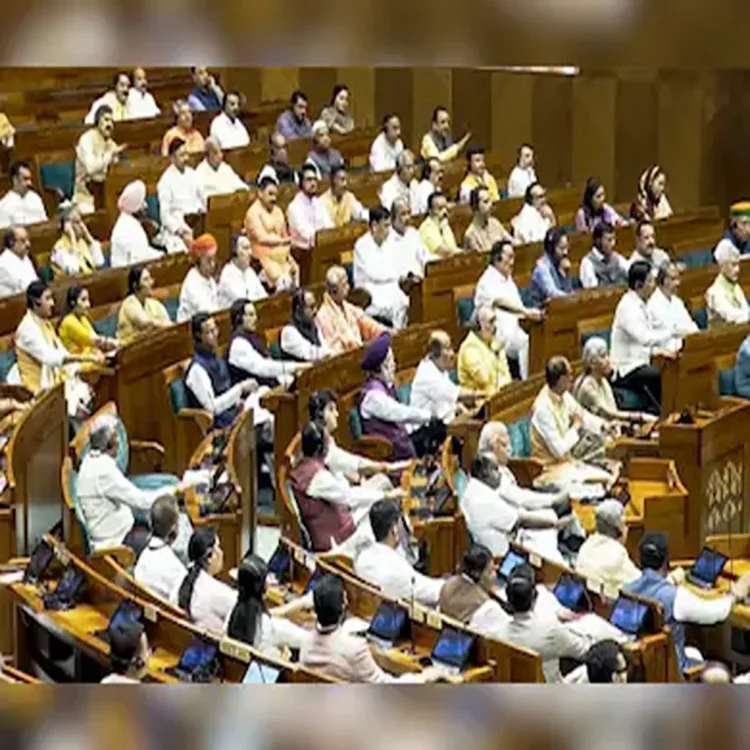
Extended Debate Scheduled Before Voting
Union Parliamentary Affairs Minister Kiren Rijiju informed the House that discussions on the proposed legislation would span several hours, ensuring members have sufficient time to present their views. He indicated that while an initial time frame of 12 hours had been considered, the duration could be increased if necessary.
Lok Sabha Speaker Om Birla later confirmed that the debate could extend between 15 and 18 hours, reflecting the importance of the issues under consideration. He assured members that adequate speaking time would be allotted to all sides before the final voting process begins, which is scheduled for Friday afternoon.
Key Bills Introduced in the House
Among the proposals placed before the House is the Constitution (One Hundred and Thirty-First Amendment) Bill, 2026. This bill aims to advance provisions related to women’s reservation and also facilitate the process of delimitation, which involves redrawing electoral constituency boundaries.
In addition, the Delimitation Bill, 2026, and the Union Territories Laws (Amendment) Bill, 2026, were also introduced. These legislative measures are part of a broader effort to address representation and administrative adjustments within the electoral framework.
Union Law Minister Arjun Meghwal formally introduced the constitutional amendment bill, marking a key step forward in its legislative journey. The introduction followed earlier approval from Members of Parliament, allowing the bill to be taken up for detailed discussion.
Voting Process and Opposition’s Demand
The introduction of the bill was not without contention. Members of the Opposition called for a formal division of votes instead of relying on the usual voice vote system. This led to a recorded voting process in the House.
According to the figures announced by the Speaker, 251 members supported the introduction of the bill, while 185 voted against it. The numbers, he noted, remain subject to verification and adjustment if required.
Understanding the Division Mechanism
Under normal circumstances, parliamentary decisions in the Lok Sabha are made through voice voting, where members express agreement or disagreement verbally. However, when the outcome is unclear or challenged, a division is conducted.
During such instances, the Automatic Vote Recorder system is used to capture votes under three categories: Ayes, Noes, and Abstain. This ensures transparency and accuracy in the decision-making process.
In the recent proceedings, vote slips were also used alongside the electronic system. A total of 333 members participated in this round of voting, and notably, no abstentions were recorded.
Provision for Vote Changes and Transparency
Officials clarified that members have the option to revise their votes if needed by requesting the use of vote slips. This flexibility is intended to ensure that each vote accurately reflects the member’s final position.
The Secretary General of the Lok Sabha had earlier communicated this provision to the House, reinforcing the procedural safeguards in place during important legislative decisions.
Political Significance and Next Steps
The bills have attracted considerable attention from both the government and the Opposition, highlighting their political and constitutional importance. The demand for a recorded vote reflects heightened engagement and scrutiny from various parties.
As the House prepares for the final round of voting, the outcome will play a crucial role in shaping future discussions on representation, electoral boundaries, and legislative reforms.
The extended debate scheduled before the vote is expected to bring forward diverse perspectives, ensuring that the decision is made after thorough consideration.