
Politics – Rahul Gandhi Targets TMC and BJP Over Bengal Industry Decline
Politics – Congress leader Rahul Gandhi on Tuesday began his campaign in West Bengal with sharp criticism directed at both the ruling Trinamool Congress (TMC) and the Bharatiya Janata Party (BJP). Addressing public meetings in Raiganj and other parts of North Dinajpur and Malda, Gandhi accused the two parties of weakening the state’s industrial base and failing to create employment opportunities.
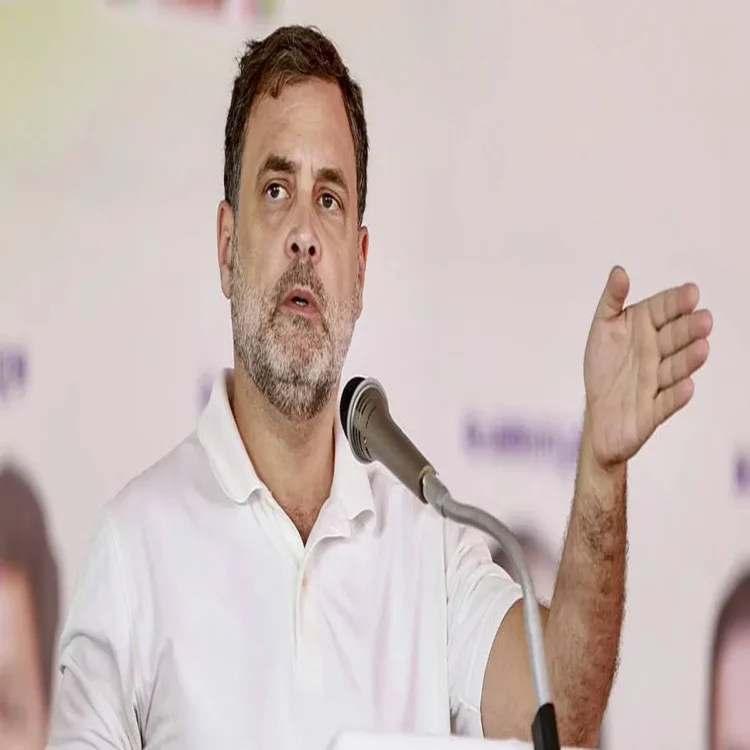
Campaign Begins in Key Districts
Launching his party’s election push, Gandhi chose regions that were once considered strongholds of the Congress. His rallies in Raiganj and Malda marked a significant attempt to reconnect with voters in areas where the party had previously enjoyed considerable support.
This election is notable as the Congress is contesting independently, without forming alliances with either the TMC or Left parties. In earlier elections, the party had often partnered with regional or national groups to challenge the BJP’s growing influence.
Allegations Against TMC and BJP
During his speeches, Gandhi alleged that both the ruling TMC and the BJP have contributed to the decline of industries in West Bengal. He claimed that instead of focusing on development and job creation, both parties have engaged in political strategies that have harmed the state’s economic prospects.
He further argued that the TMC’s governance has indirectly allowed the BJP to expand its presence in the state. According to him, if the ruling party had focused on effective administration and reducing violence, the BJP would not have gained significant ground in West Bengal.
Concerns Over Central Funding
Gandhi also criticized the BJP-led central government for what he described as inadequate financial support to West Bengal. He alleged that substantial funds meant for the state were withheld, affecting development projects and welfare schemes.
Referring to employment programs, he pointed out reductions in funding for initiatives like MGNREGA, which he said has impacted rural livelihoods. He also noted the absence of major projects for the state in the Union budget, suggesting that this lack of investment has further slowed economic growth.
Focus on Employment and Governance
A recurring theme in Gandhi’s address was the need for job creation and stable governance. He emphasized that political conflicts and violence have discouraged investment and hindered industrial progress in the state.
He urged voters to consider alternatives that prioritize economic development and social stability. His remarks positioned the Congress as a party aiming to restore industrial growth and improve employment conditions in West Bengal.
Changing Political Dynamics
The decision of the Congress to contest alone reflects shifting political dynamics in the state. By stepping away from previous alliances, the party appears to be testing its independent strength and attempting to rebuild its base among voters.
Gandhi’s campaign signals a more direct approach in challenging both the ruling party and the BJP, highlighting issues of governance, funding, and economic performance. As the election approaches, these themes are expected to remain central to the political discourse in West Bengal.