
Election – Hungary Signals Major Political Shift After Orban Concedes Defeat
Election – Hungary has entered a new political phase after long-time Prime Minister Viktor Orban acknowledged defeat in the country’s latest parliamentary election, marking a turning point in its domestic and international trajectory. The outcome has been interpreted as a clear signal from voters seeking change after more than a decade and a half of continuous leadership under Orban’s administration.
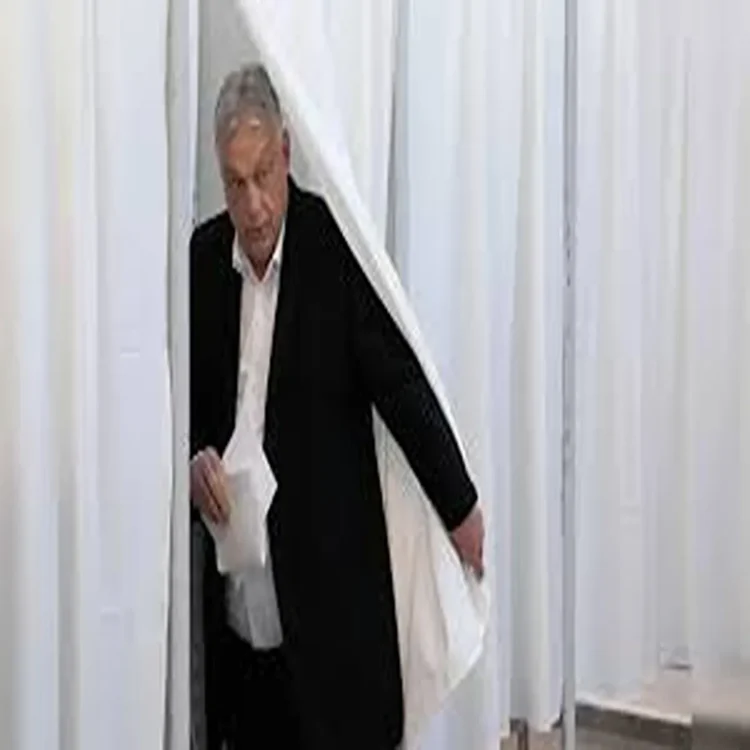
EU Leaders Respond to Hungary’s Electoral Outcome
European Commission President Ursula von der Leyen reacted swiftly to the results, describing the development as a reaffirmation of Hungary’s place within the European framework. In a public message shared on social media, she indicated that the outcome reflected a renewed commitment by Hungary toward Europe, adding that the unity of the European Union had been strengthened by the decision.
Her remarks highlighted the broader significance of the election beyond Hungary’s borders, suggesting that the results may influence the balance of political alignment within the EU.
Decisive Victory for Tisza Party
Preliminary official figures revealed a strong performance by Peter Magyar’s centre-right Tisza party. With nearly all votes counted, the party secured a commanding majority in the 199-seat parliament. According to reported figures, Tisza won 138 seats, translating to more than half of the total vote share.
In contrast, Orban’s Fidesz party experienced a notable decline, securing only 55 seats. This represented a significant drop compared to its dominance in previous elections, reflecting a shift in voter sentiment.
The scale of the victory underscores a substantial transformation in Hungary’s political landscape, ending a 16-year period during which Fidesz maintained firm control over the government.
Orban Concedes as Political Era Ends
As early results made the outcome clear, Viktor Orban formally accepted defeat. His acknowledgment effectively ended any possibility of forming a new majority government, bringing closure to one of the most enduring political tenures in Hungary’s recent history.
Observers have described the election as one of the most consequential in decades, not only because of the leadership change but also due to its implications for Hungary’s relationship with European institutions.
Magyar Outlines Pro-European Vision
Addressing supporters in Budapest following his victory, Peter Magyar emphasized a renewed commitment to strengthening Hungary’s position within Europe. Speaking before a large gathering, he stated that his administration would focus on rebuilding ties with Western allies and aligning the country more closely with European values and institutions.
Magyar noted that Hungary’s role in Europe would remain central to its national interests, underlining a policy direction that contrasts with the previous government’s often contentious relationship with the EU.
Foreign Policy Priorities and EU Engagement
Magyar also shared details of his immediate diplomatic agenda. He indicated that his first official visits would include key European capitals such as Warsaw and Vienna, followed by a trip to Brussels. These visits are expected to focus on restoring cooperation and addressing ongoing issues with EU institutions.
A key priority for the incoming government will be securing access to suspended European Union funds. These funds, worth billions of euros, have been withheld due to concerns raised in recent years. Magyar signaled his intention to work toward resolving these matters and unlocking financial support for Hungary.
A Defining Moment in Hungary’s Political Direction
The election results represent more than a routine change in leadership. They point to a broader reorientation of Hungary’s political and diplomatic approach, particularly in relation to the European Union. With a strong parliamentary majority, the new government will have the mandate to pursue its agenda and reshape the country’s policies.
As Hungary transitions into this new phase, attention will remain focused on how effectively the incoming leadership can deliver on its promises and navigate the challenges ahead.