
Economy – US Pushes Private Sector to Counter China Global Reach
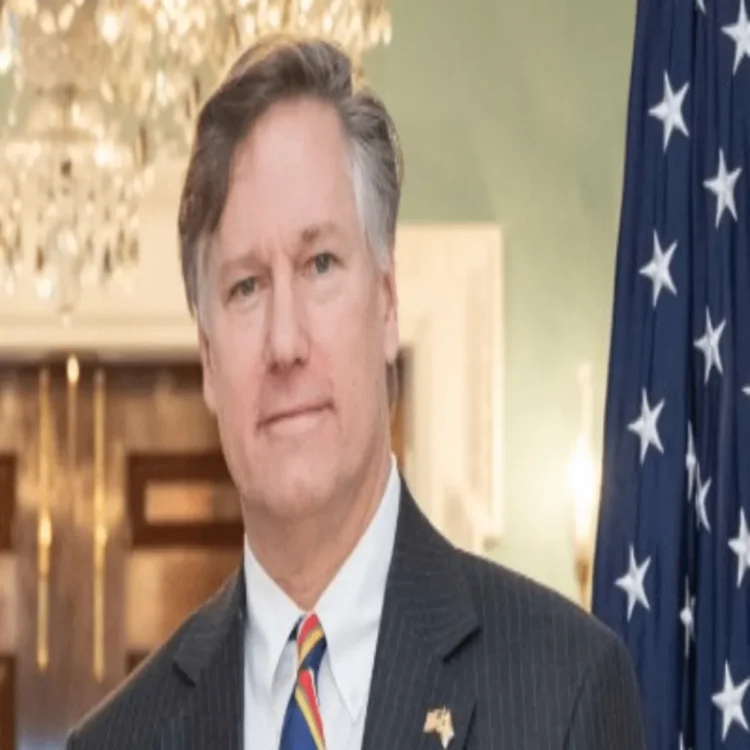
Economy – The United States is placing renewed emphasis on mobilising its private sector to expand its presence in international markets, aiming to balance China’s growing economic influence. Speaking at a policy forum, Deputy Secretary of State Christopher Landau highlighted the importance of commercial diplomacy as a central pillar of US foreign policy and long-term global engagement.
Commercial diplomacy gains strategic importance
Landau described economic engagement as essential not only for geopolitical competition but also for ensuring stability across regions. He stressed that American businesses must play a more active role abroad if the country hopes to remain competitive. According to him, the challenge lies in ensuring that US companies can effectively compete with Chinese enterprises that have established a strong presence in many parts of the world.
He pointed out that while many countries express a preference for working with American firms, they often turn to China because of its consistent involvement and ready financing options. This imbalance, he suggested, can only be addressed if US companies are more visible and proactive in global markets.
Addressing barriers for US companies
A significant part of Landau’s remarks focused on the obstacles that discourage American firms from expanding overseas. These include concerns over political and financial risks, limited access to reliable information, and complex regulatory environments. He noted that some of these risks may be overstated and called for better mechanisms to help businesses evaluate and manage them effectively.
The US government, he said, has a role to play in reducing uncertainty and providing clearer guidance so that companies can make informed decisions about international investments. By improving risk assessment and offering support, Washington hopes to encourage more firms to explore opportunities beyond domestic markets.
Three-part approach to economic engagement
Landau outlined a structured strategy for strengthening commercial diplomacy, describing it as a “three-legged stool.” This approach involves expanding export opportunities, promoting outbound investment by US companies, and attracting foreign investment into the United States.
He emphasised that the goal is not to create a zero-sum environment but to build mutually beneficial partnerships. According to him, successful economic relationships are based on shared gains, where both sides benefit from increased trade and investment.
Regional focus and emerging opportunities
The Western Hemisphere was identified as a natural priority for US economic engagement due to geographic proximity and existing supply chain connections. Landau also pointed to countries like Venezuela as potential long-term opportunities, noting that despite current challenges, such economies possess significant natural resources and growth potential.
He suggested that targeted investment and economic cooperation could help revive struggling economies while also creating opportunities for American businesses.
Economic growth as a stabilising force
Beyond competition, Landau highlighted the broader role of economic development in reducing conflict and instability. He argued that improving economic conditions can address underlying issues in politically fragile regions, making prosperity a key factor in maintaining peace.
He cited examples where investment-driven development has contributed to easing tensions and fostering cooperation, reinforcing the idea that economic tools can complement traditional diplomacy.
Private capital seen as key to future growth
Discussions at the forum reflected a wider agreement among policymakers and financial leaders that private sector investment will be crucial for global economic growth. In many developing economies, most new jobs are expected to come from private enterprises rather than government initiatives.
This trend underscores the need for stronger collaboration between governments and businesses. Landau encouraged corporate leaders to engage more actively, signalling that policymakers are ready to support their efforts and address their concerns.
Evolving approach to global competition
In recent years, the United States has increasingly incorporated economic strategy into its foreign policy, particularly in response to China’s Belt and Road Initiative. New tools and institutions have been introduced to support overseas investments and reduce associated risks.
Landau’s remarks reflect a broader shift toward integrating economic priorities with diplomatic efforts. By strengthening the role of its private sector, the US aims to enhance its global influence while contributing to sustainable economic development worldwide.