
Politics – Concerns Rise Over Delimitation Impact on Representation Balance
Politics – A day after the Prime Minister stated that southern states would not lose seats in the proposed delimitation exercise, fresh concerns have emerged from the opposition regarding its broader implications. Congress leader and Lok Sabha MP Manickam Tagore has cautioned that the move could alter the balance of political representation and weaken certain democratic safeguards if not handled carefully.
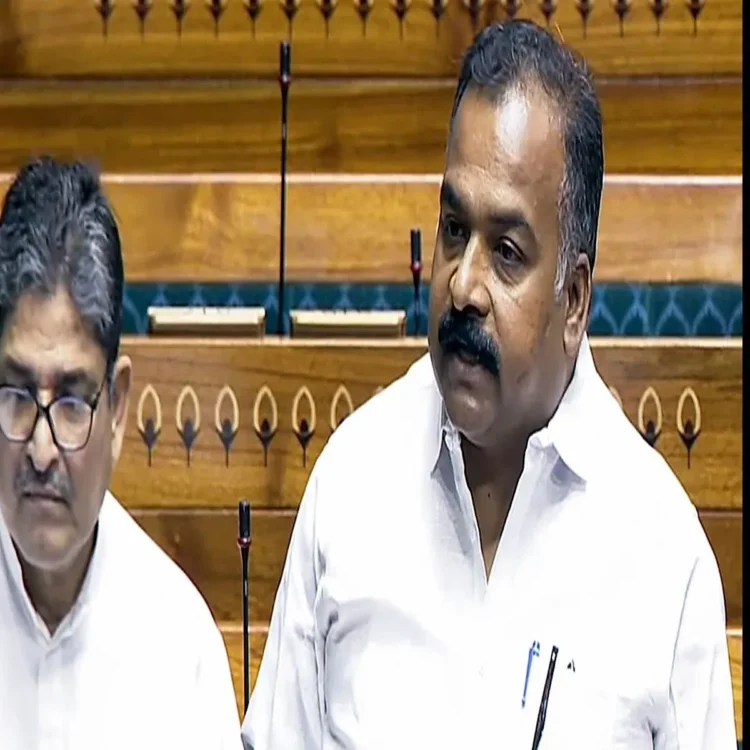
Questions Raised Over Delimitation Strategy
Tagore suggested that the Centre’s approach to advancing delimitation may not be purely administrative. According to him, the timing of the move could be linked to ongoing discussions around representation for Other Backward Classes within the proposed women’s reservation framework. He argued that without updated caste-based data, fair allocation within reserved seats may not be possible.
He emphasized that earlier indications from the government had outlined a sequence: census first, followed by delimitation, and then implementation of women’s reservation. Any shift away from this order, he noted, raises legitimate concerns about transparency and intent.
Demand for Wider Consultation
The Congress leader called for an inclusive dialogue involving key stakeholders, including the Prime Minister, the Leader of the Opposition, and representatives from various political parties. He stressed that such a significant exercise should not proceed without consensus, as it directly affects the democratic structure of the country.
According to Tagore, a consultative framework would help ensure that all regions and communities receive fair representation, especially in a diverse country with varying population dynamics.
Concerns About Regional Representation
One of the major issues highlighted is the possible increase in Lok Sabha seats. Reports suggest that the total number of seats could rise significantly, potentially adding hundreds of new constituencies. While this expansion is partly aimed at accommodating the women’s reservation policy, its distribution across regions remains a point of debate.
Tagore pointed out that although southern states may gain additional seats in absolute numbers, their proportional influence in Parliament could decline compared to northern states. He noted that population growth trends differ across regions, which could lead to uneven political weight despite an overall increase in representation.
He further warned that not only southern states but also western and northeastern regions could face similar disadvantages if the seat allocation is not carefully balanced.
Women’s Reservation and OBC Representation Debate
The Congress party has consistently supported the idea of reserving seats for women in Parliament. However, Tagore reiterated that such a policy must be implemented in a way that reflects social diversity. He argued that a caste-based census would provide essential data to ensure that women from OBC communities receive equitable representation within the quota.
Without such data, he cautioned, there is a risk that the benefits of reservation may not be distributed fairly across different social groups.
Criticism Over Special Session Timing
Tagore also questioned the timing of the special parliamentary session called to pass the women’s reservation bill. He noted that the session is scheduled close to upcoming elections in key states such as West Bengal and Tamil Nadu, which could affect the participation of elected representatives.
He expressed concern that the Business Advisory Committee was not adequately informed about the session in advance. According to him, greater transparency and coordination with the opposition are essential for maintaining trust in parliamentary processes.
Broader Implications for Democratic Processes
The ongoing debate highlights deeper questions about how electoral reforms should be implemented in a rapidly changing political landscape. While delimitation aims to adjust representation based on population changes, its execution requires careful consideration of regional balance, social equity, and institutional transparency.
As discussions continue, the demand for a more inclusive and data-driven approach is likely to remain at the centre of the political discourse.