
Policy – Government counters claims over foreign funding law changes
Policy – The Union government has pushed back against criticism surrounding the proposed amendments to foreign funding regulations, stating that concerns raised in Kerala are based on misinformation rather than facts.
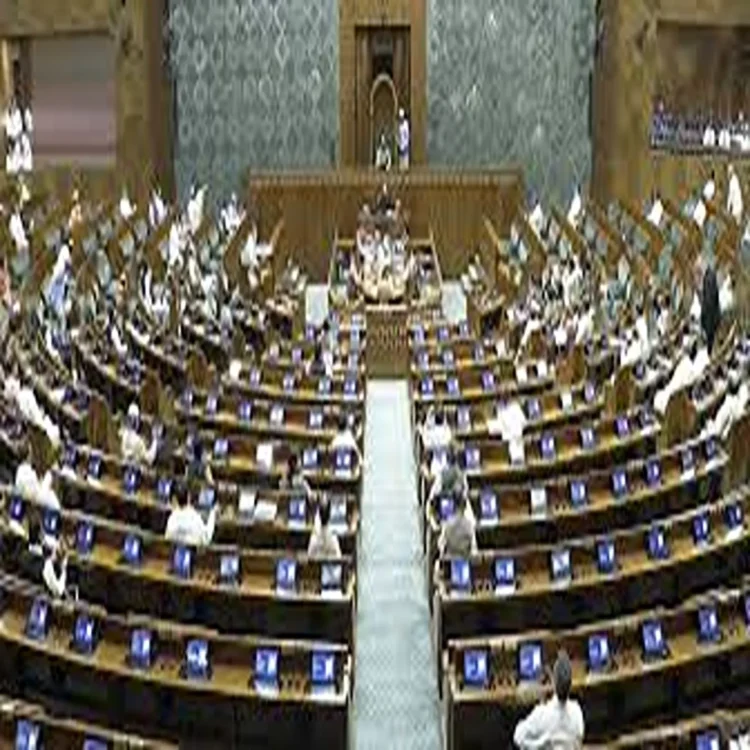
Government Responds to Allegations in Kerala
Union Minister Kiren Rijiju has said the Centre is ready to counter what he described as misleading narratives being circulated by political opponents regarding the Foreign Contribution (Regulation) Amendment Bill, 2026. Addressing the issue on Friday, he maintained that both Congress and Left parties in Kerala have presented an inaccurate picture of the proposed changes.
According to Rijiju, the government has taken note of various concerns but believes that several claims lack factual basis. He emphasized that if such narratives continue, the Centre would publicly clarify its position and present what it considers the truth behind the legislation.
Dialogue with Christian Groups
The minister also confirmed that discussions have been held with representatives of Christian missionary organisations in Kerala. These conversations, he said, were aimed at addressing doubts and ensuring transparency around the proposed amendments.
He underlined the importance of open communication, noting that the government is willing to engage with all stakeholders through dialogue. Rijiju added that feedback from these meetings has been acknowledged and that efforts are ongoing to resolve concerns in a constructive manner.
Clarification on Government Intentions
Rijiju rejected allegations that the amendments are targeted at any particular religious or social group. He stated that the government’s objective is not to interfere with religious practices or discriminate against any community.
He further said that the Centre has already addressed several misunderstandings and reiterated that the policy changes are administrative in nature. According to him, the aim is to strengthen oversight mechanisms rather than impose restrictions based on identity.
Focus on Minority Welfare
Highlighting the government’s approach towards minority communities, Rijiju asserted that greater attention is now being given to groups that were previously overlooked. He pointed out that smaller minority communities are also receiving recognition and support under current policies.
At the same time, he criticised the Congress party’s past approach, alleging that it treated certain communities, particularly Muslims, as a political vote base. He argued that such strategies are not beneficial in the long term and stressed that the present government aims to adopt a more inclusive approach.
Impact of the Proposed Amendments
The minister clarified that the proposed changes to the law would primarily affect organisations that are not in compliance with existing regulations. He stressed that only accounts found to be operating outside legal norms would face action.
The amendment bill outlines provisions under which an organisation’s registration could cease if its certificate expires, is not renewed, or if renewal is denied by the authorities. It also proposes the creation of a designated authority responsible for overseeing foreign contributions and related assets.
Framework for Oversight and Management
Under the proposed system, there would be a structured mechanism to manage foreign funds, including their supervision and potential disposal when necessary. The government says this framework is intended to ensure transparency and accountability in the handling of foreign contributions.
Officials believe that clearer rules and monitoring systems will help prevent misuse while allowing legitimate organisations to continue their work without disruption.
Continuing Political Debate
The issue has sparked a broader political debate, particularly in Kerala, where concerns among civil society groups and religious organisations have gained attention. While the government insists the amendments are administrative and necessary, opposition parties continue to question their potential impact.
As discussions continue, the Centre has signalled its willingness to engage further with stakeholders, while also maintaining that it will challenge what it sees as incorrect or misleading claims about the legislation.