
SpacePolicy – US Lawmaker Pushes Plan for Permanent Moon Base by 2030
SpacePolicy – The United States is moving toward a renewed long-term presence on the Moon, as a senior lawmaker has introduced fresh legislation calling for the creation of a permanent lunar outpost within this decade.
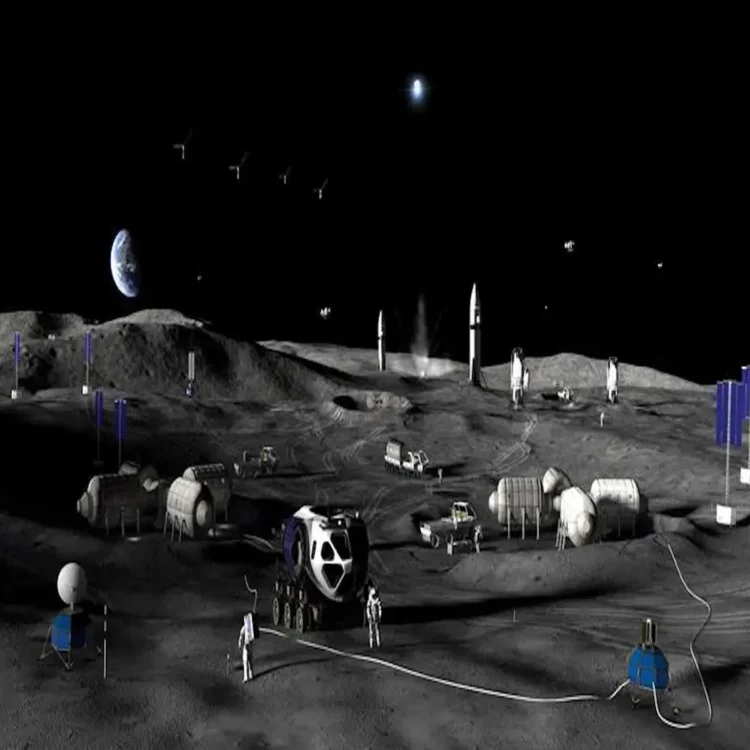
A new bill presented by Congressman Keith Self seeks to direct NASA to begin building foundational infrastructure on the Moon by December 31, 2030. The proposal comes at a time when global competition in space exploration is intensifying, particularly with China accelerating its own lunar ambitions.
Legislative Push Follows Historic Artemis Mission
The timing of the proposal is notable. It was unveiled shortly after the successful launch of the Artemis II mission, which marked the first human journey toward lunar orbit in more than 50 years. The mission is seen as a key step in NASA’s broader plan to return astronauts to the Moon and eventually establish a sustained presence there.
Speaking after the launch, Self emphasized that while the mission was a significant milestone, it should not be viewed as the end goal. He argued that a permanent foothold on the Moon is essential if the United States intends to maintain its leadership in space exploration.
Focus on Strategic Lunar South Pole
According to the proposed legislation, NASA would be required to begin initial construction efforts at the Moon’s south pole. This region has drawn increasing attention from scientists and policymakers due to its potential resources.
Water ice deposits in permanently shadowed craters could be converted into fuel and breathable oxygen, making long-term missions more feasible. In addition, the area is believed to contain valuable materials such as helium-3 and rare earth elements, which could play a role in future energy and manufacturing technologies.
Economic Opportunities Drive Policy Direction
Self framed the initiative not only as a strategic move but also as an economic opportunity. He highlighted the possibility of developing a new industrial ecosystem centered around lunar resources, including mining, manufacturing, and construction in space.
He noted that several American companies are already working on technologies related to space infrastructure and resource extraction. However, he stressed that sustained government support and a permanent presence on the Moon would be necessary to fully unlock these opportunities.
Rising Competition with China
The proposal also reflects growing concern in Washington over China’s progress in space exploration. The China National Space Administration has publicly outlined plans to establish a lunar research station near the Moon’s south pole before the end of the decade.
Self described the situation as a competitive race rather than a collaborative effort. He pointed out that international rules governing the use of lunar resources remain unclear, suggesting that the country that establishes an early and lasting presence could influence future regulations.
Artemis Program Seen as Foundation for Expansion
NASA’s Artemis program, which includes the Orion spacecraft used in Artemis II, is widely viewed as the backbone of America’s return to deep space missions. The current mission involves a crew of four astronauts conducting a flyby of the Moon, setting the stage for future landings.
Supporters of the new bill argue that building on Artemis achievements with a permanent outpost would ensure continuity and provide long-term benefits, both scientifically and economically.
Domestic Impact and Long-Term Vision
Beyond space exploration, the proposed initiative is expected to have implications for the US economy. Lawmakers backing the plan believe it could generate jobs, stimulate innovation, and strengthen the country’s position in advanced technologies.
The legislation had previously been included in a broader NASA reauthorization package and had passed through committee earlier this year. It has now been reintroduced as a standalone bill, signaling a renewed push to prioritize lunar infrastructure development.
As the global race to the Moon accelerates, the proposal underscores a broader shift toward treating lunar exploration as both a strategic priority and an economic frontier.