
Security – Rajya Sabha Passes CAPF Reform Bill Amid Opposition Protest
Security – The Rajya Sabha on Wednesday approved the Central Armed Police Forces (General Administration) Bill, 2026 through a voice vote, even as several opposition members staged a walkout during the proceedings. The legislation aims to introduce a common administrative structure for personnel across the Central Armed Police Forces (CAPFs), replacing the existing system where each force follows separate service rules.
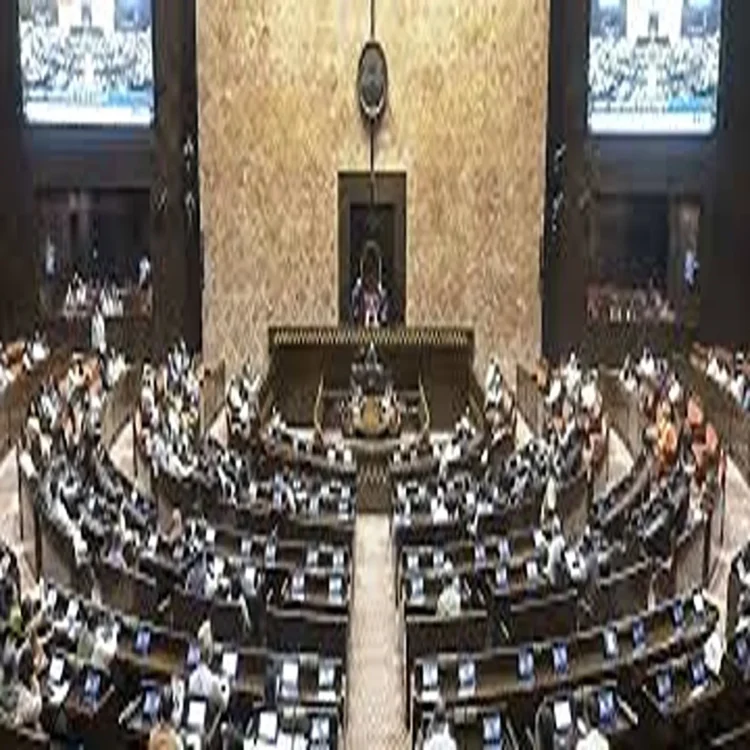
Government Highlights Need for Unified Framework
Responding to the discussion in the Upper House, Minister of State for Home Affairs Nityanand Rai stated that the bill is designed to strengthen the country’s internal security framework. He clarified that the intention behind the proposal is not merely legislative but rooted in improving governance within the forces.
According to the minister, the current system suffers from inconsistencies in service conditions, cadre management, and appointment processes. He said the new law seeks to address these issues by creating a uniform structure that enhances coordination and operational efficiency. Rai also emphasized that streamlining these aspects would help improve morale among personnel and ensure better career management across the forces.
Opposition Raises Concerns Over Process and Impact
Despite the government’s assurances, opposition parties expressed strong reservations about the bill. Their protest culminated in a walkout, with members demanding that the proposal be referred to a parliamentary select committee for further examination.
Leader of the Opposition Mallikarjun Kharge criticized the government’s response, stating that several critical concerns remained unaddressed. He pointed to issues such as the institutionalisation of deputation, its potential impact on the morale and career progression of officers, and the absence of broader consultation with stakeholders. Kharge also mentioned concerns regarding compliance with judicial directions and the lack of adequate representation in the decision-making process.
Treasury Benches Accuse Opposition of Disruption
In response to the walkout, Leader of the House JP Nadda accused opposition members of avoiding meaningful debate. He said their actions reflected a lack of respect for parliamentary procedures and suggested that they were not interested in engaging constructively on the issue.
The exchange highlighted the sharp divide between the government and opposition over the bill, with both sides maintaining firm positions on its intent and implications.
Key Provisions on Deputation and Appointments
One of the significant aspects of the bill relates to the appointment of Indian Police Service (IPS) officers within the CAPFs. The proposed framework specifies that 50 percent of Inspector General-level posts will be filled through deputation, while at least 67 percent of Additional Director General-level positions will also be occupied by deputed officers.
These provisions have been a point of contention, with critics arguing that they may affect promotional opportunities for officers within the CAPFs, while the government maintains that they are necessary for maintaining administrative balance and expertise.
Background of Supreme Court Ruling
The introduction of the bill follows a recent judicial development. In October last year, the Supreme Court declined to review its earlier 2025 judgment, which had directed the government to gradually reduce the deputation of IPS officers in CAPFs up to the Senior Administrative Grade level. The court had also instructed authorities to carry out a cadre review within six months.
The new legislation is seen as part of the government’s broader response to that ruling, although opposition members argue that it does not fully align with the spirit of the court’s directions.
Diverging Views on Reform
Members from the ruling alliance described the bill as a long-awaited reform that would bring clarity and uniformity to the functioning of the CAPFs. They argued that a standardized system is essential for modernizing administrative practices and strengthening internal security.
On the other hand, opposition parties labeled the proposal as discriminatory and warned that it could undermine institutional autonomy. They stressed the need for wider consultation and a more balanced approach before implementing such significant changes.
The passage of the bill amid protest underscores the ongoing debate over how best to manage and reform India’s paramilitary forces while balancing efficiency, fairness, and institutional integrity.