
WestAsiaCrisis – Government Calls All-Party Meet to Address Regional Tensions
WestAsiaCrisis – The Centre is set to convene an all-party meeting on Wednesday evening to update political leaders on the fast-changing situation in West Asia, as concerns grow over its wider impact on India’s economy and national security.
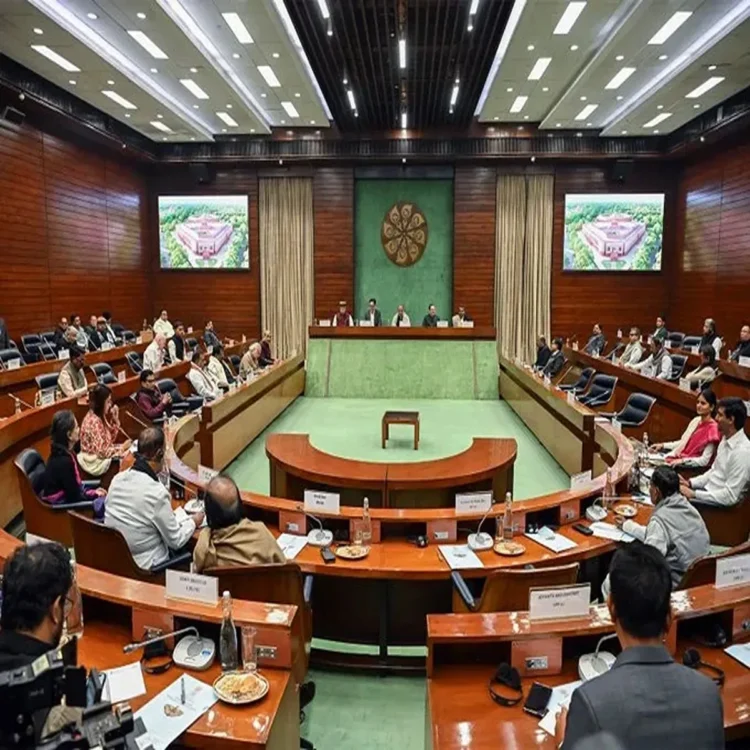
The meeting will take place at 5 pm within the Parliament complex and will be led by Defence Minister Rajnath Singh. External Affairs Minister S. Jaishankar is expected to present a detailed briefing, outlining the current developments in the region and India’s diplomatic position in response to the crisis.
Government Moves to Build Political Consensus
The decision to hold this meeting comes in the wake of Prime Minister Narendra Modi’s recent remarks in Parliament, where he described the situation in West Asia as an “unprecedented crisis” with potential long-term implications. The government appears keen to ensure that all political parties are informed and aligned on the evolving scenario.
By initiating this dialogue, the Centre aims to foster a broader political understanding of the issue, particularly as global tensions continue to escalate and uncertainties persist.
Disruptions in Trade and Energy Markets
The ongoing conflict, now stretching into its fourth week, has significantly affected crucial maritime routes, especially through the Strait of Hormuz. This passage is a vital artery for global oil shipments, and disruptions here have triggered fluctuations in international energy prices.
Such volatility has raised concerns about supply chain stability and inflationary pressures, both of which could have a direct bearing on India’s economy. The government is closely monitoring these developments while engaging with stakeholders to assess potential risks.
Opposition Calls for Detailed Parliamentary Debate
Opposition parties have been urging the government to allow a comprehensive discussion on the matter within Parliament. Congress leaders, in particular, have expressed dissatisfaction with the decision to hold a briefing instead of a full-fledged debate.
In the Rajya Sabha, Leader of the Opposition Mallikarjun Kharge questioned the approach, stating that the seriousness of the situation warranted an in-depth discussion in the House rather than a limited interaction.
Political Reactions and Criticism
Rahul Gandhi, Leader of the Opposition in the Lok Sabha, also voiced criticism of the government’s handling of foreign policy. He alleged that India’s external engagements have been influenced by personal considerations rather than national priorities.
While acknowledging the importance of the all-party meeting, Gandhi mentioned that he would not be able to attend due to a prior commitment in Kerala. His remarks add to the broader political discourse surrounding India’s response to international crises.
Security Preparedness Under Review
The upcoming meeting follows a high-level security review chaired by Defence Minister Rajnath Singh a day earlier. The बैठक included Chief of Defence Staff General Anil Chauhan, senior military officials, and key representatives from defence and research institutions such as DRDO.
This review focused on evaluating the regional situation and ensuring that India remains prepared for any potential security challenges arising from the ongoing conflict.
A Platform for Strategic Dialogue
As geopolitical tensions intensify and their global repercussions become more evident, the all-party meeting is expected to play a crucial role. It will provide a platform for the government to share insights, address concerns, and seek a unified political stance on India’s approach to the crisis.
The consultation underscores the importance of coordination across party lines, particularly at a time when international developments are closely linked to domestic economic and security considerations.