
Scheduled- Caste Status Restricted to Select Religions, Supreme Court Rules
Scheduled- The Supreme Court has clarified that individuals who convert to religions outside Hinduism, Sikhism, or Buddhism cannot retain Scheduled Caste status, reinforcing existing legal provisions.
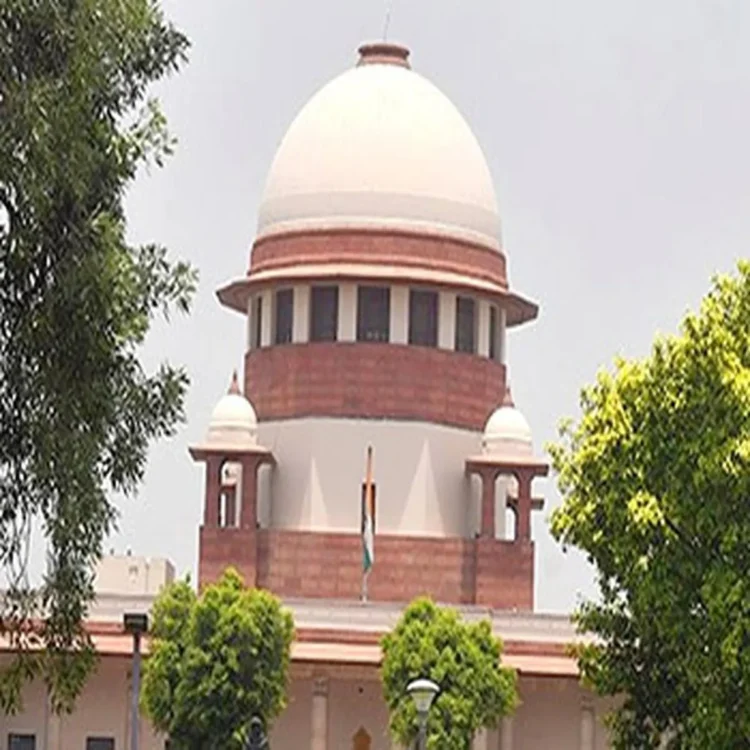
The Supreme Court on Tuesday reaffirmed that Scheduled Caste (SC) status is limited to individuals belonging to Hindu, Sikh, or Buddhist communities. The court stated that those who convert to any other religion are no longer eligible to claim SC status or its associated legal protections.
Court Examines Appeal in Discrimination Case
The ruling came from a bench comprising Justices P K Mishra and Manmohan while hearing an appeal filed by pastor Chinthada Anand. Anand had alleged that he faced caste-based harassment and abuse from Akkala Ramireddy and several others. Acting on his complaint, police had registered a case under the Scheduled Castes and Scheduled Tribes (Prevention of Atrocities) Act.
However, the legal question before the court centered on whether Anand, who had converted to Christianity, could still invoke protections available to members of Scheduled Castes under the law.
High Court Decision Upheld
Earlier, in May 2025, the Andhra Pradesh High Court had set aside the FIR filed in the case. The high court observed that Anand’s conversion to Christianity made him ineligible to claim Scheduled Caste status, thereby invalidating the application of the SC/ST (Prevention of Atrocities) Act in his complaint.
Challenging this decision, Anand moved the Supreme Court, seeking restoration of the case and protection under the law.
Supreme Court’s Interpretation of Law
While upholding the high court’s ruling, the Supreme Court emphasized that the legal definition of Scheduled Castes is tied to specific religions. The bench noted that Christianity does not recognise caste distinctions, and therefore, a person who converts to Christianity cannot continue to be identified as a member of a Scheduled Caste under the Constitution.
The court reiterated that the existing legal framework clearly states that only individuals professing Hinduism, Sikhism, or Buddhism are eligible for SC classification. As a result, any conversion to another faith leads to the loss of that status.
Implications for Legal Protections
The judgment reinforces the boundaries of the SC/ST (Prevention of Atrocities) Act, which is designed to protect members of Scheduled Castes and Scheduled Tribes from discrimination and violence. By clarifying eligibility, the court has underlined that these protections cannot be extended to individuals who no longer fall within the legally defined categories.
Legal experts note that the decision aligns with earlier interpretations of constitutional provisions related to caste-based reservations and protections, ensuring consistency in how such cases are handled across courts.
Background of the Case
Pastor Chinthada Anand had initially approached authorities alleging that he had been subjected to caste-based insults and mistreatment. Based on his complaint, law enforcement registered a case under provisions meant to safeguard SC/ST communities.
However, the issue of his religious identity became central to the case, ultimately determining whether the law could be applied in his favour.
With the Supreme Court’s ruling, the legal position has been reaffirmed, bringing clarity to a matter that has seen debate over the intersection of caste identity and religious conversion.