
Kashmir – Jamia Masjid Closed for Jumat-ul-Vida Prayers Seventh Year
Kashmir – Authorities in Srinagar did not permit the traditional Jumat-ul-Vida congregational prayers at the historic Jamia Masjid on the final Friday of Ramadan, marking the seventh consecutive year that the significant gathering has been prevented. The development drew criticism from religious leaders and mosque authorities, who said the restriction has deeply disappointed worshippers across the Kashmir Valley.
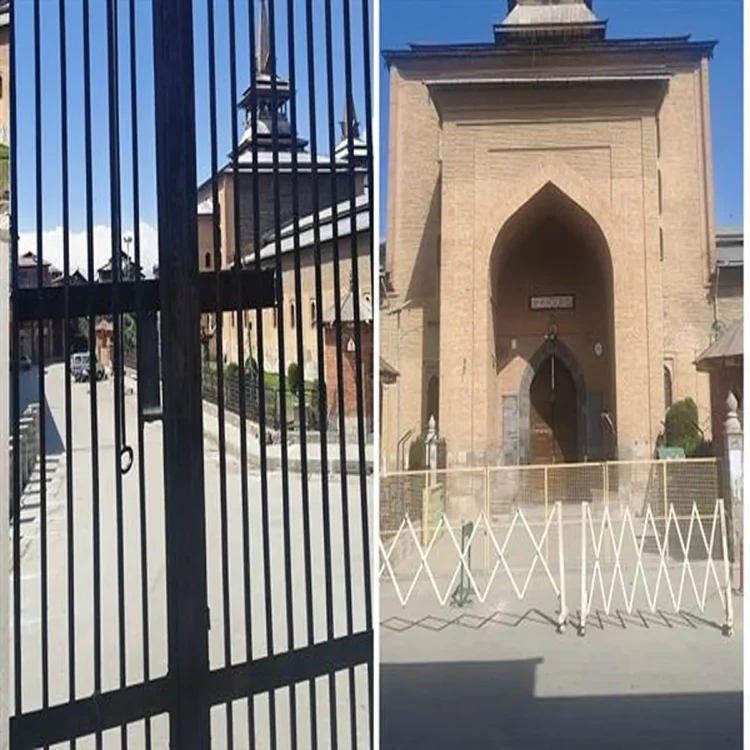
Large congregational prayers are typically held at the centuries-old mosque on the last Friday of Ramadan, when thousands of Muslims from various towns and villages travel to Srinagar to participate in special prayers and supplications. However, this year too, security restrictions prevented the gathering from taking place.
Mosque Gates Sealed on Final Friday of Ramadan
According to local sources, security personnel closed all entry points to the Jamia Masjid complex early in the day to ensure that the special Jumat-ul-Vida prayers could not be held. The mosque, located in Srinagar’s old city, is considered the central place of worship for Friday congregations in the region and usually attracts a large number of worshippers during Ramadan.
The closure effectively stopped devotees from assembling for the final Friday prayers, an occasion regarded as one of the most spiritually significant days during the fasting month.
Mirwaiz Umar Farooq Placed Under House Arrest
Hurriyat Conference chairman and prominent cleric Mirwaiz Umar Farooq, who regularly delivers Friday sermons at the Jamia Masjid, said he was placed under house arrest at his residence in the Nageen area of Srinagar. Because of the restrictions, he was unable to lead the congregation or address worshippers on the important religious occasion.
In a statement, Mirwaiz expressed disappointment over the continued restrictions on prayers at the mosque. He said that every year thousands of believers look forward to gathering at the historic site for the final Friday of Ramadan, making the continued closure particularly distressing for the local Muslim community.
Mosque Management Voices Concern
The Auqaf body responsible for managing the internal affairs of Jamia Masjid also expressed concern over the decision. In a statement, the management said that preventing worshippers from offering prayers at the Valley’s main congregational mosque for several consecutive years has caused anguish among the faithful.
The organization stated that restricting access to the mosque affects the religious sentiments of the community and deprives worshippers of the opportunity to pray at one of the most significant religious sites in Kashmir during a major Islamic observance.
Religious Significance of Jumat-ul-Vida
Jumat-ul-Vida, observed on the last Friday of Ramadan, holds special importance for Muslims worldwide. The day is marked by large congregations in mosques where believers gather for prayers, reflection, and supplication as the holy month approaches its conclusion.
In Kashmir, Jamia Masjid has traditionally served as the focal point for these gatherings. Devotees often travel from distant districts to participate in the prayers and listen to the sermon delivered by the Mirwaiz.
Mirwaiz Criticizes Continued Restrictions
Reacting to the development, Mirwaiz Umar Farooq said that it was unfortunate that Muslims in the region had once again been unable to gather for prayers at the mosque on such an important day. He described the continued restrictions as deeply painful for the community.
He also compared the situation to restrictions imposed on worshippers at other prominent religious sites during sensitive periods, stating that seeing mosques closed to worshippers during Ramadan is deeply distressing for many believers.
Uncertainty Over Shab-e-Qadr Prayers
Attention has now shifted to whether night-long prayers will be allowed at Jamia Masjid during Shab-e-Qadr, one of the holiest nights in the Islamic calendar that falls in the final days of Ramadan. Traditionally, large numbers of devotees gather at mosques across the region for prayers and spiritual reflection on this night.
Last year, authorities did not allow congregational prayers at the Jamia Masjid during Shab-e-Qadr either. It remains unclear whether similar restrictions will be imposed again this year, leaving many worshippers uncertain about whether they will be able to observe the occasion at the historic mosque.