
Pakistan – Trump Praises Islamabad Amid Escalating Border Clashes
Pakistan – As cross-border violence intensifies between Pakistan and Afghanistan, United States President Donald Trump has publicly commended Pakistan’s leadership while refraining from direct involvement in the unfolding conflict.
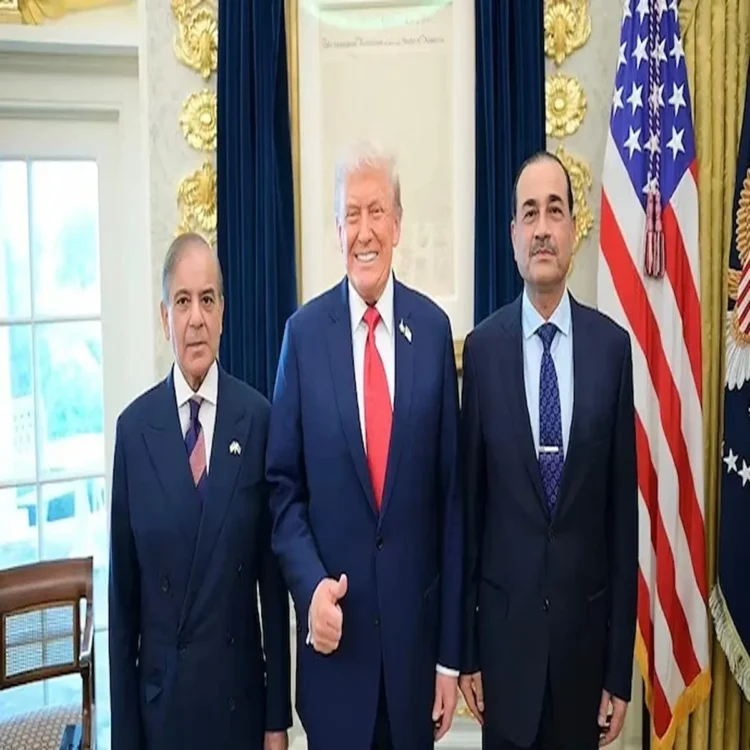
President Trump on Friday spoke positively about Pakistan, highlighting his rapport with Prime Minister Shehbaz Sharif and Army Chief Field Marshal Asim Munir. Addressing reporters, he said he maintained strong relations with Islamabad’s leadership and described the country as performing well despite the ongoing tensions. His comments came in response to questions about whether Washington would step in to calm the situation.
Cross-Border Strikes Deepen Crisis
The diplomatic remarks followed a sharp escalation along the Pakistan-Afghanistan border. Pakistani forces carried out air operations targeting areas under Taliban control in Kabul, Kandahar, and Paktia. Islamabad characterized its actions as part of what it described as an open conflict against militants allegedly operating from Afghan territory.
Earlier in the week, Afghan forces had launched strikes inside Pakistani territory, according to officials in Islamabad, prompting a swift response. Both governments have acknowledged casualties, though independent confirmation of the figures remains unavailable.
Conflicting Casualty Figures
Pakistan initially reported the loss of 12 soldiers. Afghan authorities stated that 13 Taliban fighters were killed in the fighting. However, each side has presented sharply different accounts of the broader toll.
According to The Associated Press, Pakistan’s military spokesperson Lt. Gen. Ahmed Sharif Chaudhry said combined air and ground operations resulted in the deaths of at least 274 Afghan forces and affiliated militants, with more than 400 injured. He confirmed that 12 Pakistani soldiers were killed, 27 wounded, and one reported missing.
Afghan government spokesperson Zabiullah Mujahid rejected those figures, calling them inaccurate. He claimed that 55 Pakistani soldiers had been killed, with 23 bodies allegedly transported into Afghanistan. Mujahid also asserted that several Pakistani personnel had been captured. He reported 13 Afghan soldiers killed and 22 wounded, along with injuries to 13 civilians.
Civilian Impact Raises Alarm
Later on Friday, Afghan authorities announced that 19 civilians had died and 26 others were injured following Pakistani strikes in the southeastern provinces of Khost and Paktika. The reports of civilian casualties have added to concerns about the widening humanitarian impact of the confrontation.
The escalation has heightened fears of prolonged instability along the shared border, a region long affected by insurgency and security operations. Analysts note that the exchange of heavy fire and airstrikes marks one of the most serious flare-ups in recent months.
Taliban Signals Openness to Dialogue
Despite the surge in violence, the Taliban administration indicated that it remains open to diplomatic engagement. Spokesperson Zabihullah Mujahid stated that the group prefers negotiations as a means to resolve disputes rather than continued armed confrontation.
The statement suggests a potential opening for de-escalation, though neither side has formally announced plans for immediate talks.
Washington Monitors Situation Closely
The US State Department confirmed that it is closely tracking developments. Under Secretary of State for Political Affairs Allison Hooker extended condolences to Pakistan over the soldiers killed in the clashes and reiterated Washington’s recognition of Pakistan’s right to defend itself against attacks.
While President Trump praised Pakistan’s leadership, US officials stopped short of announcing any mediation initiative. The situation remains fluid, with both Islamabad and Kabul standing by their respective accounts of the conflict.
As tensions persist, regional stability and civilian safety remain central concerns for neighboring countries and the broader international community.