
WarLoan – Sehore Family Seeks Repayment of 1917 British Debt
WarLoan – A business family from Sehore district in Madhya Pradesh has begun examining legal avenues to recover Rs 35,000 that it says was lent by its grandfather to the British administration during World War I. The claim is supported by a century-old certificate preserved by the family, which they discovered only recently among ancestral documents.
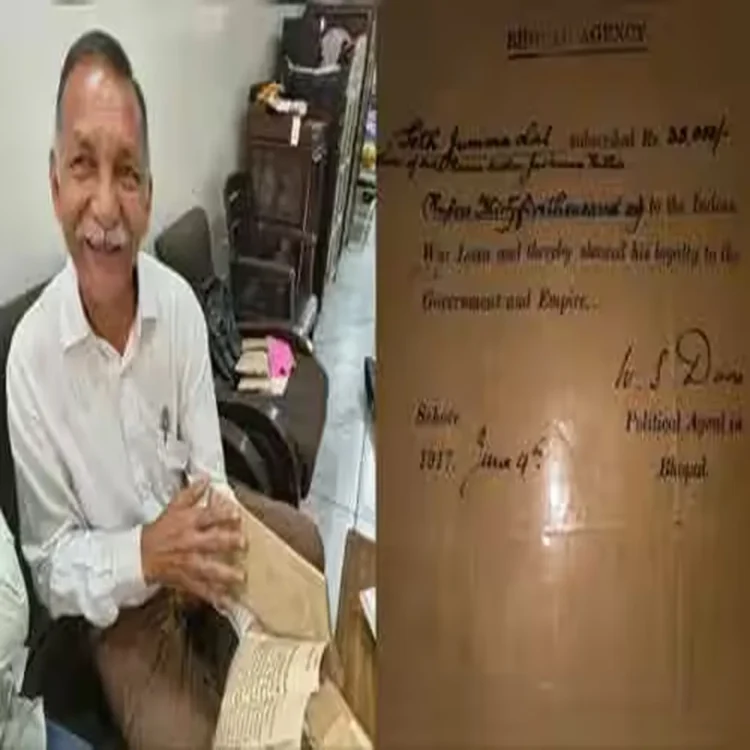
A Forgotten Certificate Unearthed
Vivek Ruthia, a third-generation member of the family, said the existence of the loan came to light after his father’s passing. While sorting through old papers, the family found a faded certificate dated June 4, 1917. The document states that their grandfather, Seth Jumma Lal Ruthia, had subscribed Rs 35,000 to what was described as the Indian War Loan.
The certificate was issued by the Bhopal Agency and bears the signature of W.S. Davis, who was the political agent at the time. According to the text on the document, the contribution was acknowledged as a demonstration of loyalty to the Government and the Empire during the war period.
Ruthia said that until this discovery, none of the present family members were aware that such a financial contribution had been made.
Context of the British War Loan
During World War I, the British administration raised funds from various parts of the empire, including India, to finance military operations and government expenditure. Wealthy individuals and business families were encouraged to subscribe to war bonds or loans as part of the broader effort.
In March 2015, the British government announced the redemption of £1.9 billion in historic War Loan bonds. These repayments marked the settlement of long-standing debts issued to fund World War I and, later, World War II. The bonds had been held by investors across different countries.
The Ruthia family says it has learned through media reports about these repayments and is now questioning whether contributions made from India were included in the final settlement.
Family Demands Clarity
Speaking to local journalists, Vivek Ruthia said the family is seeking clarity on whether any portion of the funds raised from Indian contributors was returned to India. He has called on the Indian government to disclose details about any transfers made by the United Kingdom in connection with war-era borrowings.
The family is currently consulting legal experts to determine whether a formal notice can be sent to the British government. According to individuals familiar with the matter, all supporting documents related to the 1917 subscription are in the family’s possession.
While the amount in question—Rs 35,000—may appear modest by modern standards, it was a substantial sum in 1917. Adjusted for inflation and historical value, the contribution would have represented a significant financial commitment at the time.
A Prominent Pre-Independence Family
Before Independence, the Ruthia family was counted among the prominent business families in Sehore and the erstwhile Bhopal State. Historical accounts suggest that large portions of land in present-day Sehore were once owned by the family.
Even today, members of the family are said to hold multiple properties in Sehore, Bhopal and Indore. Some of these assets, according to family sources, are currently under dispute or alleged unauthorized occupation, though no formal details have been publicly shared.
Legal and Historical Questions Ahead
Legal experts indicate that pursuing repayment of a colonial-era financial instrument may involve complex jurisdictional and diplomatic considerations. The terms under which the original loan was issued, the nature of the subscription, and whether it was classified as a bond or voluntary contribution would likely play a key role in any legal proceedings.
For now, the family says it is focused on reviewing historical records and seeking professional advice before taking further steps. The case has drawn attention locally, raising broader questions about financial arrangements made during colonial rule and how they were settled decades later.
Whether the claim results in formal legal action remains to be seen, but the rediscovery of the 1917 certificate has reopened a chapter of history that had long been forgotten within the family.