
CartelViolence – Mexico Faces Turmoil After Notorious Drug Lord Killed
CartelViolence – Mexico has been rocked by a surge of unrest after security forces killed one of the country’s most powerful drug cartel leaders, triggering retaliatory violence that spread across several states and disrupted daily life, including in major tourist hubs.
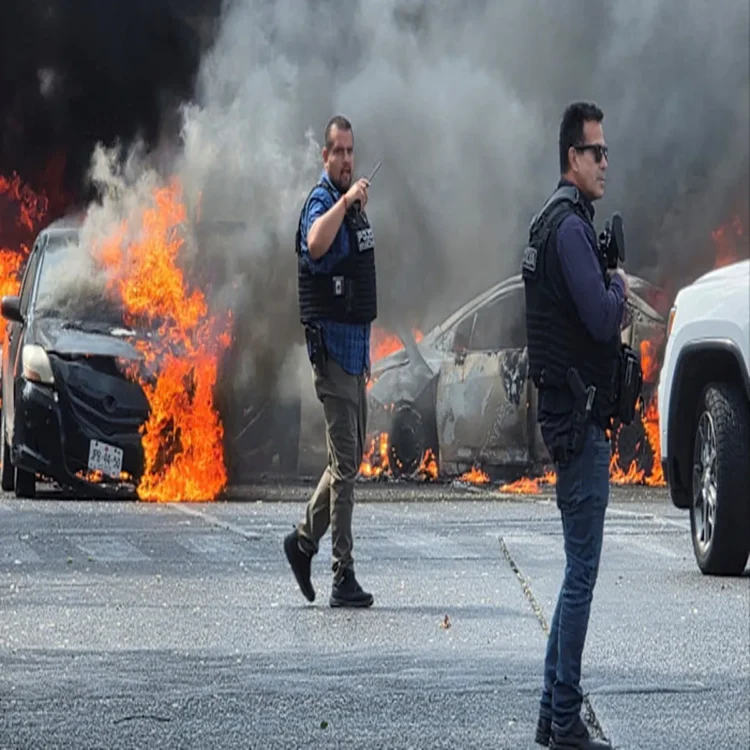
Military Operation Targets Cartel Leadership
Nemesio Oseguera Cervantes, widely known as “El Mencho,” led the powerful Jalisco New Generation Cartel and had long been among Mexico’s most wanted figures. He was killed on Sunday during a military-led operation. United States officials later indicated that American intelligence agencies provided critical support in tracking him down.
According to reports in The Washington Post, the Central Intelligence Agency played a key role in supplying intelligence that enabled Mexican forces to locate and confront the cartel leader. Mexico’s Defence Secretary, General Ricardo Trevilla Trejo, confirmed that eight cartel members died in the operation.
Authorities described the mission as a significant blow to organised crime. However, its aftermath was swift and severe.
Coordinated Retaliation Spreads Across Regions
Within hours of the announcement, armed groups launched what officials called coordinated reprisals. Gunmen set up roadblocks on highways, torched vehicles, and clashed with security forces in several cities. Thick columns of smoke were seen rising above urban areas as vehicles burned.
The Wall Street Journal reported that roads were shut down in multiple regions, including the coastal resort city of Puerto Vallarta. Public transportation was disrupted, and commercial flights to Puerto Vallarta and Guadalajara were temporarily suspended as airlines assessed safety conditions.
Mexican authorities later disclosed that at least 85 roadblocks had been established during the unrest. Dozens of attacks were directed at police and military units. More than 25 members of the security forces and one civilian were killed. Officials said over 30 suspected cartel members died in the confrontations and approximately 70 were taken into custody.
Tourists Caught in Unexpected Chaos
In Puerto Vallarta, a popular destination on Mexico’s Pacific coast, visitors found themselves in the midst of violent scenes. Several American tourists reported witnessing vehicles engulfed in flames.
Eugene Marchenko, who was vacationing from South Carolina, described seeing multiple cars and a fuel tanker deliberately set on fire. He said armed men ordered bystanders to move away before pouring fuel on the vehicles and igniting them.
The sudden escalation left many travellers stranded. The US State Department confirmed it had received hundreds of calls from Americans seeking assistance since the violence erupted. A round-the-clock emergency hotline was activated to support those affected.
In a security advisory, US officials stated that conditions had improved in many areas but urged citizens in Puerto Vallarta, Guadalajara, and Ciudad Guzman to remain indoors until further notice. Travellers were advised to verify flight schedules before heading to airports.
Government Says Stability Gradually Returning
President Claudia Sheinbaum addressed the nation on Monday, stating that most activities had resumed and that authorities were working to stabilise affected regions. While schools and businesses began reopening in some areas, certain services remained limited.
Security forces have increased patrols and reinforced key transport corridors in an effort to prevent further disruptions.
Fears of Internal Power Struggle
Analysts warn that the death of Oseguera Cervantes could spark internal competition within the Jalisco New Generation Cartel. Leadership vacuums in criminal organisations often lead to factional infighting, potentially intensifying violence in the short term.
Jalisco state, which is scheduled to host matches during the 2026 FIFA World Cup, could face particular scrutiny if instability persists. The cartel has built a reputation as one of the most influential criminal networks in Mexico, with extensive trafficking routes reaching into the United States.
Historically, arrests or killings of senior cartel figures have been followed by periods of heightened conflict, as rival groups attempt to assert dominance. Despite repeated government pledges to dismantle organised crime networks, Mexico continues to confront periodic waves of violence linked to drug trafficking and territorial disputes.
Authorities now face the challenge of containing further retaliation while preventing a broader struggle for control within one of the country’s most formidable criminal organisations.