
RoadAccident – Bus Falls into Trishuli River, 17 Dead in Nepal
RoadAccident – A passenger bus travelling from Pokhara to Kathmandu veered off a mountainous highway and plunged into the Trishuli River in central Nepal early Monday, leaving at least 17 people dead and dozens injured, officials confirmed.
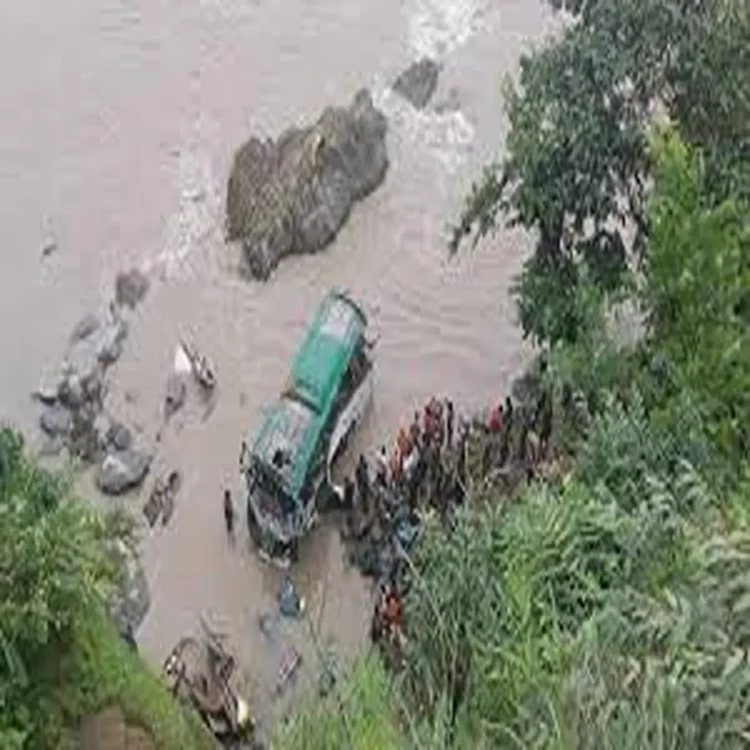
Crash Occurred in Dhading’s Bhaisigauda Area
The accident took place around 1:30 a.m. in Bhaisigauda, located in Benighat Rorang Rural Municipality of Dhading district. According to district authorities, the vehicle fell nearly 300 metres from the roadway before landing on the riverbank below.
Chief District Officer Bijaya Raj Subedi said 17 individuals who appeared to have died at the scene were transported for medical verification. Another 27 injured passengers were rushed to nearby hospitals as well as medical facilities in Kathmandu for further treatment.
Officials confirmed that 44 people were aboard the ill-fated bus at the time of the incident. The cause of the crash has not yet been determined. Authorities noted that preliminary information suggests the vehicle was travelling within its designated lane, making the exact circumstances surrounding the fall unclear.
Rescue Efforts Challenged by Darkness and Terrain
Emergency teams from the Nepali Army, Armed Police Force, and Nepal Police were deployed immediately after the crash was reported. Local residents also joined the rescue operation, working through the night to search for survivors and recover bodies.
The operation faced significant obstacles. The steep terrain, limited lighting, and lack of advanced rescue equipment slowed initial efforts. Despite these challenges, officials said the first phase of the rescue mission concluded at approximately 6:30 a.m.
Injured passengers were stabilized at local health centres before being transferred to larger hospitals where necessary. Authorities have not yet released the identities of the deceased, pending official confirmation and notification of families.
Growing Concerns Over Road Safety in Nepal
The tragedy has once again drawn attention to Nepal’s ongoing road safety concerns. Over the past decade, the country has experienced a noticeable rise in traffic accidents, partly attributed to an increase in the number of vehicles on its roads.
Traffic Police data indicate that 4,999 road accidents were recorded roughly ten years ago. In contrast, during the fiscal year 2024–25, the number climbed to 7,669 incidents. Authorities reported 190 deaths during the same period, with 278 accidents categorized as serious.
Experts point out that Nepal’s challenging geography, combined with expanding road networks and vehicle growth, has created additional safety risks. Mountain highways often feature sharp bends, steep drops, and limited protective barriers, increasing the likelihood of severe outcomes when crashes occur.
Economic and Social Impact of Road Accidents
Beyond the immediate human toll, road traffic injuries carry significant economic consequences. A World Bank study conducted in Nepal found that the financial burden associated with traffic-related injuries has tripled since 2007. The study estimated that these losses amount to roughly 1.5 percent of the country’s gross national product.
The impact is felt most acutely among vulnerable populations. According to the same study, more than 70 percent of road fatality victims in Nepal are classified as vulnerable road users, including pedestrians, cyclists, and motorcyclists. These groups often face higher exposure to risk due to limited infrastructure protection.
Authorities have reiterated their commitment to investigating Monday’s crash thoroughly. Officials say a detailed inquiry will examine vehicle condition, driver factors, road design, and environmental conditions to determine what led to the bus leaving the roadway.
As families await confirmation and survivors recover in hospitals, the incident stands as a stark reminder of the urgent need for strengthened road safety measures across Nepal’s expanding transport network.