
Defense – US Envoy, Admiral Visit Western Command Headquarters
Defense – Senior American officials met Indian Army leaders in Chandimandir on Monday to review regional security cooperation and deepen military ties between the two countries.
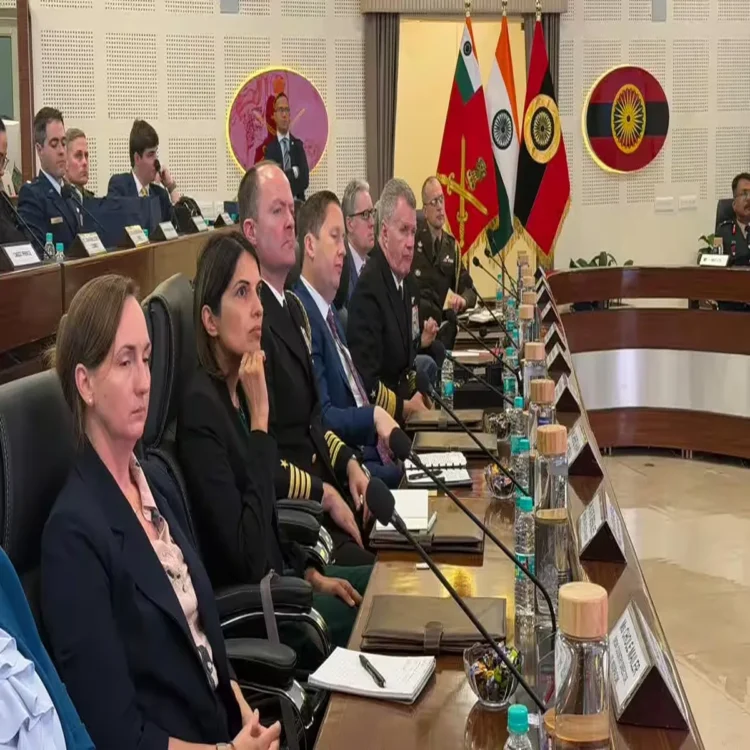
High-Level Visit to Western Command
The United States Ambassador to India, Sergio Gor, along with Admiral Samuel Paparo, who heads the US Indo-Pacific Command, visited the Indian Army’s Western Command headquarters in Chandimandir. During the visit, the delegation engaged in detailed discussions with senior Indian military officers on evolving strategic security dynamics in the region.
According to sources familiar with the meeting, conversations centered on enhancing defense cooperation, reinforcing bilateral military partnerships, and maintaining stability across the Indo-Pacific and South Asian regions. The interaction marked another step in the structured military-to-military engagement framework between India and the United States.
Briefing on Operational Preparedness
The visiting delegation was briefed on the operational responsibilities and strategic outlook of Western Command. Officers outlined the formation’s preparedness along the western front and its broader role in safeguarding national security.
In a post shared on the social media platform X, Western Command stated that the American delegation received a comprehensive overview of the command’s operational readiness, its historical legacy, and the execution of Operation Sindoor. The briefing also highlighted the Indian Army’s contribution to nation-building initiatives and regional stability efforts.
Lt Gen Manoj Kumar Katiyar, the General Officer Commanding-in-Chief of Western Command, held substantive exchanges with the US officials. The discussions reportedly addressed current regional security trends and areas where defense collaboration could be strengthened further.
Expanding Military Engagement
The visit is being viewed as part of a broader pattern of expanding defense ties between New Delhi and Washington. Military exchanges between the two countries have grown steadily in recent years, including joint exercises, technology cooperation, and high-level visits.
The US Indo-Pacific Command, which oversees American military interests across 36 countries in the Asia-Pacific region, plays a central role in shaping US defense engagement in the region. The command’s area of responsibility includes major regional powers and key maritime routes.
While commanders from the US Indo-Pacific Command have previously visited Indian naval establishments, this visit to an operational Army Command is considered significant. Sources noted that earlier interactions were largely focused on maritime cooperation, making the Chandimandir visit a notable development in expanding the scope of engagement to land forces.
Significance of Chandimandir Headquarters
Western Command is one of the Indian Army’s key operational formations. Headquartered in Chandimandir, it is responsible for operations along the western border, covering areas from Akhnoor in Jammu and Kashmir to Fazilka in Punjab. Its strategic importance stems from its role in overseeing sensitive sectors and ensuring operational preparedness along the frontier.
Officials indicated that visits by foreign ambassadors to this command are uncommon. In recent memory, there have been no widely known instances of a US Ambassador visiting Western Command headquarters. A few years ago, the Canadian High Commissioner visited Chandimandir and met soldiers undergoing treatment at the command hospital.
Statements from US Officials
Ahead of the visit, Ambassador Sergio Gor posted on X that he had arrived in Chandigarh and was looking forward to engaging with Western Command. A day earlier, he expressed his appreciation for Admiral Samuel Paparo’s presence in India, describing it as an opportunity to further strengthen the US-India defense partnership.
The remarks reflect a shared emphasis on deepening cooperation at a time when both countries are seeking closer alignment on regional security challenges. As India and the United States continue to expand their defense relationship, such high-level engagements are expected to remain an important feature of their strategic dialogue.