
ElectoralRolls – Supreme Court Sets Clear Boundaries in SIR Review
ElectoralRolls- the Supreme Court has clarified operational limits and administrative responsibilities in West Bengal’s ongoing Special Intensive Revision of electoral rolls.
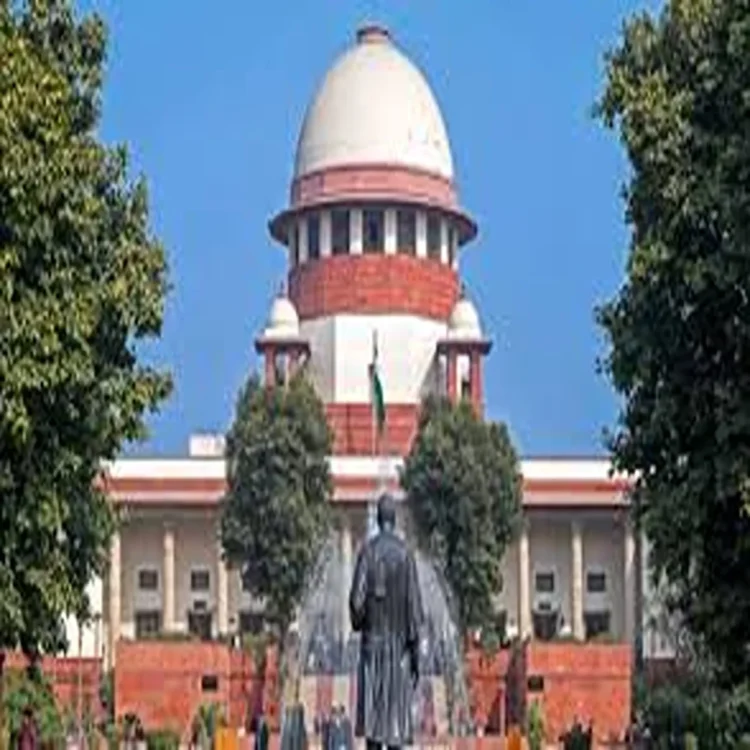
The Supreme Court on Monday issued key directions concerning the Special Intensive Revision (SIR) of electoral rolls, prompting strong political reactions in West Bengal. The ruling Trinamool Congress (TMC) described the order as a firm message to the Election Commission over what it termed procedural overreach, while the Bharatiya Janata Party (BJP) said the judgment would ensure the integrity of the revision process.
Court Emphasises Completion of Electoral Exercise
The apex court made it clear that the SIR process must proceed without obstruction. It stated that no individual or authority should create hurdles in the completion of the electoral roll revision.
In addition, the bench directed the Director General of Police of West Bengal to submit an affidavit responding to allegations made by the Election Commission regarding incidents in which official notices related to the revision exercise were reportedly set on fire by unidentified persons.
The court also took note of the state government’s submission that it had provided a list of 8,505 Group B officers for deployment in the SIR exercise. It observed that the Election Commission may examine the credentials and professional experience of these officers and shortlist personnel in numbers equivalent to the micro-observers already engaged.
Role of Micro-Observers Clarified
One of the central issues during the hearing was the authority of micro-observers appointed for the revision process. According to the TMC, the Supreme Court clarified that micro-observers can assist Electoral Registration Officers (EROs) and Assistant Electoral Registration Officers (AEROs), but the final decision-making authority remains solely with the designated electoral officers.
In a statement shared on its official platform, the party said the ruling removed ambiguity about the limits of micro-observers’ responsibilities and reinforced statutory procedures under election law.
TMC leaders argued that the directive would ensure that the SIR process remains within established legal boundaries. State general secretary Kunal Ghosh described the court’s observations as significant, saying they addressed concerns earlier raised by Chief Minister Mamata Banerjee regarding the conduct of the revision process.
Political Reactions Intensify
TMC leaders framed the decision as a positive development for the state, asserting that the court’s intervention would help maintain transparency and administrative balance during the electoral roll update.
Member of Parliament Mahua Moitra also commented on the judgment, stating that micro-observers have limited statutory functions and must not exceed their mandate. She said accountability would apply if any official acted beyond the scope defined by law.
According to Moitra, since the formal notification of the SIR in October 2025, more than one lakh officials have been involved in the exercise across West Bengal. These include over 80,500 Booth Level Officers (BLOs), more than 8,500 Assistant Electoral Registration Officers, and 294 Electoral Registration Officers. She added that a district-wise list of Group B officers had been compiled and forwarded to the Election Commission following the court’s observations.
BJP Welcomes Judicial Oversight
The BJP, however, interpreted the court’s ruling differently. State president and Rajya Sabha MP Samik Bhattacharya said the judgment strengthened the SIR process and rejected what he alleged were attempts to delay the revision. He claimed that the electoral roll update was necessary to ensure that ineligible or duplicate names are removed.
Leader of Opposition Suvendu Adhikari also reacted to the order, stating that the court did not accept arguments seeking to stall the exercise. He said the ruling reinforces compliance with the directives of the Election Commission and the Supreme Court.
Focus on Electoral Transparency
The Special Intensive Revision is a periodic exercise conducted to verify and update electoral rolls, ensuring accuracy before elections. The Supreme Court’s latest directions underline the importance of administrative cooperation and procedural clarity in such processes.
With political parties offering contrasting interpretations, the focus now shifts to the implementation of the court’s directives. The Election Commission is expected to review the list of officials provided by the state and proceed in accordance with the framework outlined by the apex court.