
AirQuality – Delhi Records Marginal Improvement, AQI Still Poor
AirQuality – Delhi experienced a slight dip in pollution levels on Saturday morning, though air quality across the city continued to remain in the “poor” range. According to figures released by the Central Pollution Control Board (CPCB), the overall Air Quality Index (AQI) stood at 213 at 8 am, reflecting a modest improvement from Friday’s reading of 226 recorded at the same time.
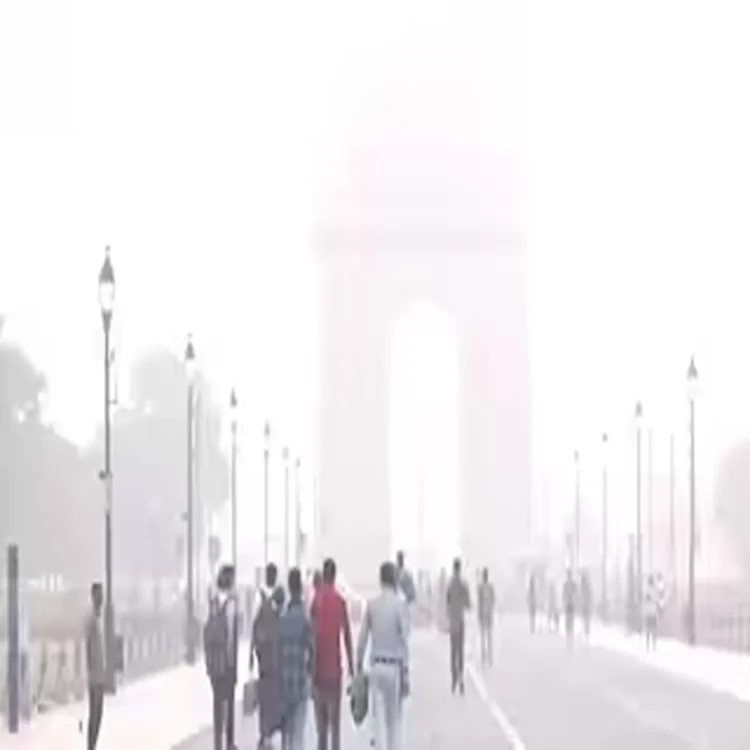
Citywide AQI Remains in Poor Category
Despite the marginal decline in pollution levels, the capital’s air quality continues to raise health concerns. An AQI between 201 and 300 is classified as “poor,” a level at which prolonged exposure may cause breathing discomfort for most people and aggravate respiratory conditions among vulnerable groups.
Officials noted that while the numbers show a downward trend compared to the previous day, the overall environment has not yet shifted out of the poor bracket.
Local Variations Across Monitoring Stations
Air quality readings varied across key monitoring locations in Delhi. In Anand Vihar, the AQI was recorded at 260, firmly within the poor category. RK Puram registered an AQI of 237, while ITO reported 223 during the morning rush hour.
Chandni Chowk saw pollution levels touch 232, and another reading from RK Puram later in the morning indicated 239, both remaining under the same classification. These figures highlight that while there has been minor improvement at the macro level, several parts of the city continue to experience elevated pollution.
Moderate Air Quality in Select Areas
Not all regions of the capital were under the poor bracket. Aya Nagar recorded an AQI of 151, placing it in the “moderate” category. Similarly, the Indira Gandhi International Airport’s Terminal 3 area reported a reading of 138, while Pusa registered 157.
An AQI between 101 and 200 is considered moderate, where air quality may cause mild breathing discomfort to people who are unusually sensitive to pollution. These relatively lower readings offered limited relief compared to the more polluted zones.
Smog Persists Despite Slight Improvement
Even with the small dip in the overall AQI, several neighborhoods continued to witness a thin layer of smog. Visibility in certain stretches remained affected during the early hours, adding to concerns over daily commuting conditions.
The persistence of smog indicates that although pollutant concentrations have marginally reduced, atmospheric conditions are still trapping pollutants close to the ground. Environmental experts often point to factors such as vehicular emissions, construction dust, and regional pollution patterns as contributing elements during this time of year.
Understanding AQI Categories
The Air Quality Index is used as a standardized tool to communicate pollution levels and their likely impact on public health. As per official classification, an AQI reading between 0 and 50 is considered “good,” 51 to 100 “satisfactory,” 101 to 200 “moderate,” 201 to 300 “poor,” 301 to 400 “very poor,” and 401 to 500 “severe.”
With Delhi currently placed in the poor bracket, authorities continue to monitor trends closely. Public health advisories typically recommend limiting prolonged outdoor activities when AQI remains elevated.
Weather Conditions and Temperature Update
According to the India Meteorological Department (IMD), Delhi recorded a temperature of 13.2 degrees Celsius on Saturday. Strong surface winds were observed during the day, which can sometimes aid in dispersing pollutants.
However, the capital also woke up to dense fog in the early morning hours. Reduced visibility was reported in several areas, though it gradually improved as the day progressed. Weather patterns, including wind speed and humidity, often play a crucial role in influencing daily air quality levels.
While the latest data indicates a slight easing in pollution levels, overall air quality in Delhi remains a matter of concern. Continuous monitoring and sustained mitigation efforts are expected to remain central to managing the city’s pollution challenges in the coming weeks.