
Rajasthan – State Moves Toward Landmark Law to Protect Khejri Trees
Rajasthan – The Rajasthan government has taken a decisive step toward safeguarding the Khejri tree after sustained public protests and an indefinite hunger strike drew attention to growing concerns over its preservation. Chief Minister Bhajanlal Sharma announced in the State Assembly on Thursday that legislation would soon be introduced to ensure legal protection for the tree across the state.
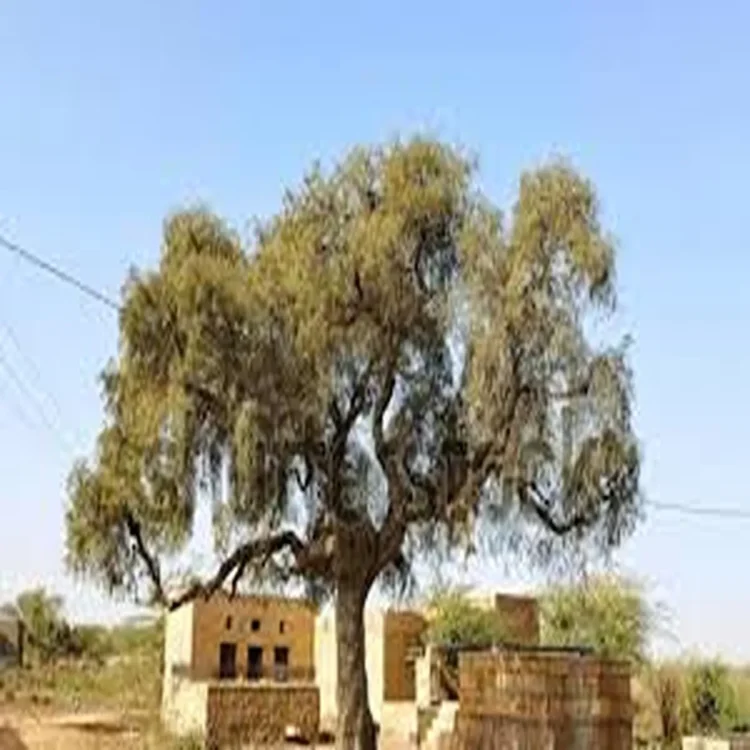
Speaking during Assembly proceedings, Sharma assured members that the government recognises the ecological and cultural value of the Khejri tree and is committed to its long-term conservation. He said a draft law aimed at protecting the species is currently being prepared and will be placed before the House in the near future. According to the Chief Minister, the proposed legislation is intended to provide statewide protection and prevent unchecked felling.
Government Assurance in the Assembly
Addressing lawmakers, Sharma described the Khejri as a symbol deeply connected to Rajasthan’s environment and heritage. He emphasised that the new law would formalise conservation efforts and offer uniform protection throughout the state. The Chief Minister added that the government’s objective is to ensure the tree is preserved not only in select regions but across all districts where it naturally grows.
He also noted that work on the legal framework had already begun following discussions with environmental representatives earlier this year. Officials, he said, were instructed to begin preparing the draft after those meetings, reflecting the administration’s intent to address the issue through legislation rather than temporary measures.
Protests and Hunger Strike Intensify Pressure
The announcement followed days of demonstrations and a hunger strike by environmental activists and local residents, who gathered at the Bikaner Collectorate to demand stronger action. Protesters have been calling for a complete ban on the cutting of Khejri trees, arguing that partial restrictions would not be sufficient to stop their decline.
The hunger strike, described by organisers as indefinite, became a focal point of the movement and drew widespread attention. Participants stated that their protest would continue until the government committed to a comprehensive, statewide prohibition on felling, backed by enforceable law.
Minister’s Intervention Fails to End Fast
In an earlier attempt to defuse the situation, state minister K K Bishnoi visited the protest site and offered juice to the fasting demonstrators in a symbolic gesture aimed at ending the hunger strike. During his visit, Bishnoi announced an immediate ban on cutting Khejri trees in the Jodhpur and Bikaner divisions.
However, the move failed to satisfy the protesters. Many expressed anger over what they described as a limited and region-specific decision. Soon after the announcement, the hunger strike was resumed, with protesters reiterating that they would not withdraw their fast unless a statewide ban was declared.
Demand for Statewide Protection
Activists maintained that restricting tree felling in only two divisions would leave large parts of Rajasthan unprotected. They argued that the Khejri tree plays a crucial role in maintaining ecological balance in arid regions and should be safeguarded through a single, comprehensive policy applicable throughout the state.
Protest leaders also stressed that temporary administrative orders could be reversed, while legislation would provide lasting protection. Their continued demonstrations underscored growing public pressure on the government to move beyond interim measures.
Earlier Consultations with Environmental Leaders
The Chief Minister revealed that environmentalist saints from Bikaner, Jodhpur, and Nagaur had met him in August to discuss concerns surrounding the Khejri tree. During those meetings, they highlighted the increasing loss of the species and urged the government to intervene.
Sharma said he had assured them at the time that their concerns would be addressed and that officials were asked to begin groundwork for a conservation-focused law. Thursday’s announcement, he indicated, was a continuation of that commitment and a response to both public sentiment and expert advice.
As the proposed legislation awaits presentation in the Assembly, attention remains on how quickly it will be introduced and what specific protections it will include. For now, protesters have welcomed the Chief Minister’s assurance but say they will closely watch the next steps to ensure the promise translates into enforceable law.