
Punjab and Himachal : Strategic Political Moves Intensify Across Ahead of Key Elections
Punjab and Himachal: As northern India slowly moves toward the next cycle of state elections, political activity in Punjab and Himachal Pradesh has begun to intensify, revealing new strategies, fresh faces, and old rivalries. Recent developments indicate that national and regional parties are recalibrating their approach to connect with voters more deeply, while internal conflicts and public controversies continue to shape the political narrative.
Haryana Chief Minister’s Outreach in Punjab
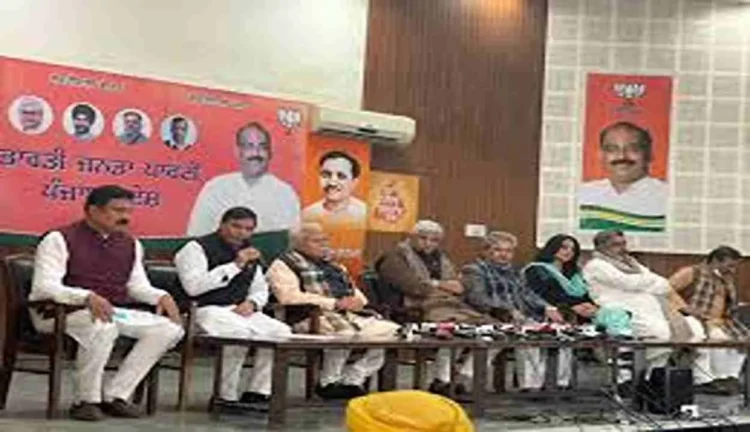
Ahead of the 2027 Punjab Assembly elections, Nayab Singh Saini, the Chief Minister of Haryana, has emerged as an unexpected yet prominent figure in Punjab’s political landscape. His recent visits to the state have drawn widespread attention, especially due to his deliberate cultural positioning. Wearing a saffron turban and addressing gatherings in a blend of Punjabi and Hindi, Saini appears keen on striking a cultural chord with local audiences.
His presence at the Maghi mela, where he was the principal speaker representing the Bharatiya Janata Party, created a noticeable political buzz. Observers noted that his visibility and outreach efforts have, for the moment, generated more attention than some established Punjab-based BJP leaders, including Union Minister Ravneet Singh Bittu. Political analysts believe this signals a broader strategy by the BJP to project a fresh and culturally sensitive face while expanding its footprint in Punjab.
Saini’s itinerary has included visits to several gurdwaras and temples, reinforcing the perception that his engagements are carefully planned rather than incidental. These visits reflect an attempt to blend political messaging with cultural symbolism, a tactic often employed to build trust in regions where the party traditionally faces resistance. For the BJP, Saini’s outreach may serve as an entry point to reframe its image and connect with diverse voter groups in the state.
Verbal Sparring Between Badal and Warring
Political rhetoric in Punjab has also heated up with a sharp exchange between Manpreet Singh Badal, a senior BJP leader and former finance minister, and Amarinder Singh Raja Warring, the current Punjab Congress president. The war of words began at a rally in Muktsar, where Badal took a swipe at Warring by recalling an alleged mathematical error made during the Congress-led MGNREGA Bachao Sangram rally in Samarala.
The remarks did not go unanswered. During a media interaction in Ludhiana, Warring retaliated by raising a personal allegation related to the vacating of a government residence. While acknowledging that his academic credentials might not match those of Badal, Warring stated that he never removed household items, specifically a dining table, from an official residence while leaving office. The exchange quickly became a talking point, reflecting the increasingly personal tone of political debates in the state.
Such confrontations underline the competitive environment in Punjab politics, where leaders are not only contesting policies and performance but also attempting to shape public perception through personal narratives. For voters, these exchanges offer insight into the friction between rival parties as they prepare for future electoral battles.
Controversy Over Himachal Minister’s Remarks
In neighboring Himachal Pradesh, a separate controversy has unfolded following remarks made by Vikramaditya Singh, the state’s Public Works Department minister. His comments, perceived as targeting bureaucrats from Uttar Pradesh and Bihar, triggered protests, criticism on social media, and concern within administrative circles. The issue soon escalated, with other ministers such as Anirudh Singh and Jagat Negi also weighing in, exposing visible factionalism within the state cabinet.
Civil service associations reacted strongly. The IPS Association of Himachal Pradesh issued a statement warning that such remarks could adversely affect the morale of the police force. Similarly, the Himachal IAS Officers’ Association expressed concern, emphasizing that while elected representatives have the right to express opinions, public statements must be measured to preserve administrative harmony.
The episode has highlighted the delicate balance between political expression and bureaucratic neutrality. It also underscores the internal challenges faced by the Himachal Pradesh government as it navigates governance while managing differing viewpoints within its own ranks.
Emerging Political Signals
Taken together, these developments in Punjab and Himachal Pradesh point to a period of heightened political activity and strategic repositioning. Cultural outreach, sharp political exchanges, and administrative controversies are all shaping the evolving narrative. As parties look ahead to upcoming elections, such moves and moments are likely to play a significant role in influencing public opinion and redefining regional political dynamics.