
Raj Thackeray : attacks the SEC for “mysterious” PADU devices and new campaign regulations
Raj Thackeray: the leader of the MNS, has harshly criticized the State Election Commission (SEC) as Maharashtra gets ready for crucial polls in 29 municipal corporations on Thursday.
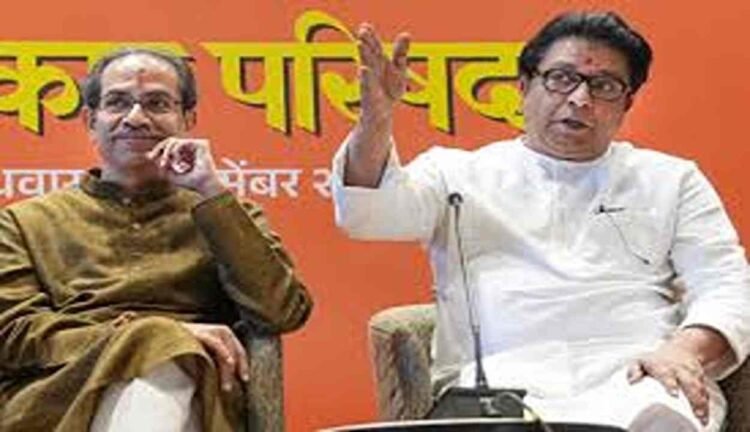
Raj Thackeray, who was at his home with his cousin and Shiv Sena (UBT) president Uddhav Thackeray, accused the poll commission of being biased and questioned a contentious new announcement that permits candidates to make door-to-door visits till election day.
He said that all types of campaigning must stop during a “silence period” that starts 48 hours before to voting. But he said that this long-standing tradition had been upset by a recent direction.
Speaking to the media on Wednesday, the MNS leader voiced his anger at the new regulations’ timing and purpose. “We’ve been watching elections for a long time. After the campaign concludes at 5 p.m., there is often a day off before voting. This has been the custom. However, according to a recent letter, candidates are permitted to meet with voters until 5 p.m. on election day. From whence did this system originate? Raj Thackeray asked. Additionally, he said that the regulation is a covert effort to encourage voter bribing.They claim that although you may meet voters, you are not allowed to hand out flyers. It’s possible that their true meaning is that money may be distributed. Noting that these regulations were not followed during the Assembly or Lok Sabha elections, he questioned, “Is the State Election Commission acting only to carry out the wishes of the government?”
Raj Thackeray brought up significant technical issues with the voting procedure in addition to the campaigning regulations. In the event that electronic voting machines (EVMs) malfunction during municipal elections, he emphasized the installation of a new device known as Printing Auxiliary Display Unit (PADU) machines as a backup during vote counting. He asserted that these machines were introduced without transparency because political parties are unaware of them. He said that the SEC did not even bother to notify the political parties about it. The public and political parties have not been shown how these units operate, according to Raj Thackeray.
He said that the State Election Commission has not offered any clarification despite official investigations, including a letter from Uddhav Thackeray. Party representatives are summoned to check the buttons when EVMs are utilized. However, no one has seen this new gadget. There is chaos here,” he said.
Raj Thackeray warned the public and his followers to be on the lookout for any wrongdoing by MNS and Shiv Sena employees. He said that in order to entice votes, opponents, particularly the BJP and the Shinde-led group, are concealing money within campaign leaflets. “I’m advising the Shiv Sena and MNS troops to be vigilant. Observe the candidates making house calls. It’s encouraging that people are beginning to reject this, but we need to closely monitor the distribution of funds,” Raj Thackeray said.
Significant doubts have been raised about the impartiality of the state’s polling apparatus as a result of the MNS chief’s accusations, which have intensified an already contentious election cycle.
On Tuesday, however, SEC Dinesh Waghmare referenced a February 14, 2012, standing order that permits candidates to do door-to-door campaigns beyond the conclusion of public campaigning. “This is not a new order as it was applied during the Lok Sabha and Assembly elections,” Waghmare said.Rallies and gatherings are examples of public campaigning that must finish 48 hours before to voting. Personal communication is not prohibited, however. He said that while candidates are not allowed to use microphones or move in big groups, they are permitted to visit houses or meet voters outside of a 100-meter radius of voting places.
He reaffirmed that door-to-door campaigning is limited to five individuals per group, including the candidate. Sound systems and microphones are completely prohibited. The SEC cautioned that giving or receiving money is illegal and is being carefully watched.