
Trump Drops US Travel Ban Bombshell: Five More Countries Have Added Entry Barriers | View the Full List
Trump Drops US Travel Ban Bombshell: On Tuesday (local time), US President Donald Trump added five additional nations to the travel ban and placed restrictions on the other ones. The action was taken at a time when the Trump administration is still tightening immigration and admission criteria into the United States.
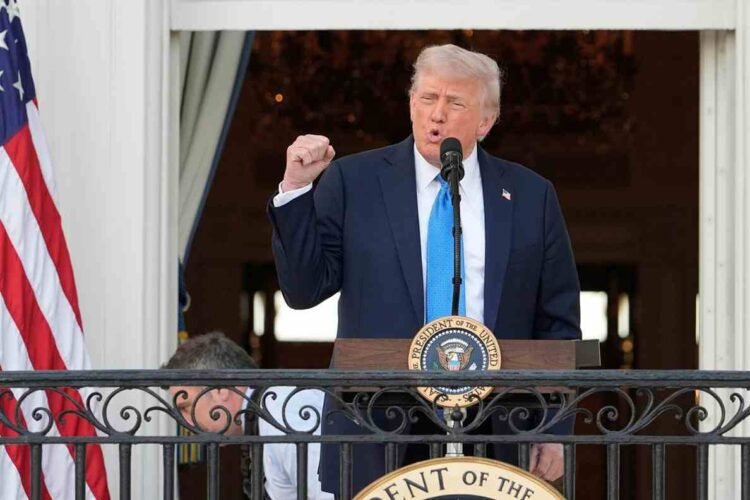
“The restrictions and limitations imposed by the Proclamation are necessary to prevent the entry of foreign nationals about whom the United States lacks sufficient information to assess the risks they pose, garner cooperation from foreign governments, enforce our immigration laws, and advance other important foreign policy, national security, and counterterrorism objectives,” according to a White House statement.
Updated list of US travel bans
Citizens of five nations—Burkina Faso, Mali, Niger, South Sudan, and Syria—as well as anyone with travel papers issued by the Palestinian Authority will be prohibited from entering the United States as a result of his actions on Tuesday, the White House said. Furthermore, the partial entry restrictions already in place for Sierra Leone and Laos were extended to complete suspensions.
Partially restricted nations include Angola, Antigua and Barbuda, Benin, Cote d’Ivoire, Dominica, Gabon, The Gambia, Malawi, Mauritania, Nigeria, Senegal, Tanzania, Tonga, Zambia, and Zimbabwe.
“Narrows broad family-based immigrant visa carve-outs that carry demonstrated fraud risks, while preserving case-by-case waivers,” the White House said in the proclamation.
Afghanistan, Burma (Myanmar), Chad, the Republic of the Congo, Equatorial Guinea, Eritrea, Haiti, Iran, Libya, Somalia, Sudan, and Yemen are all completely prohibited from entering and are not eligible for new visas.
Burundi, Cuba, Laos, Sierra Leone, Togo, Turkmenistan, and Venezuela are among the nations with somewhat restricted visa access.
What happens to nations on the US travel restriction list?
Many of the nations on the travel ban, according to the Trump administration’s statement, have “widespread corruption, fraudulent or unreliable civil documents and criminal records, and nonexistent birth-registration systems,” making it difficult to conduct effective screening. While some allow “Citizenship-by-Investment schemes that conceal identity and bypass vetting requirements and travel restrictions,” others prohibit the sharing of law enforcement data.
In addition to tightening restrictions on Burundi, Cuba, Laos, Sierra Leone, Togo, Turkmenistan, and Venezuela, Trump announced in June that citizens of 12 countries would not be allowed to enter the United States: Afghanistan, Burma, Chad, the Republic of Congo, Equatorial Guinea, Eritrea, Haiti, Iran, Libya, Somalia, Sudan, and Yemen.
The ruling on Tuesday comes after an Afghan national was detained on suspicion of shooting two National Guard members in Washington, DC, during the Thanksgiving weekend.
Rahmanullah Lakanwal was one of the several unscreened Afghans who were mass-paroled into the US under Operation Allies Welcome during the Biden administration, according to Homeland Security Secretary Kristi Noem at the time of the murder.
Lakanwal is charged with shooting US Air Force Staff Sergeant Andrew Wolfe, who is recuperating, and US Army Specialist Sarah Beckstrom, who subsequently passed away.