
Infrastructure – Ganga Expressway Launch Connects Meerut to Prayagraj Efficiently
Infrastructure – Prime Minister Narendra Modi on Wednesday formally opened the 594-kilometre Ganga Expressway, marking a significant addition to Uttar Pradesh’s road infrastructure. The inauguration ceremony took place in Hardoi, where the project was unveiled in the presence of Governor Anandiben Patel, Chief Minister Yogi Adityanath, and several senior officials.
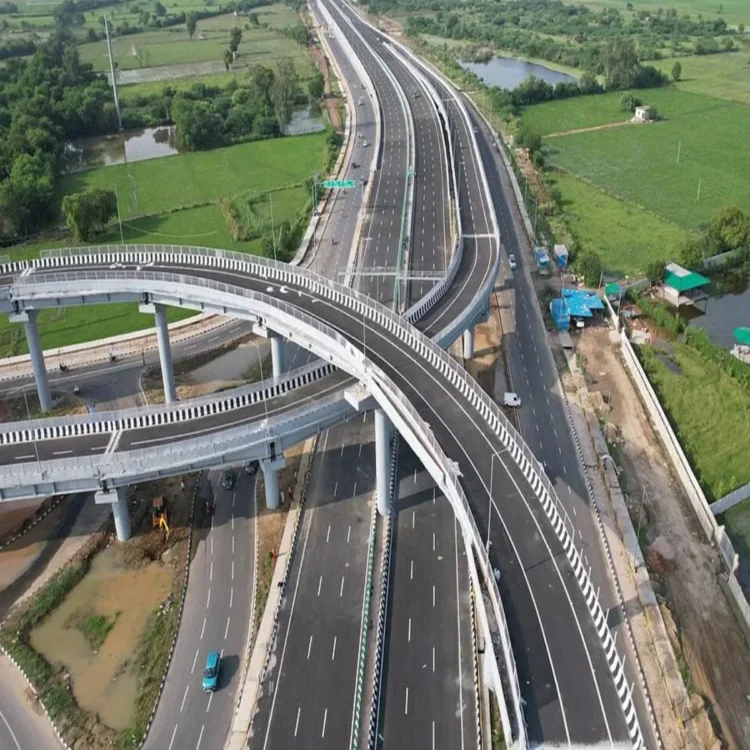
Expanding Connectivity Across Key Districts
The newly operational expressway runs through 12 districts, linking Meerut in western Uttar Pradesh with Prayagraj in the east. These districts include Hapur, Bulandshahr, Amroha, Sambhal, Badaun, Shahjahanpur, Hardoi, Unnao, Rae Bareli, and Pratapgarh. Built as a six-lane access-controlled highway with provision for expansion to eight lanes, the road is designed to support speeds of up to 120 kilometres per hour.
Officials expect the corridor to substantially reduce travel time between the two regions while ensuring smoother movement for both passengers and freight vehicles.
Modern Systems to Enhance Safety and Efficiency
The expressway has been developed under a public-private partnership framework and incorporates advanced traffic and safety mechanisms. These include an Intelligent Traffic Management System, round-the-clock CCTV monitoring, emergency call boxes, ambulances, and dedicated patrol teams.
One of its notable features is a 3.2-kilometre airstrip near Shahjahanpur. This facility has been designed to allow emergency landings by the Indian Air Force, adding a strategic dimension to the infrastructure.
Boost for Industry and Agriculture
Authorities believe the expressway will play a key role in encouraging industrial development and improving agricultural supply chains. Plans are already underway to establish manufacturing zones, logistics parks, warehouses, cold storage units, and food processing centres along the route.
These developments are expected to create employment opportunities and attract private investment, particularly in districts that previously lacked strong industrial infrastructure.
Integration With Statewide Road Network
The Ganga Expressway will be connected to several other major expressways in the state, including the Purvanchal, Agra-Lucknow, Bundelkhand, and Gorakhpur Link expressways. This integration is expected to create a seamless and extensive road network, improving accessibility across Uttar Pradesh.
Such connectivity is likely to reduce transportation costs and improve efficiency for businesses operating within the state.
Farmers’ Contribution Recognised
During the event, Chief Minister Yogi Adityanath acknowledged the role of farmers in enabling the project. He stated that over one lakh farmers across the 12 districts contributed land for the expressway, describing their support as crucial to its completion.
Approximately 18,000 acres of land were acquired for the project, while an additional 7,000 acres have been set aside for industrial and logistics developments. The chief minister referred to the expressway as a vital link that will connect rural and urban areas while supporting economic growth.
Timely Completion Highlights Infrastructure Focus
The foundation stone for the expressway was laid in December 2021, and its completion within the scheduled timeline has been highlighted as a reflection of the government’s focus on infrastructure development.
Union Minister Pankaj Chaudhary described the project as one of the longest expressways in India, noting its importance in strengthening modern transport facilities in the state.
Driving Economic Ambitions
Officials have indicated that the Ganga Expressway will contribute significantly to Uttar Pradesh’s long-term economic goals. By improving connectivity, facilitating trade, and generating employment, the corridor is expected to support the state’s ambition of becoming a trillion-dollar economy.
The project is seen not just as a transport initiative, but as a broader effort to stimulate balanced regional development and enhance economic opportunities across multiple sectors.