
WomenReservation – Delhi Assembly Witnesses Protest Over Women’s Quota Bill Delay
WomenReservation – The Delhi Assembly on Tuesday turned into a stage for sharp political messaging as Chief Minister Rekha Gupta led a demonstration by BJP legislators ahead of a special one-day session centered on women’s reservation. The protest was aimed at drawing attention to what the ruling party described as delays in implementing the Women’s Reservation Act at the national level.
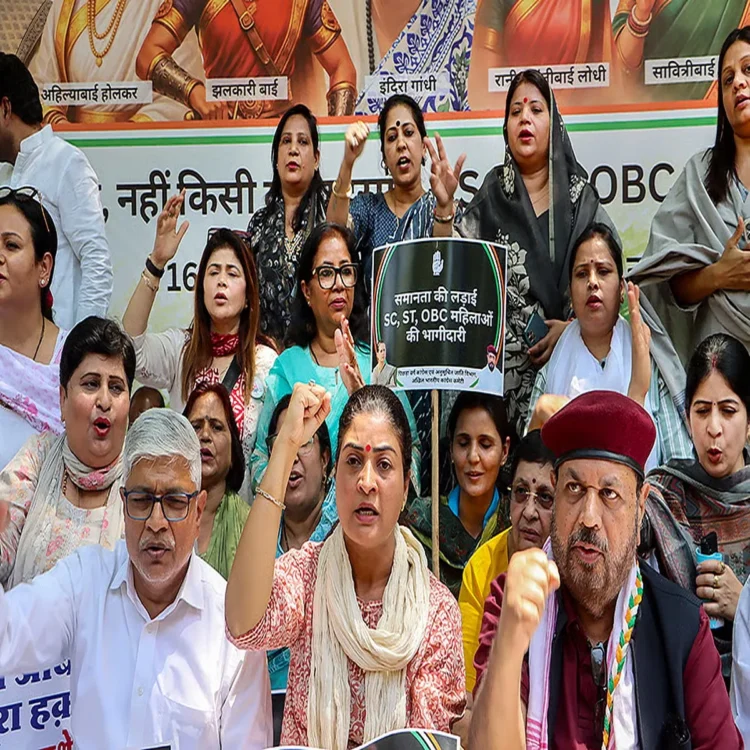
Protest Highlights Demand for Immediate Implementation
BJP lawmakers gathered within the Assembly premises, calling for the swift enforcement of the Nari Shakti Vandan Adhiniyam, a law that proposes 33 percent reservation for women in legislative bodies. The demonstration reflected the party’s effort to position itself as a strong advocate for women’s political inclusion, while also targeting Opposition parties for what it called a lack of commitment on the issue.
Dressed in black to symbolize dissent, several legislators raised slogans emphasizing that expectations among women across the country had been left unmet. The protest also sought to underline the urgency of translating legislative intent into actual representation.
Criticism of Opposition’s Role
Addressing the Assembly, Gupta expressed disappointment over the developments in Parliament, stating that recent proceedings had failed to deliver on a long-standing demand. She accused Opposition parties, including Congress, of not doing enough to support the measure, suggesting that their actions had weakened trust among women voters.
According to Gupta, the days of waiting had passed, and the issue now required decisive action. She stressed that the matter was not merely political but deeply connected to the rights and dignity of women, who make up nearly half of the country’s population.
The government also introduced a censure motion during the session, seeking to formally register its criticism of the Opposition’s stance on the legislation.
Legislative Background and Delays
The Nari Shakti Vandan Adhiniyam, introduced alongside a constitutional amendment, aims to ensure one-third reservation for women in both the Lok Sabha and state Assemblies. While the law has been passed, its implementation has been linked to procedural requirements such as delimitation, which has contributed to delays.
Gupta highlighted that despite the legal framework being in place, political disagreements and technical hurdles have slowed progress. She reiterated that timely execution of the law is essential to fulfill its intended purpose.
Representation Gap Remains a Concern
During her remarks, the Chief Minister pointed to the continuing underrepresentation of women in higher legislative bodies. While local governance structures have seen relatively better participation from women, their presence in state Assemblies and Parliament remains limited.
Current figures indicate that women constitute roughly 10 percent of MLAs across states and around 13 to 14 percent in Parliament. Gupta argued that these numbers reflect systemic barriers that require targeted policy interventions to overcome.
She also noted that various initiatives introduced by the central government over the past decade have contributed to improving women’s welfare and opportunities. However, she maintained that political representation remains a critical area needing further attention.
Symbolic Gesture in Assembly Proceedings
In a move aligned with the session’s focus, Assembly Speaker Vijender Gupta invited MLA Shikha Roy to preside over the proceedings. This step was seen as a symbolic acknowledgment of women’s leadership and participation in governance.
Roy conducted the session as Chairperson, marking a notable moment in the Assembly’s proceedings. The gesture was intended to reinforce the broader message of empowerment and inclusion that framed the day’s discussions.
Broader Political Implications
The developments in the Delhi Assembly highlight how the issue of women’s reservation continues to shape political narratives. With multiple parties seeking to position themselves on the matter, the debate is likely to remain a key point of discussion in the coming months.
As calls for implementation grow louder, the focus will increasingly shift toward resolving procedural challenges and building consensus across party lines. The outcome will play a significant role in determining how quickly the proposed changes translate into reality.