
VisionCare – AIOS Issues Fresh Guidelines to Tackle Rising Childhood Myopia
VisionCare – Childhood myopia is emerging as a serious public health concern in India and across the world, prompting eye specialists to call for urgent preventive action. The All India Ophthalmological Society (AIOS) has now introduced revised consensus guidelines focused on reducing the growing number of children affected by nearsightedness, particularly after the lifestyle changes seen during the COVID-19 pandemic.
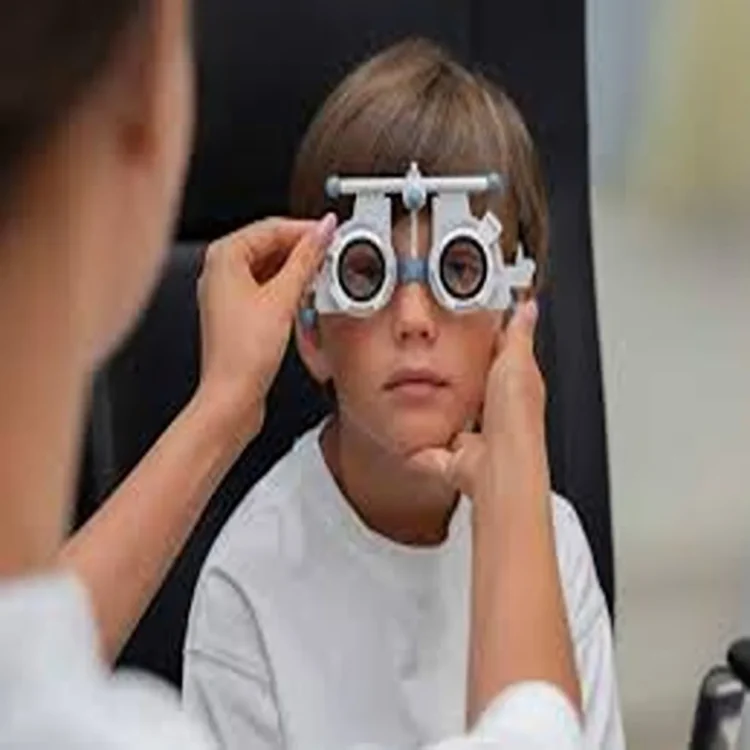
Focus on Early Prevention and Regular Eye Checks
The newly updated recommendations were released during World Myopia Week 2026, observed from May 18 to 24. The guidelines are intended to support ophthalmologists, teachers, parents and healthcare professionals with practical and research-backed measures to control the increasing burden of myopia among children.
Experts involved in drafting the recommendations stressed the importance of preventive habits at an early age. These include annual eye examinations, routine vision screening in schools, maintaining proper lighting while studying, limiting recreational screen exposure and ensuring children maintain a safe reading distance. The guidelines also strongly encourage children to spend a minimum of two hours outdoors every day.
Sharp Rise in Cases After the Pandemic
Recent studies have shown a noticeable increase in myopia among school children in India, especially in urban areas after the pandemic years. Surveys conducted by AIIMS indicate that nearly one in five children in cities may now be affected, while rural regions are reporting prevalence rates between 6 and 8 percent.
Doctors say the shift toward prolonged online learning and increased mobile device usage has significantly contributed to the problem. Children today spend far more time on tablets, phones and computers than before, while outdoor physical activities have reduced considerably.
Experts Warn About Long-Term Eye Damage
Dr Jeewan Singh Titiyal, President of AIOS, said childhood myopia should no longer be viewed as a minor issue requiring only spectacles. According to him, severe myopia can permanently affect the structure of the eye and raise the risk of retinal detachment, glaucoma, cataracts and irreversible vision loss later in life.
He also pointed out that many children fail to complain about blurry vision because they may not understand what normal eyesight should feel like. Because of this, parents and teachers need to pay close attention to behavioural signs linked to poor vision.
Dr Titiyal described childhood myopia as one of the fastest-growing lifestyle-related health conditions among young children, particularly across South East Asia and the Indian subcontinent.
Screen Dependency Among Young Children Raises Concern
Dr Rohit Saxena, senior paediatric ophthalmologist at AIIMS New Delhi and programme director for the guidelines, said myopia is now being diagnosed at much younger ages than before. Earlier, cases were more common among children aged 10 to 12, but doctors are now seeing affected children as young as five or six years old.
He highlighted that many toddlers are exposed to mobile phones and tablets at an early age, which may negatively affect visual development. According to him, children below two years should ideally avoid screen exposure completely. For those between two and five years, screen time should remain limited and carefully monitored.
He further stated that families, schools and policymakers all have a role in addressing the growing issue. Healthy sleep patterns, balanced nutrition, regular physical activity and reduced digital dependency are equally important in protecting children’s eye health.
Signs Parents Should Not Ignore
Doctors associated with the guidelines explained that one of the earliest indicators of myopia is when children begin holding books or objects very close to their eyes. Other common warning signs include squinting while looking at distant objects, moving closer to television screens, headaches, eye strain, redness, watery eyes and blurred vision.
Experts emphasised that timely diagnosis and early management can help slow the progression of myopia and reduce the risk of future complications. While treatments such as atropine eye drops, specialised spectacles, orthokeratology and soft multifocal contact lenses may help control worsening eyesight, specialists caution that these interventions should only be used under professional supervision.
Dr Namrata Sharma, Chairman of the AIOS Scientific Committee, said prevention through lifestyle changes remains the most effective approach. She added that the revised guidelines aim to create greater awareness and encourage proactive eye care rather than relying only on treatment after vision problems develop