
Tourism – Tehri’s Rise Highlights New Path for Sustainable Travel Growth
Tourism – Tehri has steadily transformed into one of India’s most promising hubs for adventure and water-based tourism, showcasing how focused infrastructure investment can unlock the potential of lesser-known destinations. The remarkable growth of the Uttarakhand district has prompted the Ministry of Tourism to encourage other states to study and adapt similar development strategies.
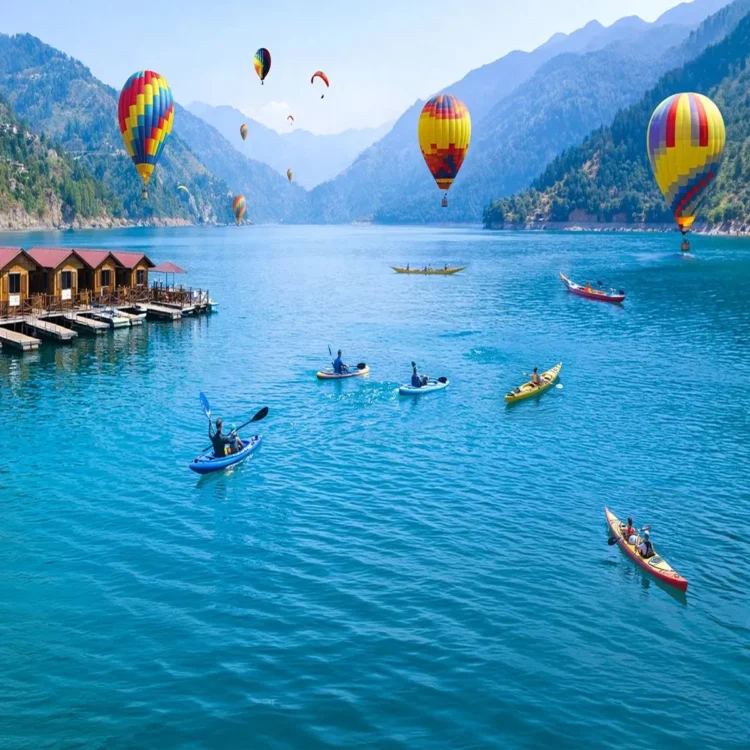
Tehri, widely known for the massive Tehri Dam and the expansive Tehri Lake, was initially identified as an alternative destination to reduce the growing tourism pressure on Mussoorie. Authorities aimed to create an environmentally responsible tourism option while generating economic opportunities for local communities. The success achieved over the past few years has demonstrated the effectiveness of this approach.
Planned Development Changed the Region
As tourist numbers in Mussoorie surged, the hill station began facing severe traffic congestion and overcrowding. To address this challenge, the Ministry of Tourism supported the establishment of floating log huts on Tehri Lake. Located around 75 kilometers from Mussoorie, Tehri gradually emerged as a fresh attraction for visitors seeking a quieter and more nature-focused experience.
What was once primarily a fishing destination has evolved into a vibrant tourism zone. The lake now features floating accommodation facilities and dining options that attract travelers from across the country. Increased visitor interest also encouraged private investment in the area, further accelerating tourism-related development.
Local Communities Benefit from Tourism Expansion
The growing popularity of Tehri has created new livelihood opportunities for residents. Many homeowners living near the lake converted their properties into homestays to accommodate tourists. This expansion of community-based tourism has helped distribute economic benefits across the region while enhancing the visitor experience through local hospitality.
Officials believe Tehri provides a practical example of how alternative destinations can ease pressure on established tourist centers. By promoting lesser-known locations and investing in tourism infrastructure, governments can achieve balanced regional development while protecting overcrowded destinations.
Swadesh Darshan Scheme Played a Key Role
The transformation of Tehri is closely linked to the Swadesh Darshan initiative, launched by the Ministry of Tourism in January 2015. The programme was designed to develop tourism circuits based on specific themes and regional strengths.
Under the initiative, 76 tourism projects received approval with a combined investment of more than ₹5,290 crore. According to official data, 75 of these projects have already been completed. Building on this foundation, the government introduced Swadesh Darshan 2.0 in 2022, focusing on sustainable and responsible tourism development. The updated programme has sanctioned 53 projects with investments exceeding ₹2,208 crore.
Visitor Numbers Continue to Climb
Tourism statistics from Uttarakhand indicate consistent growth in Tehri’s visitor arrivals over recent years. The district attracted approximately 4.92 lakh tourists in 2021. This figure rose sharply to 27.46 lakh in 2022 and further increased to 37.61 lakh in 2023.
The upward trend continued in 2025 when Tehri welcomed 53.29 lakh visitors, recording nearly five percent growth compared with the previous year. The district ranked as Uttarakhand’s third most-visited destination, behind Haridwar and Dehradun. During the same year, Uttarakhand received more than six crore tourists overall, highlighting the state’s growing appeal among domestic travelers.
Ambitious Vision for Global Recognition
The Uttarakhand government has now outlined a broader vision for the Tehri Lake region under its “One State, One Global Destination” initiative. Authorities plan to prepare a comprehensive master plan aimed at elevating the area’s international tourism profile.
Proposed projects include the construction of a ring road around Tehri Lake, new bridges, and improved pedestrian pathways. These developments are expected to strengthen connectivity, enhance visitor facilities, and support the region’s long-term tourism ambitions.