
TamilNaduPolitics – TVK May Attract More Senior AIADMK Leaders
TamilNaduPolitics – Tamil Nadu’s political landscape is witnessing renewed speculation after reports suggested that several prominent leaders formerly associated with the AIADMK could soon align themselves with the ruling Tamilaga Vettri Kazhagam (TVK). Among the names being widely discussed are former ministers C.V. Shanmugam and C. Vijayabaskar, whose next political move has become a subject of intense interest in state political circles.
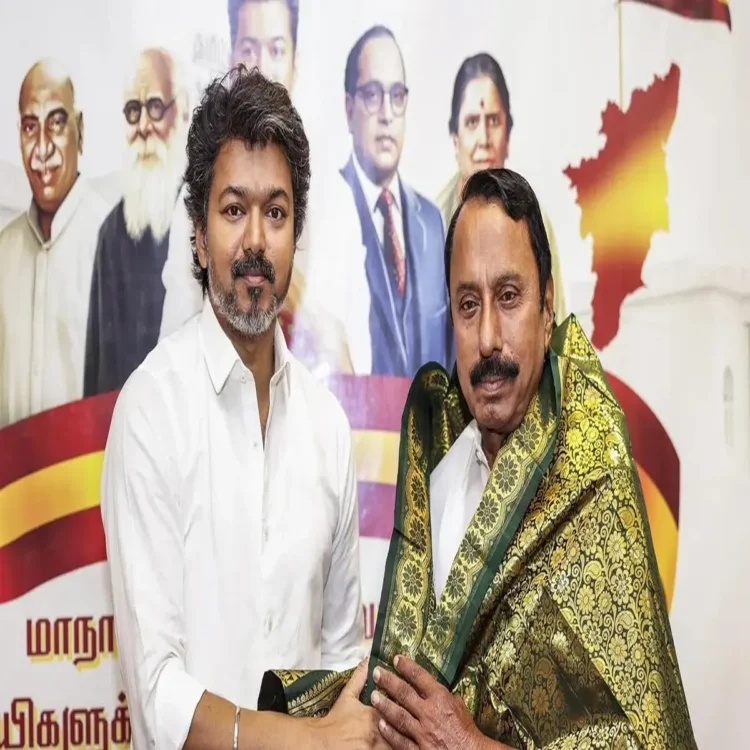
Growing Attention Around Possible Political Shift
The discussion comes at a time when the Opposition structure in Tamil Nadu has undergone significant changes following the 2026 Assembly election. Although TVK emerged as the largest party by securing 107 Assembly seats, the party did not achieve the majority mark required to independently form a government.
To strengthen its position and secure power, TVK initiated talks with several parties that had earlier been part of the alliance led by the DMK. These efforts resulted in a series of political adjustments that reshaped the balance of power in the state.
Support From Former Alliance Partners
Congress became the first major party to support the TVK-led administration after distancing itself from its previous alliance. The move proved politically significant, with the party later receiving representation in the state cabinet as well as a seat in the Rajya Sabha.
Other parties gradually followed a similar path. The Viduthalai Chiruthaigal Katchi (VCK) and the Indian Union Muslim League (IUML), which initially backed the government from outside, eventually joined the administration and secured ministerial representation. Meanwhile, both the CPI(M) and CPI continued their support for the government without placing additional conditions.
Trust Vote Played Key Role
Political tensions increased further when allegations surfaced from AMMK leadership claiming that one of its legislators had switched allegiance following political negotiations. Around the same period, Chief Minister C. Joseph Vijay reportedly held discussions with a faction within the AIADMK led by senior figures including S.P. Velumani and C.V. Shanmugam.
The importance of those discussions became evident during the Assembly confidence vote. Legislators belonging to the Velumani-Shanmugam group, along with AMMK MLA Kamaraj, supported the TVK government during the crucial vote, helping reinforce the administration’s position in the Assembly.
Several Legislators Already Joined TVK
Soon after the confidence motion, multiple AIADMK lawmakers chose to resign from their legislative positions and formally become members of TVK. Their decision was viewed as a major political gain for the ruling party.
Although some dissident legislators later returned to the AIADMK leadership under the guidance of senior leaders, not everyone chose to rejoin the party structure. A number of influential figures remained outside the fold, keeping speculation alive about their future political affiliations.
Focus Remains on Senior Former Ministers
Particular attention has remained on former ministers C.V. Shanmugam and C. Vijayabaskar. Neither leader has publicly confirmed plans regarding a party switch, yet persistent reports linking them with TVK continue to generate discussion across the political spectrum.
Their prolonged absence from the mainstream AIADMK structure has only strengthened assumptions that important decisions could be announced in the near future. Political observers believe that any move involving these senior leaders would have a noticeable impact on the state’s opposition dynamics.
Potential Impact on Tamil Nadu Politics
TVK has already benefited from the entry of several experienced political figures, including former minister Vellamandi Natarajan and other leaders who have joined the ruling party in recent months. If additional senior politicians decide to make a similar move, the party’s influence within Tamil Nadu politics could expand further.
For now, official confirmation remains unavailable. However, the possibility of more high-profile defections continues to attract attention as political developments unfold ahead of the next phase of state politics.