
Shravani Mela – Massive Devotee Turnout Continues at Deoghar and Haridwar Temples
Shravani Mela – The sacred month of Shravan continues to draw millions of devotees across India, with major pilgrimage centres witnessing large gatherings as worshippers participate in traditional rituals dedicated to Lord Shiva.
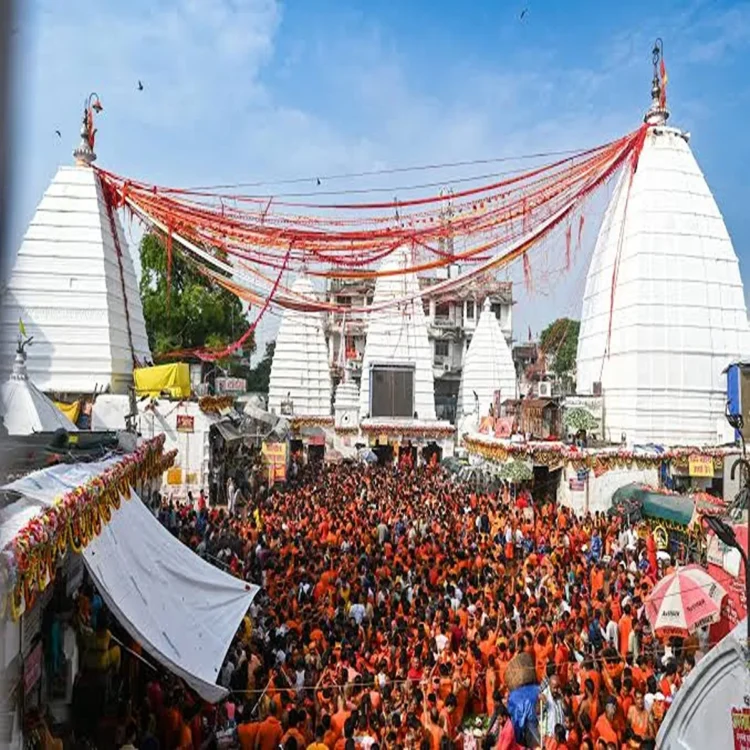
The annual Shravani Mela at Baba Baidyanath Temple in Deoghar, Jharkhand, is witnessing an impressive flow of pilgrims as the religious festival entered its third day on Saturday. Thousands of Kanwariyas and Shiva devotees waited patiently in long queues to perform Jalabhishek, offering holy water to the revered deity during one of Hinduism’s most significant spiritual observances. The temple town has come alive with devotees dressed in saffron, arriving from different parts of the country to take part in the month-long pilgrimage.
Large Crowds Gather at Baba Baidyanath Temple
The Shravani Mela, which began on July 30, will continue until August 28. Officials estimate that between 3.5 million and 5.5 million devotees are likely to visit the temple during the festival. On Saturday, queues extended for nearly three kilometres outside the shrine as pilgrims patiently waited for their opportunity to offer prayers and complete the traditional Jalabhishek ritual.
To manage the increasing number of visitors, the administration has implemented extensive arrangements across the temple town. Security personnel, crowd management systems, medical support, drinking water facilities, sanitation services and other essential amenities have been deployed to ensure that pilgrims can complete their religious journey safely and comfortably.
Pilgrims Appreciate Improved Facilities
Many devotees expressed satisfaction with the arrangements made by the authorities. Several visitors said they experienced smooth movement despite the heavy rush and praised the availability of basic services throughout the pilgrimage route.
Pilgrims also noted that waiting times appeared more organised than in previous years. Improved crowd management and better public facilities have helped devotees perform their religious rituals with greater convenience while maintaining the spiritual atmosphere that defines the annual festival.
Haridwar Witnesses Similar Spiritual Enthusiasm
The devotional spirit of Shravan is equally visible in Haridwar, Uttarakhand, where large numbers of devotees continue to visit the Siddhpeeth Dakshin Kali Temple for special worship dedicated to Lord Shiva. The temple has become a focal point for religious activities during the sacred month, attracting worshippers seeking blessings through traditional rituals and prayers.
Special ceremonies are being conducted daily under the guidance of Acharya Mahamandaleshwar Swami Kailashanand Giri Maharaj. According to temple authorities, the religious observances include Shiva worship and Rudrabhishek after a midnight holy dip in the Ganga, a practice followed throughout the Shravan period.
Traditional Rituals Continue Throughout Sawan
Temple sevadar Vinod Kumar explained that the spiritual observance begins on the full moon day of the Shravan month and continues until Raksha Bandhan. During this period, Swami Kailashanand Giri Maharaj observes silence while remaining devoted to the worship of Lord Shiva for most of the day.
He also stated that every night between midnight and 4 a.m., the spiritual leader takes a holy bath in the Ganga before resuming prayers and religious rituals, reflecting the deep spiritual discipline associated with the sacred month.
Shravan Remains One of India’s Largest Pilgrimage Seasons
Shravan is regarded as one of the most important months for devotees of Lord Shiva. Every year, millions of pilgrims travel to prominent temples across the country to perform Jalabhishek, offer prayers and participate in special religious ceremonies.
As the pilgrimage season progresses, major religious destinations such as Deoghar and Haridwar continue to witness a steady rise in visitor numbers. Local administrations remain focused on maintaining security, managing crowds efficiently and providing essential facilities so that devotees can undertake their spiritual journey in a safe and well-organised environment.