
Security – Delhi Assembly Breach Raises Questions Over Capital Safety
Security – A serious security breach at the Delhi Legislative Assembly has sparked political reactions and renewed debate over safety arrangements in the national capital. The incident, in which a vehicle reportedly broke through an entry gate and entered the high-security premises, has been described as a significant lapse by the Aam Aadmi Party (AAP).
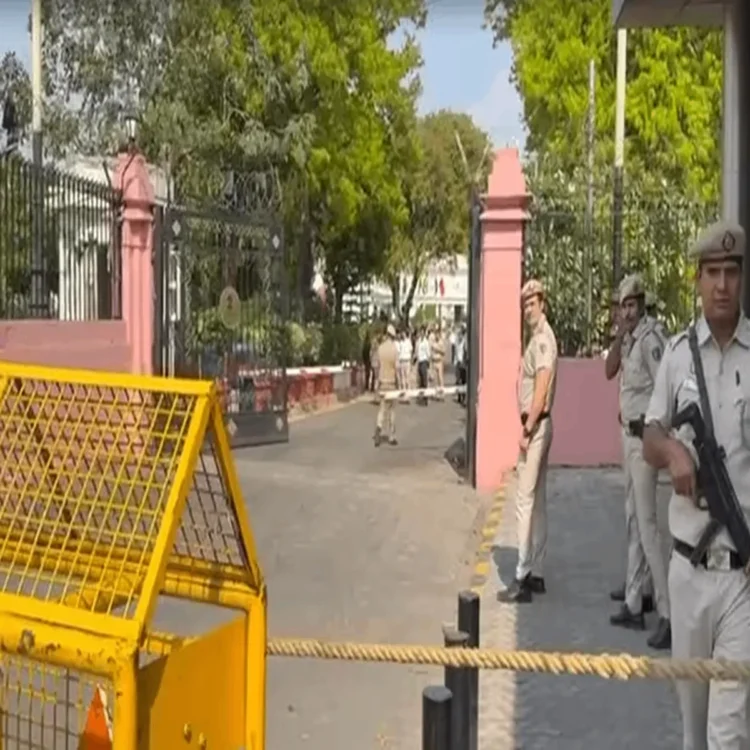
Concerns Over High-Security Zone Breach
The AAP expressed strong concern over how a vehicle could gain access to a restricted and heavily guarded area like the Assembly complex. In its response, the party highlighted what it called a glaring inconsistency in security enforcement. According to the statement, while elected opposition legislators often face strict checks and are sometimes stopped at entry points, unauthorized vehicles appear to have managed access without similar scrutiny.
The party emphasized that such an incident cannot be treated lightly, given the sensitive nature of the Assembly and its importance in governance. The breach has also raised broader questions about the preparedness of the security system in handling potential threats.
Political Reactions Intensify
AAP leaders used the incident to criticize the existing security framework under the Bharatiya Janata Party (BJP), which governs at the central level. They argued that repeated incidents point to systemic issues rather than isolated lapses.
AAP MLA and Chief Whip Sanjeev Jha publicly addressed the issue, calling it a matter of grave concern. He shared an image of the damaged Assembly gate on social media, drawing attention to the severity of the breach. Jha stated that such an incident at a highly protected site reflects poorly on the overall security arrangements in the capital.
Pattern of Security Challenges Highlighted
In his remarks, Jha also pointed to a series of recent security-related concerns in Delhi, including repeated bomb threats and an earlier attack involving the chief minister. He suggested that the Assembly breach is part of a larger pattern that indicates vulnerabilities in the system.
He questioned how a vehicle could penetrate a guarded facility while elected representatives face strict entry protocols. The contrast, he said, raises doubts about the consistency and effectiveness of the existing measures.
Questions Over Accountability
The incident has also brought attention to the question of responsibility. Delhi Police operates under the Union Ministry of Home Affairs, and AAP leaders have sought clarity on who will be held accountable for the lapse.
According to the party, ensuring the safety of critical institutions like the Legislative Assembly is fundamental. If such locations are vulnerable, it raises concerns about the security of the general public. The argument reflects a broader demand for accountability and review of current systems.
Wider Implications for Public Safety
Beyond political exchanges, the breach has triggered a wider conversation about urban safety and infrastructure readiness in Delhi. Security experts often consider legislative buildings among the most protected public institutions, and any compromise in such areas can have serious implications.
The incident is likely to prompt discussions on revisiting access control mechanisms, surveillance systems, and coordination between different security agencies. It may also lead to internal reviews aimed at preventing similar occurrences in the future.
For now, the focus remains on understanding how the breach occurred and what corrective steps will be taken. As political reactions continue, the episode has underscored the importance of maintaining robust and reliable security systems in the capital.