
Politics – Venkaiah Naidu Hails Modi’s Record-Breaking Leadership Journey
Politics – Former Vice President M. Venkaiah Naidu has expressed strong confidence in Prime Minister Narendra Modi’s leadership, stating that the country remains secure and stable under his stewardship. His remarks came as Modi achieved a historic political milestone by becoming India’s longest-serving Prime Minister in continuous office, surpassing the previous record held by Jawaharlal Nehru.
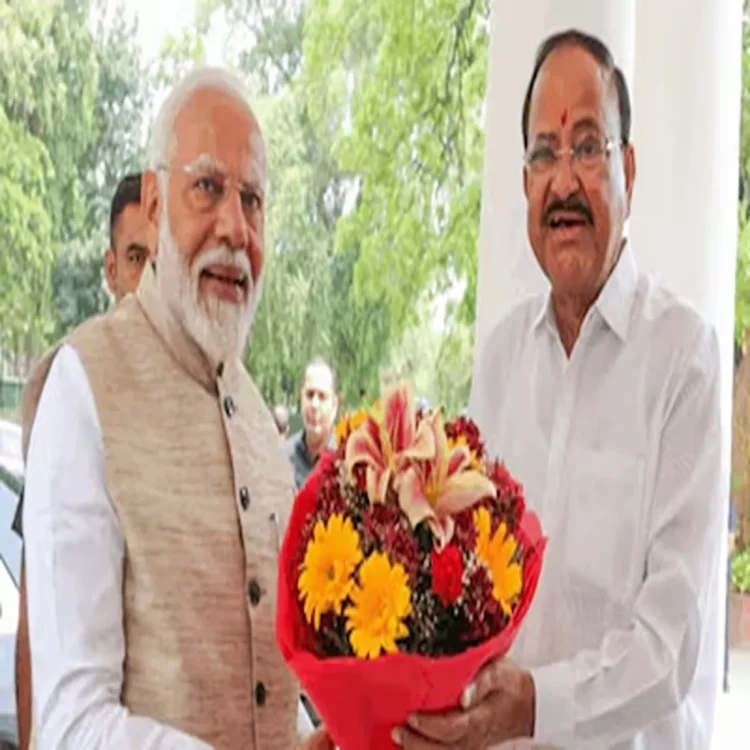
Naidu Reflects on Modi’s Political Legacy
In an article published on Wednesday, Naidu revisited an observation he made shortly after Modi assumed office in 2014. At that time, he had described the Prime Minister through the phrase “Making of Developed India.” Looking back on more than a decade of governance, Naidu said he now views Modi as a pivotal figure in shaping the nation’s future and referred to him as a “Man of Destiny for India.”
According to Naidu, the Prime Minister’s vision has consistently focused on transforming the country into a prosperous and developed nation. He added that India’s progress and security are closely linked to the leadership direction provided by Modi over the years.
Historic Tenure Amid Political Challenges
Naidu noted that Modi’s achievement is particularly significant because it has come during a period marked by intense electoral competition, coalition politics, constant media attention, and the rapid influence of social media on public opinion.
He highlighted the Prime Minister’s personal journey, describing it as an extraordinary rise from humble beginnings. Modi, who spent part of his childhood assisting his father in a tea-selling business in Gujarat’s Vadnagar town, eventually reached the highest executive office in the country. Naidu described this transformation as a story of determination, self-development, and a deep understanding of the aspirations of ordinary citizens.
Early Influences and Organisational Experience
The former Vice President also pointed to Modi’s long association with the Rashtriya Swayamsevak Sangh (RSS), stating that it played an important role in shaping his outlook and leadership style. Over the years, Modi worked within the RSS, Jana Sangh, and later the Bharatiya Janata Party, gaining extensive organisational experience and developing the ability to manage complex political responsibilities.
Naidu said these experiences helped him build a clear vision for the country while strengthening his leadership capabilities.
Gujarat Leadership and National Recognition
Reflecting on Modi’s tenure as Gujarat Chief Minister, Naidu described the period as highly influential. He said the development initiatives undertaken during those years drew nationwide attention and contributed to the emergence of what became popularly known as the Gujarat model.
According to him, many citizens were looking for leadership that could deliver visible results, and Modi emerged as a figure who fulfilled those expectations. Naidu added that he was among the senior BJP leaders who supported Modi’s candidature for the prime ministerial post.
Welfare Programmes and Public Participation
Naidu credited several major government initiatives to Modi’s emphasis on public participation. He cited large-scale sanitation efforts, housing support for economically weaker sections, expansion of banking access, direct benefit transfers, and cooking gas connections for women as examples of programmes designed to improve everyday lives.
He also highlighted India’s rise as a leader in digital payments through UPI and noted the extensive food assistance provided to millions during and after the Covid-19 pandemic.
Education, Healthcare and Policy Reforms
The former Vice President further praised the expansion of higher education and healthcare infrastructure under the current administration. He pointed to the increase in institutions such as IITs, IIMs and AIIMS, along with the implementation of Ayushman Bharat, which he described as one of the largest publicly funded healthcare initiatives globally.
Naidu also referred to key policy decisions including the removal of Article 370 provisions, the abolition of triple talaq, implementation of the Goods and Services Tax (GST), and the introduction of legislation providing greater representation for women in legislative bodies.
Security and Global Standing
Discussing national security and foreign relations, Naidu said the government has taken a firm approach toward internal and external challenges. He noted progress in addressing left-wing extremism and referred to military actions undertaken in response to security threats.
On the international front, he stated that India’s foreign policy has increasingly focused on national interests and has strengthened the country’s voice in global discussions. According to Naidu, India now commands greater attention and influence across major international platforms