
Politics – Shifting Electoral Patterns Shape Bengal Border Constituencies
Politics – The political landscape of West Bengal’s constituencies along the Bangladesh border has undergone a significant transformation over the past decade, shaped by evolving voter concerns and shifting party strategies.
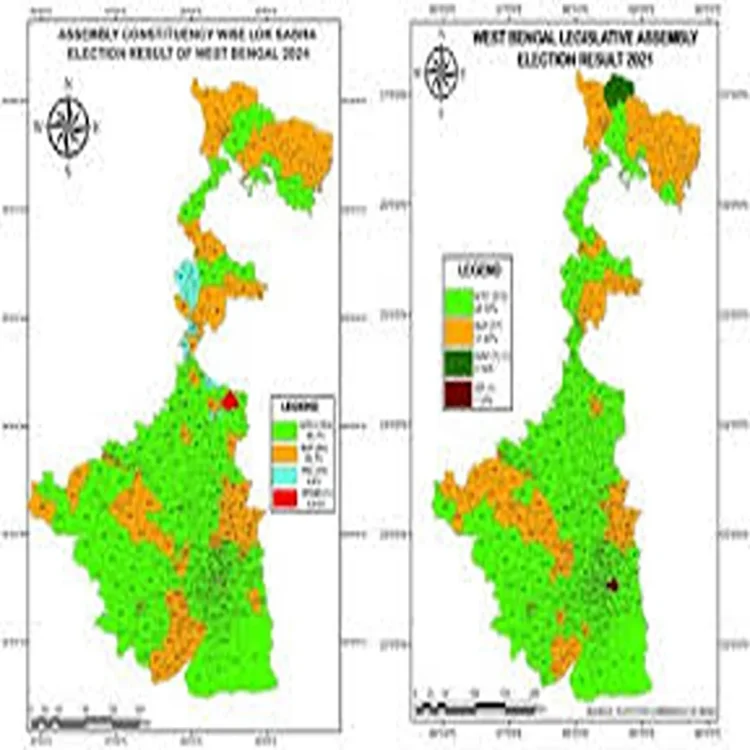
Before 2011, electoral politics in these regions followed relatively stable patterns. Much of South Bengal remained firmly under the influence of the Left Front, which had built a strong grassroots presence over decades. Its organisational network, strengthened by land reforms and cadre-based mobilisation, ensured consistent electoral success. Leaders such as Narayan Mukherjee in Basirhat reflected this stability, relying more on party structure than campaign rhetoric. However, this dominance was not uniform across all districts. In areas like Murshidabad, Malda and parts of Uttar Dinajpur, where Muslim voters form a majority, the Congress maintained a steady base through local connections and community engagement.
Concerns Shaping Border Politics
Voter behaviour in these constituencies is strongly influenced by a mix of historical experiences and present-day uncertainties. One of the most prominent concerns relates to citizenship, especially among Matua refugees who migrated from Bangladesh. Many in this community continue to face uncertainty regarding their legal status, creating a sense of insecurity that becomes more pronounced during elections.
Another recurring issue is the perception of outsiders. Among sections of Hindu voters, this is often linked to fears of cross-border migration. For Muslim communities, however, such narratives can be unsettling, as they risk questioning the legitimacy of long-settled populations. This difference in perception adds complexity to the political discourse in these regions.
Demographic concerns further influence political attitudes. In constituencies such as Bongaon and Basirhat, even minor or unverified reports of migration are sometimes amplified into broader concerns about population changes. These perceptions, whether accurate or not, often carry significant political weight.
At the same time, in districts like Murshidabad and Malda, many minority voters express concern about the possibility of exclusion through processes similar to the National Register of Citizens. These fears centre on the idea that long-standing residents could be excluded from official records. Alongside these identity-based concerns, voters also weigh the importance of welfare benefits, creating a balance between immediate needs and deeper anxieties.
Political Strategies and Responses
Since 2016, both the Bharatiya Janata Party (BJP) and the Trinamool Congress (TMC) have actively engaged with these concerns, often shaping their campaigns around them. The BJP has focused strongly on citizenship issues in Matua-dominated areas, presenting policies such as the Citizenship Amendment Act as a solution to long-standing uncertainties. By aligning with community leaders, the party has aimed to strengthen its support base among these voters.
In other regions, particularly those with mixed populations, the BJP has highlighted concerns around migration and demographic change. This approach has helped it consolidate sections of Hindu voters, though it has also led to strong opposition from Muslim communities, limiting its reach in those areas.
The TMC, on the other hand, has responded by emphasising welfare schemes and cautioning against policies it claims could negatively impact vulnerable communities. Among Matua voters, it has combined development initiatives with cultural outreach, while in minority-dominated regions it has positioned itself as a protective force against exclusionary measures.
Changing Electoral Outcomes
The 2011 state election marked a turning point, ending decades of Left Front dominance as the TMC swept to power across border districts. By 2016, the TMC had strengthened its position further, while the Left’s influence continued to decline. During this period, the BJP began emerging as a significant challenger, gradually expanding its presence.
By the 2021 election, the political contest in these constituencies had largely become bipolar. The BJP made notable gains in Hindu-majority and Matua-influenced areas, indicating a shift in voter alignment. However, in Muslim-majority constituencies, the TMC retained strong support, often winning by large margins. In some cases, smaller parties also attracted a portion of minority votes, further affecting the BJP’s performance.
Overall, electoral behaviour in West Bengal’s border regions now reflects a complex interplay of identity, security concerns, and welfare considerations. As these factors continue to evolve, they are likely to remain central to political strategies and outcomes in future elections.