
Politics – Debate Intensifies Over AAP MPs’ Shift to BJP in Rajya Sabha
Politics – The controversy surrounding the reported alignment of seven Aam Aadmi Party (AAP) Members of Parliament with the Bharatiya Janata Party (BJP) has sparked fresh debate over constitutional provisions and parliamentary procedures.
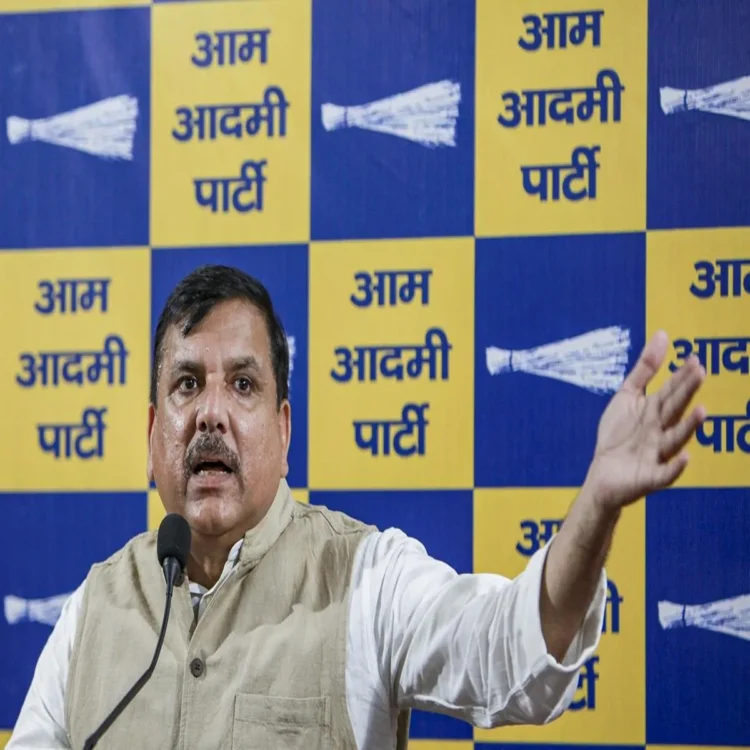
Former Lok Sabha Secretary General and noted constitutional expert P D T Achary has raised concerns over the legal standing of the development, stating that the move could be inconsistent with the provisions of the Tenth Schedule of the Constitution. According to him, despite administrative updates, the MPs cannot yet be considered part of the BJP’s parliamentary group in the Rajya Sabha from a legal standpoint.
Disqualification Petition Remains Central Issue
Achary emphasized that a petition seeking the disqualification of the seven MPs is currently pending before the Rajya Sabha Chairman. The plea was filed by AAP leader Sanjay Singh, and its outcome is expected to play a decisive role in determining the political future of the concerned members.
He noted that until the Chair formally examines and rules on the petition, the situation remains unresolved. Any further action by the AAP, including legal recourse, would depend on the Chairman’s response. The pending decision, therefore, holds significant weight in interpreting whether the MPs’ actions comply with constitutional norms.
Secretariat Update Sparks Political Reactions
The matter gained attention after the Rajya Sabha Secretariat revised its official records, listing the seven MPs alongside the BJP. This update effectively reduced AAP’s strength in the Upper House to three members.
While the revised bulletin suggests that the Chairman acknowledged the MPs’ request to align with the BJP, Achary clarified that such administrative changes do not carry legal authority in determining party membership under the anti-defection framework.
Legal Interpretation of Anti-Defection Law
Explaining the procedural aspects, Achary pointed out that the rules under the Tenth Schedule require any change in party strength to be formally communicated to the presiding officer and the Secretariat. However, this process is largely procedural and does not substitute for a legal determination regarding defection or merger.
He stressed that the crux of the matter lies in whether the move qualifies as a legitimate merger under constitutional provisions. According to paragraph 4(1) of the Tenth Schedule, a valid merger must involve the original political party itself, not merely a group of its legislators.
Questions Over Validity of Merger Claim
Achary argued that the current situation does not meet the criteria outlined in the Constitution. If only a faction of MPs has chosen to align with another party without an official merger of the parent political organization, it could be interpreted as a violation of the anti-defection law.
This interpretation raises the possibility of disqualification if the Chairman concludes that the MPs acted contrary to party directives without fulfilling the legal requirements for a merger.
Awaiting Chairman’s Decision
For now, the focus remains on the Rajya Sabha Chairman’s forthcoming decision. Political observers note that the ruling will not only determine the status of the seven MPs but may also set a precedent for similar cases in the future.
Until then, the situation continues to evolve, with both legal and political implications closely watched by parties across the spectrum. The case highlights the complexities of parliamentary rules and the importance of constitutional safeguards in maintaining the integrity of legislative processes.