
Peacekeeping – Indian Army Officer Major Swathi Kumar Honoured With UN Gender Award
Peacekeeping – Major Swathi Shantha Kumar, an Indian Army officer from Bengaluru currently serving with the United Nations Mission in South Sudan (UNMISS), has been awarded the UN Secretary-General’s Award 2025 in the gender category. The honour recognises her project titled “Equal Partners, Lasting Peace,” which focused on strengthening the role of women in peacekeeping efforts and building stronger relationships between the mission and local communities in the conflict-affected region.
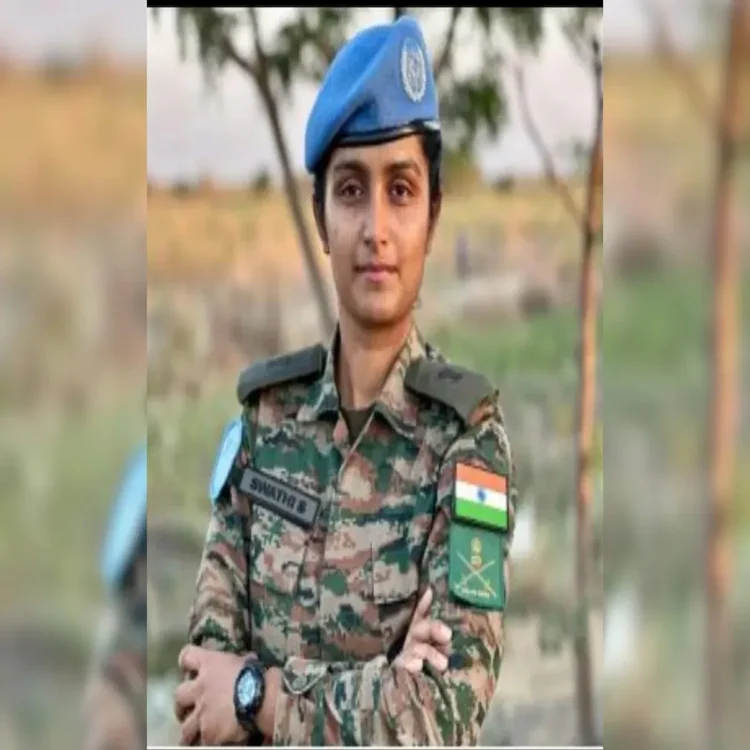
The officer described the award as a recognition not just of her individual work but of the collective contribution made by her team of Indian women peacekeepers deployed in South Sudan.
Recognition Reflects Team Effort
Speaking about the award, Major Swathi Kumar said the achievement represents the dedication of a team of 20 Indian women soldiers who were part of the mission. According to her, it marked the first time such a group of Indian women peacekeepers participated in a United Nations mission in South Sudan.
She explained that the recognition reflects the collaborative effort of the entire team along with the guidance provided by their battalion and the Indian Army leadership in New Delhi. The officer noted that the mission required constant coordination between the troops deployed on the ground and the command structures in India.
Major Kumar added that while the soldiers were operating in South Sudan, they continued to receive consistent guidance and support from their battalion and the Army Headquarters in Delhi, which helped them carry out their responsibilities effectively.
Responsibilities During the UN Mission
Discussing her role in the peacekeeping mission, Major Kumar said her primary duties involved operational planning and organising patrols to maintain security and protect civilians.
She explained that the battalion conducted several types of patrols depending on operational requirements. These included short-range and long-range ground patrols, as well as river and air patrols designed to monitor remote areas.
Such patrols were essential to ensure the safety of communities and to maintain stability in regions affected by ongoing conflict. According to the officer, regular patrol activities also helped the mission remain connected with local populations across different parts of the country.
Difficult Terrain and Weather Challenges
Operating in South Sudan presented significant logistical challenges, particularly due to the region’s difficult terrain and unpredictable weather conditions.
Major Kumar noted that during the wet season, heavy rainfall often floods large parts of the area, making many roads inaccessible. As a result, reaching remote villages and administrative regions known as payams becomes extremely difficult.
To overcome these obstacles, the peacekeeping unit relied on alternative approaches such as river patrols and air operations. These methods allowed the team to maintain access to isolated communities even when road travel was not possible.
Addressing Community Communication Gaps
Major Kumar’s award-winning project “Equal Partners, Lasting Peace” was inspired by observations made during the mission about the need for stronger engagement between peacekeepers and local communities.
She explained that her team recognised a gap in communication between the United Nations mission and residents in some areas. In response, they increased their outreach through patrol interactions and community meetings.
These efforts helped improve dialogue and build trust between the mission and the population. According to the officer, regular engagement allowed communities to better understand the role of peacekeepers while also enabling the mission to respond more effectively to local concerns.
Role of Women in Peacekeeping
The project also emphasised the importance of increasing the participation of women in operational and community-focused peacekeeping roles.
Major Kumar said that women peacekeepers often bring valuable perspectives to community engagement activities, particularly when interacting with women and children in conflict-affected regions.
She added that empowering women within societies has a broader impact beyond individuals. Education, economic opportunities, and social support for women can strengthen families and contribute to long-term stability within communities.
Commitment to Service and National Representation
Reflecting on her experience, Major Kumar highlighted the guiding principle followed by Indian Army personnel: service before self. She said this value remains central to their duties both within India and during international peacekeeping deployments.
According to her, participating in such missions also means representing the country on the global stage. She encouraged women serving in peacekeeping roles to believe in the mission they are assigned and to remain adaptable in challenging environments.
Major Kumar noted that every mission and community presents unique challenges, and innovative approaches are often necessary to achieve meaningful results.