
Parliament – Women’s Reservation Debate Gains Momentum Ahead of Special Session
Parliament – India is preparing for a crucial parliamentary discussion on women’s reservation as political leaders debate its timeline and implementation framework.
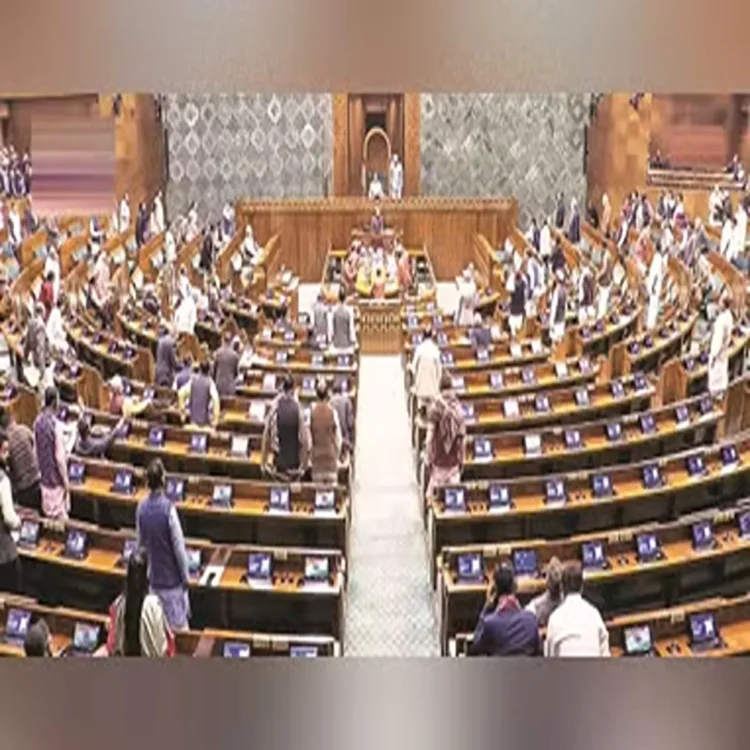
As Parliament convenes for a special three-day session starting April 16, discussions are set to focus on the implementation of a 33% reservation for women in the Lok Sabha and state assemblies. The proposed reform has reignited debate across political circles, with leaders emphasizing the need for broader representation of women in legislative bodies.
Push for Greater Representation in Legislatures
BJP MP Aparajita Sarangi has underlined that the proposed reservation marks a significant step toward inclusive governance. She noted that women constitute nearly half of India’s population, yet their presence in Parliament and state assemblies remains comparatively low. According to her, the Nari Shakti Vandan Adhiniyam Act, passed in 2023, represents the culmination of decades-long efforts that began in the mid-1990s.
Sarangi pointed out that while women have made notable gains at the grassroots level through local governance reforms, similar progress has not been reflected in higher legislative institutions. She believes that once implemented, the reservation policy could fundamentally reshape democratic participation in the country.
Debate Over Consultation and Political Consensus
Opposition parties have expressed support for the idea of women’s reservation but have raised concerns about the consultation process. Some leaders argue that broader stakeholder discussions should have been held before finalizing the framework. However, Sarangi dismissed these claims, stating that Parliament had already witnessed detailed debates when the bill was introduced and passed.
She stressed that the issue should rise above political divisions, urging all parties to support the measure without hesitation. According to her, delays in implementation would undermine the collective aspiration of women seeking fair representation in governance.
Timeline and Implementation Challenges
A key point of contention remains the timeline for rolling out the reservation. The current plan links implementation to delimitation and the next Census, which has led to concerns about delays. Critics argue that tying the policy to these processes could push its rollout further into the future.
Sarangi acknowledged the complexity of the issue, explaining that delimitation is essential to identify which constituencies would be reserved for women. Without this step, she said, it would be difficult to operationalize the policy effectively.
Possible Use of Existing Census Data
To address concerns about delays, the government is reportedly considering using data from the 2011 Census as a basis for delimitation. This approach could help streamline the process and ensure that the reservation policy is implemented within a reasonable timeframe.
Sarangi indicated that waiting for a fresh Census followed by delimitation might make it difficult to meet the proposed 2029 implementation target. She emphasized the need for a practical solution that balances procedural requirements with the urgency of the reform.
OBC Quota Concerns Remain Unresolved
Another longstanding issue is the demand for a separate quota for women from Other Backward Classes within the broader reservation framework. This demand had earlier stalled similar efforts in 1996 and 2010 and continues to be a point of debate.
Sarangi stated that while the government remains committed to the welfare and empowerment of OBC communities, introducing additional provisions at this stage could complicate the legal and administrative process. She warned that adding more layers to the legislation might lead to further delays and potential legal challenges.
Call for Unified Approach
As discussions move forward, there is growing emphasis on building consensus across political lines. Sarangi reiterated that the responsibility to ensure timely implementation lies with all stakeholders. She urged political parties to focus on the larger goal of empowering women rather than raising procedural objections.
The upcoming parliamentary session is expected to play a decisive role in shaping the future of women’s representation in India’s legislative framework. With multiple viewpoints on the table, the challenge will be to strike a balance between inclusivity, practicality, and timely execution.